SC Ruling Empowers Married Women in Govt Service to Change Domicile Without Career Loss
The Supreme Court allows married women in government service to adopt their husband’s domicile without losing promotion rights, ensuring equal opportunities in postings and professional growth.


ISLAMABAD: In a landmark ruling, the Supreme Court of Pakistan has secured a long-overdue right for married women in government service — allowing them to change their domicile after marriage without risking their promotion or eligibility for higher posts.
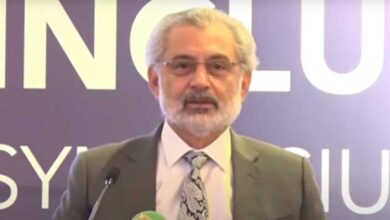
The judgement was issued by a two-member bench of the apex court, comprising Justice Syed Mansoor Ali Shah and Justice Aqeel Ahmed Abbasi. It marks a major relief for countless government servant couples who previously faced bureaucratic hurdles and career stagnation due to domicile-related restrictions.
The case was initiated by Dr. Shumaila Naeem, a gold medalist medical officer who had originally entered government service on a Khyber Pakhtunkhwa (KP) domicile. After marrying a civil servant from Balochistan, she changed her domicile to match that of her husband and later applied for the post of Associate Professor (Obstetrics and Gynaecology) BPS-19 at Pakistan Institute of Medical Sciences (PIMS), Islamabad.
Despite topping the written exam conducted by the Federal Public Service Commission (FPSC), Dr. Shumaila was not invited for the interview. The FPSC claimed her application was ineligible due to her original KP domicile, ignoring the legally changed domicile of Balochistan.
After her internal departmental representations and review petitions were dismissed by the FPSC, Dr. Shumaila challenged the decision in the Islamabad High Court (IHC). Chief Justice Aamer Farooq ruled in her favor on January 28, 2025. However, rather than implement the decision, the FPSC filed an appeal in the Supreme Court.
The Supreme Court’s judgment reinforced a woman’s legal right to choose whether to retain her original domicile or adopt her husband’s after marriage. “The apex court held that a married woman retains the legal discretion or choice to either adopt her husband’s domicile or retain her own,” explained Dr. Shumaila.
The Court found the FPSC’s refusal to accept her Balochistan domicile unjustified and ruled that the seat of Associate Professor remained vacant and should be filled. It directed authorities to consider her application based on her Balochistan domicile and make the appointment within two weeks.
This decision now sets a precedent for similar cases across the country. It ensures that married women in public service are no longer penalized for choosing to align their domicile with their spouse’s — a common step taken for family unity and practical living arrangements.
“This decision will change the lives of countless female officers,” Dr. Shumaila said. “They will now have the peace of mind to serve in the same province as their husbands, without sacrificing their career progress.”
The ruling is a significant step toward gender-sensitive policy reforms in Pakistan’s bureaucratic system. It addresses a long-standing issue affecting women professionals, many of whom were previously forced to choose between personal life and professional advancement.
By securing married women’s right to domicile change without career repercussions, the Supreme Court has paved the way for a more inclusive and equitable public service system.