Women of Pakistan’s Foreign Service: Shaping Diplomacy, Breaking Barriers
In a country battling gender disparity, Pakistani women diplomats are rewriting the narrative — leading missions, representing the nation, and proving that capability knows no gender.

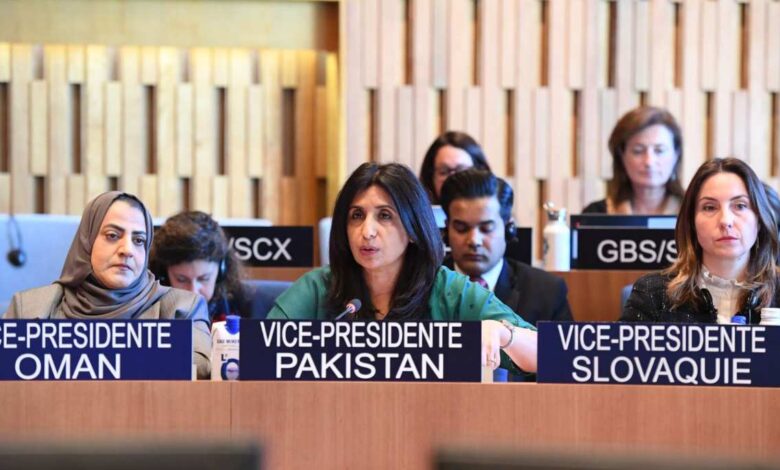
ISLAMABAD: In a nation where gender parity remains a distant dream and women often face systemic resistance in professional spaces, Pakistan’s Foreign Service stands as a powerful exception — a platform where women aren’t just visible, but are actively shaping policy, leading global conversations, and redefining leadership.
Ambassador Mumtaz Zahra Baloch, currently serving in France and as Permanent Delegate to UNESCO, captures the shift: “Foreign Service of Pakistan is an equal opportunity service. If you work hard, your work is noticed — gender doesn’t matter.”
Her impressive diplomatic career includes key assignments across the U.S., China, South Korea, and the UN, proving that Pakistani women aren’t just participating in diplomacy — they’re leading it.
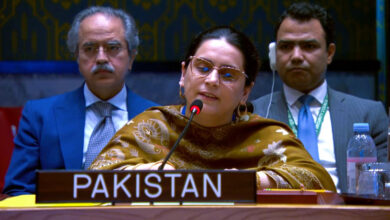
Her counterpart, Counsellor Saima Saleem, Pakistan’s first visually impaired diplomat, echoed this sentiment from New York: “We’ve shown we can handle pressure, represent Pakistan with dignity, and rise on merit.” Saleem made history with a powerful UN Right of Reply to India in 2021, showing courage and command on a global platform.
Yet, the transformation wasn’t always smooth. When these women joined, female representation was sparse, role models were few, and societal expectations loomed large. Despite this, they thrived — supported by progressive leadership, gender-inclusive work culture, and their own grit.
Former Ambassador Naghmana A Hashmi, who represented Pakistan in China, the EU, and beyond, noted: “I’ve never experienced discrimination in service. In fact, being a woman was sometimes an advantage in diplomacy.”
She stressed that merit, preparation, and professionalism define success — not gender. “We’ve served in war zones, negotiated sensitive treaties, and upheld Pakistan’s interests globally — with courage and commitment,” she stated.
Hashmi also emphasized the importance of deep national knowledge, composure, and constant global awareness, calling the Foreign Service “not just a career — a way of life.”
Despite the broader gender gap challenges — with Pakistan ranked last in WEF’s 2025 Gender Gap Index — the Foreign Service continues to be a rare model of merit-based progression for women.
Today, 25% of Foreign Service officers are women, a figure rising steadily. From representing Pakistan at UNESCO to holding ground at the UNGA, these women are redefining Pakistan’s global image — showcasing a nation where women lead with competence, not just compliance.
Their success sends a clear message: Pakistan’s daughters are not waiting for space — they’re claiming it. And in diplomacy, they’ve already proven their worth — to Pakistan, and to the world.