COP 29: A Landmark Event in Baku Addressing Global Environmental Challenges
How Pakistan and the World are Mobilizing for Climate Action at the Baku Conference

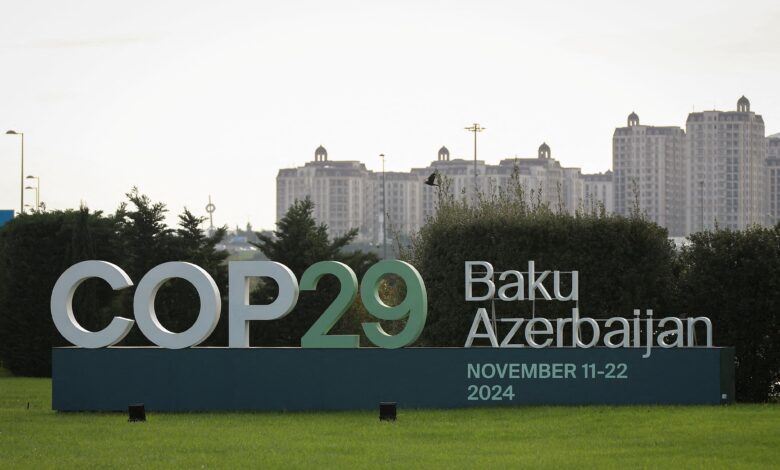
When the COP 29 conference was held in Baku, the capital of Azerbaijan, we made up our minds to attend and be a part of this conference to address environmental challenges.
Arrival in Baku and the Significance of COP 29
We eagerly waited for the moment, and finally, on the morning of November 7th, we arrived in the beautiful capital of Azerbaijan, Baku. This conference is undoubtedly very important in addressing environmental challenges.
The Conference Atmosphere and Global Participation
On the morning of November 11th, when we arrived for the conference, there was an overwhelming crowd. Thousands of people from 198 parties, including those from Azerbaijan and various other countries, had gathered at the Baku Olympic Stadium. Despite the extremely cold weather, the atmosphere inside the stadium was quite warm, reducing the feeling of the cold. Media entry was prohibited in the conference hall, so we headed towards the pavilions where each country was preparing briefings in their respective areas. Various events were being planned, and we were thoroughly enjoying the atmosphere. It was quite impressive to see that nearly all countries in the world are serious about environmental challenges.
Exploring Pakistan’s Pavilion
Anyway, while walking around, we began searching for Pakistan’s pavilion, which required quite a bit of effort.
Everywhere, discussions were happening about floods, rising temperatures, and environmental challenges. When we reached the Pakistan pavilion, conversations were focused on green financing, green economy, and carbon policies. This was a very significant opportunity for Pakistan. Since 2022, Pakistan has been severely impacted by climate change, enduring billions of rupees in losses due to floods. However, Pakistan had planned many events and engaged in in-depth discussions on environmental issues in the pavilion.
Key Discussions and Developments for Pakistan
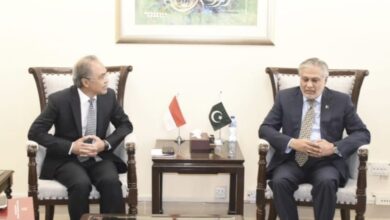
On the third day of COP 29, when Finance Minister Mohammad Aurangzeb also attended, it felt like an important day for Pakistan. Minister Aurangzeb had arrived to participate, and I took the opportunity to ask him whether COP 29 would yield positive results for Pakistan and what benefits it would bring.
Address by Finance Minister Mohammad Aurangzeb
The Finance Minister, Mohammad Aurangzeb, responded that good news had come for Pakistan at COP 29. In his exclusive address, he shared that the most significant progress for Pakistan at COP 29 was that HeCUMEN had established the first climate investment fund specifically for Pakistan. This fund is focused on agriculture, and it is a very important development for Pakistan, bringing forward positive steps.
Establishment of Climate Investment Fund
The Finance Minister continued, saying that discussions were ongoing about how to manage adaptation finance with the rest of the world. The Green Climate Fund has also invested in HeCUMEN’s fund. In national climate finance, we have prepared a policy framework, developed NDCS, and outlined our plan to move towards net-zero by 2050. Pakistan is among the top ten countries most affected by climate change, and we need adaptation finance for this. There was also talk about what multinational support will look like and how public-private partnership frameworks will function. We are planning to enter the international market, and the green economy is a key issue. Our focus should be on investable and bankable projects. Financing is available, but it is up to us to bring those investable projects.
Adaptation Finance and Green Economy
Referring to the past few years, the Finance Minister mentioned that three to three and a half years ago, Pakistan issued green bonds. The government and WAPDA received $500 million from these green bonds, although the order book was $3 billion. He emphasized that our main focus should be on capacity building.
Pakistan’s Success with Green Bonds
When asked whether the government would be able to take action to address challenges similar to the 2022 crisis after COP, the Finance Minister replied that it is the government’s responsibility to take action on its own. We cannot rely on others. Regarding meetings with the World Bank, he mentioned that two weeks ago in Washington, DC, positive discussions had taken place, and the World Bank funds are available to us. In case of any future crisis, we will not need to create a funding proposal; instead, we will be able to immediately use these funds for our objectives.
After listening to all the discussions, it became clear that this was a great opportunity for Pakistan and also a golden opportunity for other countries around the world.
Understanding NDCs and Their Significance
What are NDCs, which have been frequently mentioned at the COP 29 conference? These NDCs are receiving such importance, and the United Nations Secretary-General has also called them the most important policy documents of this century. So, let’s first understand what NDCs are.
NDCs, or Nationally Determined Contributions, are essentially the environmental plans that countries have developed under the Paris Agreement. These plans primarily include actions to mitigate the effects of climate change and reduce greenhouse gas emissions. Each country sets targets to reduce greenhouse gas emissions based on its national circumstances and capabilities. A plan of action is developed to address the impacts of climate change, and NDCs are updated every five years to align with evolving climate challenges.
Goals and Timely Actions
The goal of NDCs is to keep global temperatures less than 2 degrees Celsius above pre-industrial levels and to strive to limit this increase to 1.5 degrees. This is the definition of NDCs. It is crucial for countries to take timely actions, and at COP 29, ongoing attention has been focused on NDCs by participating countries.
At COP 29, the United Nations Secretary-General called NDCs the most important policy documents of this century and also announced the launch of the Climate Plan Campaign. He stated that the Climate Plan Campaign will assist countries in mobilizing new environmental initiatives. Simon Stiell, the Executive Secretary of the UN Framework Convention on Climate Change, said during an event at COP 29 that clean energy is expected to reach two trillion dollars globally this year. The UK and Brazil have announced efforts to accelerate environmental actions under NDCs 3.0 at COP 29.
Economic Impacts of Climate Change
Climate change has impacted the economy of every country, with some nations’ GDPs decreasing by up to five percent. Agriculture and food supply are severely affected by climate impacts. However, the most important benefits of clean energy in the NDCs include a strong economy, job opportunities, and reduced pollution. He further mentioned that NDC partnerships are playing a key role in fostering cooperation on climate change issues. The UN has also urged countries to strengthen their environmental commitments.
If the NDC documents are finalized at COP 29 and countries implement them, there is hope for a better and more promising future, as hope is what sustains the world. Every moment is precious for countries worldwide at this time. The hope is that COP 29 will not be just words, but will yield positive results.