Pakistan’s Women Still Silenced in the Name of Honour
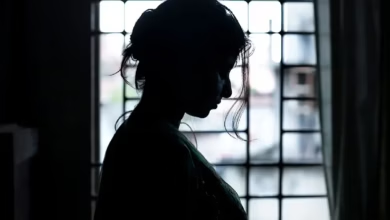
Despite growing awareness, honour killings and violence against women remain a brutal reality across Pakistan’s tribal and rural regions.

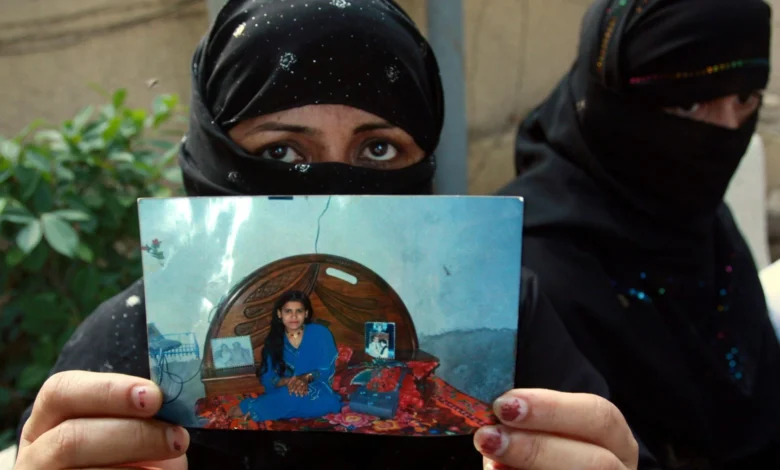
The serene, cool air of Degari, a sparsely populated area outside Quetta, hides a disturbing reality beneath its silence. This region of Balochistan, dominated by the Satakzai tribe, has recently gained attention for a horrific act — the cold-blooded killing of a young couple in the name of honour. The victims, Noor Bano Satakzai and Ehsan Sumalani, were executed on camera, allegedly by orders of a local tribal council or Jirga.
In Balochistan and across much of Pakistan, honour killings continue to be justified as a means of preserving family pride. These acts often target women accused of defying societal expectations — refusing marriages, choosing partners, or being linked to relationships their families disapprove of. What makes it worse is that such crimes are often carried out by relatives or sanctioned by local tribal leaders, reinforcing a culture of silence and impunity.
Human rights activist Sadia Baloch, who documents gender-based violence in the province, explained that these killings stem not only from notions of honour but also from power struggles within patriarchal structures. “In Balochistan, honour killings take place due to socio-economic reasons, as well as to show muscular power by men to settle personal scores over land disputes and debts,” she said. Sadia’s research reveals a disturbing pattern — women silenced or killed with no accountability, their stories rarely reaching the public eye.
This is not new to Balochistan. In 2008, three teenage girls aged between 16 and 18 were buried alive in an honour killing — an incident that shook the nation but failed to bring lasting change. Similarly, in 2023, the shocking discovery of three bullet-riddled bodies in a well — including that of a young girl — near the home of a provincial minister, Sardar Abdur Rehman Khetran, highlighted the complicity of powerful figures. Despite his arrest, he was quickly granted bail and continues to serve in the Balochistan Assembly.
Sadia explains that many women accused of dishonouring their families are abandoned or handed over to tribal leaders, often to be sold, forced into marriage, or enslaved. “Families hand over their girls to the Sardars who sell them out or force them into servitude. These cases don’t get reported at all,” she said.
According to the Human Rights Commission of Pakistan (HRCP), at least 405 women were killed in the name of honour in 2024. Activists believe the real number is far higher, as countless cases remain buried — both literally and figuratively. Punjab, Pakistan’s most populous province, records the highest number of such incidents. HRCP’s Sunny Zia attributes this to both population density and the persistence of the caste system. “In many cases, honour killings are related to the caste system, especially when inter-caste marriages occur, which are not socially accepted,” he said.
Author and historian Shah Mohammad Marri described how tribal traditions perpetuate this cycle. “In Pakistan’s tribal belt, Sardars are the supreme authority. There are no laws or police stations for local tribesmen, so Sardars decide everything,” he explained.
At the same time, scholars like Jahanzeb Rind of LUMS point to systemic failure. “Our judicial system is weak,” he said. “The state hasn’t given citizens proper rights or protections, especially in the tribal belt. This is why people turn to tribal leaders — and honour killings persist.”
Beyond honour crimes, the scale of violence against women in Pakistan is staggering. A recent report revealed that 93% of women experience sexual harassment in public places, while 73% face violence at the hands of intimate partners, family members, or acquaintances. Alarmingly, 62% of victims are between the ages of 10 and 19.
These figures paint a grim picture of a country where women continue to live under threat, silenced by culture, power, and fear. Honour killings are only one manifestation of this larger crisis — a deep-rooted failure to protect women’s lives and dignity.
As the stories of Noor Bano and countless others fade from headlines, one truth remains: Pakistan has failed its women. Until the culture of silence ends and justice is delivered without bias, honour will continue to be used as a weapon against the very women it claims to defend.