Congress Slams Modi Government Over Exclusion of Women Journalists at Afghan Minister’s Press Meet
Congress leaders, including Rahul and Priyanka Gandhi, demand PM Modi clarify his stance after women journalists were barred from Afghan Foreign Minister’s press conference in Delhi.

India’s opposition Congress party has strongly criticized the Narendra Modi-led government following the exclusion of women journalists from a press conference addressed by visiting Afghan Foreign Minister Amir Khan Muttaqi in New Delhi. The incident, which took place on Friday, has sparked political outrage and raised questions about the government’s commitment to gender equality.
Congress general secretary Priyanka Gandhi Vadra and Leader of the Opposition Rahul Gandhi both condemned the incident, calling it a blow to women’s rights and India’s democratic values. “Mr Modi, when you allow the exclusion of women journalists from a public forum, you are telling every woman in India that you are too weak to stand up for them,” Rahul Gandhi posted on X. “Your silence in the face of such discrimination exposes the emptiness of your slogans on Nari Shakti.”
Priyanka Gandhi, in a separate post, questioned whether Prime Minister Modi’s advocacy for women’s empowerment was “just convenient posturing from one election to another.” She urged the Prime Minister to publicly clarify his stance on the matter. “How can such an insult to some of India’s most competent women be allowed?” she asked.
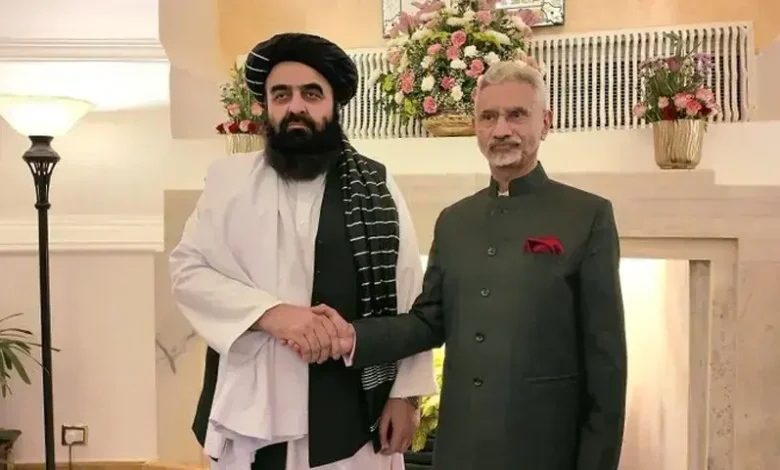
According to reports, the press interaction held at the Afghan Embassy in New Delhi was attended only by male journalists, with women reporters barred from entry. The session took place hours after Mr Muttaqi held detailed talks with India’s External Affairs Minister S. Jaishankar on bilateral cooperation and regional stability.
Government sources have indicated that the decision to exclude women journalists came from the Taliban officials accompanying the Afghan foreign minister. Indian authorities reportedly suggested that the delegation allow female journalists, but the request was declined.
Congress communications chief Jairam Ramesh expressed shock over the development, posting on X, “(Tali)ban on female journalists in India. Shocking and unacceptable that the Government of India agreed to it — and that too in New Delhi on the eve of the International Day of the Girl Child.”
Former finance minister P. Chidambaram also voiced his disapproval, suggesting that the male journalists present should have protested the decision. “The men journalists should have walked out when they found that their women colleagues were excluded,” he wrote.
The criticism extended beyond Congress. Communist Party of India general secretary D. Raja questioned whether the exclusion reflected Taliban misogyny alone or a tacit approval from the Indian side. “The Republic of India is built on equality,” he said, tagging External Affairs Minister S. Jaishankar in his post. “To allow such exclusion here is blasphemy to our constitutional spirit.” Raja urged the Ministry of External Affairs to explain how it allowed what he called a “discriminatory spectacle,” warning that such actions “nourish patriarchal ideology that wants to erase half the world from public life.”
Despite the controversy, the Afghan foreign minister’s visit carried diplomatic significance. During his meeting with Mr Muttaqi, Minister Jaishankar emphasized India’s commitment to Afghanistan’s sovereignty, stability, and development. He also highlighted the shared concern over cross-border terrorism and announced the upgrading of India’s technical mission in Kabul to a full embassy.
The visit, however, has been overshadowed by the uproar over the exclusion of women journalists — an incident that many see as contrary to India’s values of equality and freedom. With mounting public criticism, pressure is building on the Modi government to issue a clear statement and reaffirm India’s stance on women’s rights and press freedom.