
Yemen’s Progress in Combatting Cyber Extortion and Protecting Women in Digital Spaces
A groundbreaking initiative in Yemen aims to safeguard women and girls from online threats and strengthen digital peacebuilding.

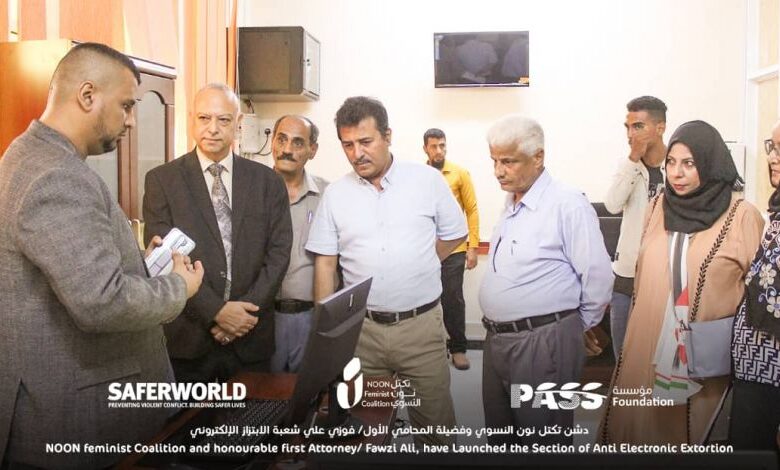
In Yemen, locally led initiatives by Saferworld and its partners – The National Organisation for Community Development (NODS), PASS Foundation, Peace for Sustainable Societies, and Youth Without Borders Organization for Development (YwBOD) – are creating vital spaces for dialogue, decision-making, and action. Among the most important of these are the Noon Women’s Hub in Aden and the Wahag Women’s Hub in Taiz, which focus on amplifying women’s voices, advocating for their participation in peacebuilding, and supporting their leadership in both digital and physical spaces.
In recent years, digital platforms have become essential tools for community connection, participation, and mobilization. However, these spaces are increasingly vulnerable to cyber threats, particularly against women and girls. Cyber harassment, technology-facilitated gender-based violence, online hate speech, and electronic blackmail are major risks that disproportionately affect women. These threats not only cause personal harm but also serve as tools to silence women, limiting their role in shaping peace and security agendas and excluding them from public discourse.
Recognizing this, Saferworld and its partners have taken a proactive approach to combat these issues by raising awareness about digital gender-based violence, advocating for legal reforms, and establishing mechanisms for digital protection. Through partnerships with Yemeni women’s hubs, the initiative aims to foster safer digital environments that promote women’s participation in peacebuilding. This work combines local actions with institutional support to create lasting change in digital spaces and helps build resilience against online threats.
A New Approach to Combat Cyber Extortion
Cyber extortion poses immediate dangers to victims, undermining their safety and confidence in engaging in digital and public spheres. Women, especially in Yemen’s conservative context, are frequent targets of this form of technology-facilitated gender-based violence. The fear of blackmail, social shame, and violence often keeps women from fully participating in civic life or peacebuilding efforts.
In response, Yemeni-led hubs, including Noon Women’s Hub, recognized the urgency of addressing this issue. They successfully advocated for the establishment of a Cyber Extortion Division within Yemen’s Public Prosecution Office. This division, launched in March 2024, is a critical step in tackling cyber extortion and other cybercrimes, ensuring better protection for victims and accountability for perpetrators.
The division provides a confidential and accessible channel for victims to report cyber extortion, fostering a sense of security for women navigating the often intimidating justice system. The First Attorney General of Yemen, Judge Fawzi Ali Saif Saeed, highlighted the division’s importance, stating that it would help modernize investigative tools, improve victim protection, and enhance Yemen’s digital security.
Since its establishment, the Cyber Extortion Division has made significant strides. In its first year, it received 96 cyber extortion complaints, conducted training for judicial officers in Aden and Taiz, and established a secure online platform for reporting cases. These efforts have already begun to reduce the number of cyber extortion crimes and have increased the public’s awareness of legal accountability.
Protecting Women from Online Blackmail
The creation of the Cyber Extortion Division has had a transformative impact, particularly for women and girls, who are the primary targets of online blackmail. Cyber extortion is not just a violation of privacy; it is a deliberate tactic to control and silence women. It exacerbates gendered vulnerabilities and limits women’s ability to participate in public discourse and peacebuilding.
This initiative aligns with the global Women, Peace and Security (WPS) agenda, which emphasizes the protection of women from all forms of violence and advocates for their full participation in peace processes. By ensuring that digital spaces are safe, the division strengthens Yemen’s commitment to the WPS agenda and allows women to engage more fully in shaping their country’s future.
As Dr. Roaa Abdullah Mujahid Abdullah, a member of the Noon Women’s Hub, stated, the creation of the division was critical for protecting women from the dangers of digital violence. The division has not only facilitated the reporting of cyber extortion but has also offered psychological support and awareness to victims, ensuring that their voices are heard and protected.
Community-Driven Advocacy and Support
The success of the Cyber Extortion Division is largely due to the efforts of Yemeni organizations like the Noon Women’s Hub, which played an instrumental role in advocating for its establishment. By collaborating with the Attorney General’s Office and providing training, advice, and advocacy, these organizations have ensured that the division is not just a legal tool but a supportive space for victims.
However, the fight against cyber extortion and digital violence in Yemen is far from over. Despite the division’s achievements, Yemen’s ongoing conflict and limited resources present significant challenges. Judge Ammar Alawi Masoud Salem noted that while even powerful countries struggle to combat cybercrime, Yemen’s situation is complicated by political instability and economic difficulties. Continued investment in digital safety, training, and international cooperation will be essential to strengthening the division’s impact.
The Cyber Extortion Division is a crucial step forward in Yemen’s broader digital safety strategy, ensuring that women and girls can participate in online and public spaces without fear of exploitation or violence. This initiative demonstrates how digital peacebuilding can help create safer, more inclusive environments for women’s leadership and participation in peace processes.