Women Riders Spark Quiet Revolution on Peshawar’s Streets
Scooters and motorcycles are empowering women and challenging societal norms in Peshawar.

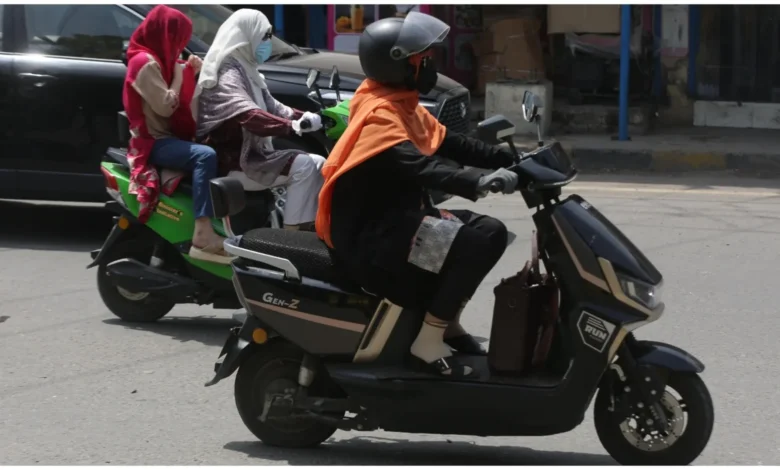
When Saba, a social media influencer, first rode a scooter through Peshawar, she drew curious stares and surprise from the public. Undeterred, she focused on the road ahead, bolstered by her family’s support. Her experience highlights how personal transport is slowly becoming a symbol of autonomy and empowerment for women in the city.
Motorcycles dominate Pakistan’s roads, yet women riders remain rare, particularly in conservative cities like Peshawar. Cultural expectations often dictate how women should ride, if at all. Saba and others defy these norms, showing that scooters and motorcycles can be safe, practical, and empowering modes of transport for women.
Official data reflects the gap: while women make up nearly half of Peshawar’s population, only 1,931 women hold driving licences in 2025. Each woman riding a scooter represents more than mobility; she represents a quiet but significant social change. Studies suggest that owning and riding a two-wheeler provides independence, challenges gender norms, and reduces reliance on unsafe public transport.
Experts note the broader impact of women’s mobility. Dr. Zafar Khan, a sociology lecturer at the University of Peshawar, observes that personal transport allows women to manage daily responsibilities independently, reducing dependence on male relatives and improving economic opportunities. Increased mobility also encourages participation in education, work, and community life.
Family support proves crucial in enabling women riders. Huma, a university student, credits her father for backing her decision to ride a motorcycle, giving her freedom and confidence. Women with such support report safer experiences and greater self-reliance, while inspiring others to challenge social barriers.
Public perception is slowly shifting. Journalists and community members note that visibility matters: as more women ride scooters and motorcycles, societal resistance diminishes. Early adopters face stares and criticism, but their persistence is fostering a broader acceptance of women’s freedom to move independently.
This growing presence of women on two-wheelers is more than a transportation choice; it represents empowerment, resilience, and the gradual reshaping of gender norms. Women like Saba and Huma are quietly transforming Peshawar’s streets, showing that independence and mobility go hand in hand. Their efforts reflect a larger movement toward social and economic empowerment, giving hope for a future where women freely claim public spaces.
“My Peshawar is wonderful,” Saba reflects, “and it is getting better for girls.”