Pakistan’s Landmark Rulings on Women’s Rights Signal Hope — But Real Change Needs Enforcement
Recent judicial decisions affirm women’s inheritance and job rights, but implementation remains key.

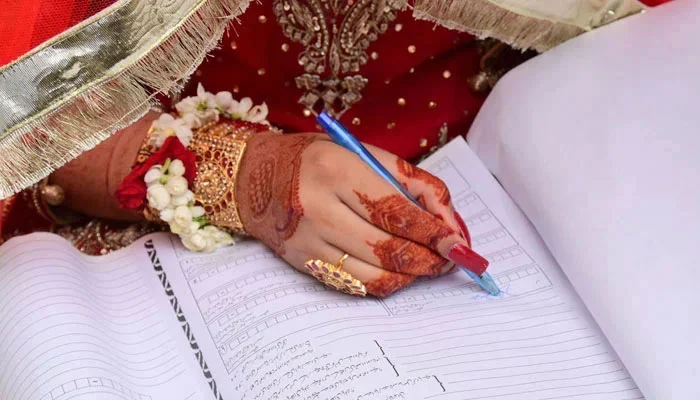
In a rare and welcome development, Pakistan’s judiciary has delivered a series of rulings that uphold women’s rights, marking a possible shift towards legal progress in a country where systemic discrimination against women remains entrenched. In a landmark decision, the Federal Shariat Court ruled that no tradition or custom can deny women their rightful share in family property, reaffirming their Islamic and constitutional inheritance rights.
This decision comes alongside another Supreme Court verdict, which allows married women to retain their eligibility for government jobs under their father’s quota. Together, these rulings challenge long-standing patriarchal norms and signal a potential shift towards a more equitable legal landscape for women in Pakistan.
Historically, Pakistani women have faced severe obstacles in inheritance matters, often denied property under the pretext of having received dowry or coerced into arranged cousin marriages aimed at retaining wealth within male lineage. In some extreme cases, women have even been forcibly “married” to the Holy Quran to block them from claiming property rights. These barbaric customs not only violate their agency but also ensure their economic dependence on male family members.
The Federal Shariat Court’s verdict dismantles these justifications, setting a powerful legal precedent. But the real test lies ahead. Legal victories must translate into real-life change. Women’s rights in Pakistan have long been undermined by patriarchal attitudes, which continue to dominate public discourse and societal expectations. When women march for their rights, the focus often shifts from their legitimate demands to the “spectacle” of the protests, undermining their struggle.
Economically, the exclusion of women from property and financial ownership does not just perpetuate inequality — it also hinders national development. Economists argue that empowering women boosts productivity and growth. Encouragingly, a slow shift is visible, as companies begin to recruit women into leadership roles, recognising the benefits of diverse and inclusive workforces.
Inheritance rights are especially critical. Many women remain in abusive marriages due to a lack of financial independence and housing security. Access to their rightful inheritance can offer safety, autonomy, and options.
However, Pakistan remains one of the lowest-ranked countries in gender equality. According to the World Population Review, it scores 0.57 out of 1, with a dismal 0.36 in economic participation and opportunity. Legal reforms are only the first step. Without strong enforcement mechanisms, public awareness, and legal literacy campaigns, these rulings risk becoming symbolic victories with limited on-ground impact.
To truly empower women, Pakistan must move beyond rhetoric. It must ensure equal access to wealth, healthcare, education, movement, and opportunity — for every woman, regardless of status or wealth.