How Are Pepsi’s “Playboards” Changing the Future of Women’s Cricket in Pakistan?
The world’s first billboards that give female cricketers real gear and real opportunity

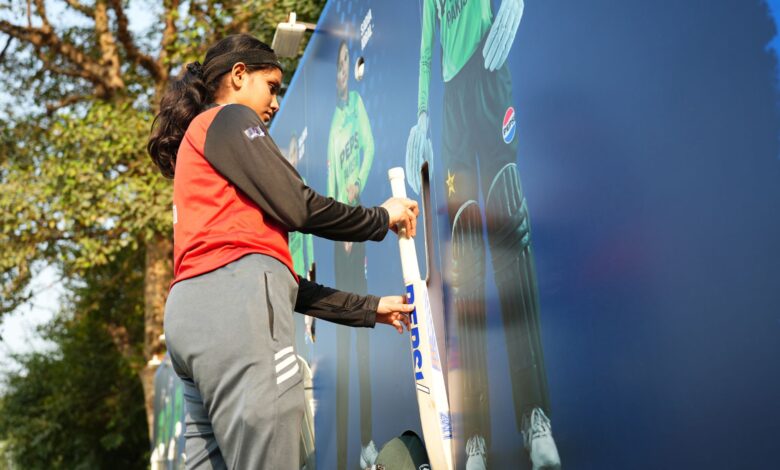
Cricket may be Pakistan’s greatest passion, but for countless young girls, the journey into the sport begins with obstacles that boys rarely face. Access to proper cricket gear remains one of the biggest challenges. Many aspiring female cricketers train in open grounds or narrow streets with no equipment of their own, often using oversized bats, worn-out gloves, or makeshift tools never designed for them. Without resources, support, or gear tailored to their needs, their dreams often stall long before they reach a professional pathway.
Pepsi, a long-standing supporter of Pakistan cricket, has taken a bold step to change this reality. In collaboration with the Pakistan Cricket Board (PCB), the company has launched an extraordinary initiative called Playboards the world’s first billboards that contain real, high-quality cricket gear made specifically for women. These aren’t just symbolic gestures placed on city walls. They are functional installations equipped with bats, pads, gloves, and helmets that young girls can pull off, use for practice, and return for others to benefit from. A billboard becomes a training kit; a public space becomes an equal playing field.
Placed in accessible outdoor locations, the Playboards resemble traditional cricket-themed billboards at first glance. But a closer look reveals something different: the equipment attached to them is real. This innovative approach puts professional gear directly into the hands of the girls who need it most, without cost, permission, or barriers. For many who have never held a properly sized bat or worn protective gear designed for female athletes, the experience is transformative. It signals a shift not only in access but in mindset women’s cricket deserves tools, investment, and opportunity.
The campaign was crafted with IMPACT BBDO and BBDO Pakistan, produced by Wide Angle Films, and driven by a compelling purpose. According to Hakima Mirza, Senior Director Marketing at PepsiCo Pakistan, the goal was not simply to celebrate the women’s cricket team from a distance but to influence real change. She emphasized that Pepsi wanted to address systemic gaps in the sport by equipping young girls with gear that finally fits their bodies, ambitions, and playing style. By doing so, Pepsi moves beyond sponsorship it becomes part of shaping the grassroots culture of women’s cricket.
The initiative also features Pakistan’s leading female cricketers, highlighting them not only as professional athletes but as role models guiding the next generation. For every girl who has borrowed her brother’s gloves or struggled with a bat too heavy to lift comfortably, the Playboards mark a turning point. They offer a starting point built around equality rather than compromise.
PCB Chairman Mohsin Naqvi echoed this vision, noting that the initiative aligns with the board’s goal to grow women’s cricket from the ground up. Access to proper gear is one of the first steps toward creating a more inclusive environment one where dreams are not limited by resources.
Ali Rez, Chief Creative Officer at IMPACT BBDO, described the Playboards as a revolution in sports equality. These billboards do more than display an advertisement they actively change lives. By making equipment accessible in public spaces, the campaign removes one of the earliest and most common barriers faced by young female cricketers.
In a country where cricket often begins in alleyways, empty plots, and rooftops, Pepsi has created a new place for dreams to take shape right under a billboard that offers more than visibility. It offers gear, confidence, and opportunity. Sometimes the path to becoming a national cricketer doesn’t begin with formal coaching or elite academies. Sometimes it begins with someone handing a young girl a bat made just for her, giving her not only the tools to play but the belief that she belongs in the game.