Pakistan Urges UN to Address Sexual Violence in Conflict Zones
Envoy highlights Kashmir and Palestine, calls for accountability and protection of women under foreign occupation

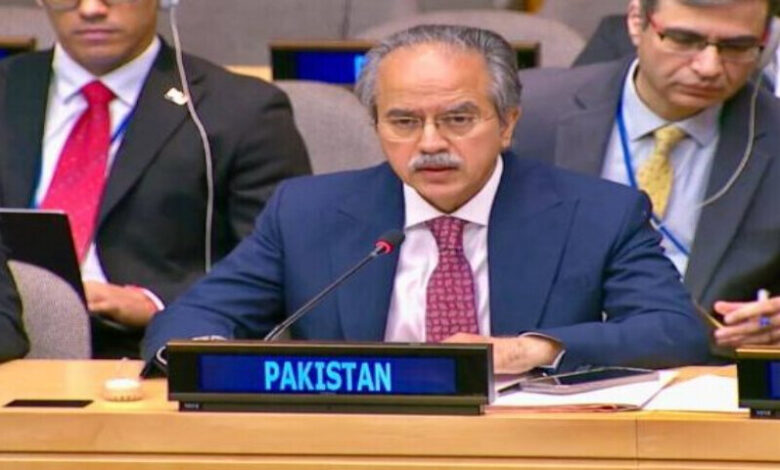
Pakistan has called on the United Nations Security Council to take stronger action against sexual violence in conflict zones, particularly in regions under foreign occupation such as Palestine and Indian Illegally Occupied Jammu and Kashmir.
Speaking at the Council’s debate on conflict-related sexual violence, Ambassador Asim Iftikhar Ahmad, Pakistan’s permanent representative to the UN, described sexual violence as a “grave crime” used as a weapon of war, torture, political repression, and illegal occupation. He stressed that such crimes must be “resolutely condemned” and addressed without delay.
He pointed out that in situations of occupation, the scale of systematic abuse often remains hidden due to restrictions on access and reporting, as well as immunity laws that shield occupying forces from accountability. “These cases must not escape international scrutiny,” he warned, urging urgent attention from both the Council and the Special Representative of the Secretary-General.
Citing the Occupied Palestinian Territories as a glaring example, Ambassador Ahmad noted that civilians face violence, forced displacement, and starvation. He highlighted reports documenting incidents of rape, forced nudity, and degrading strip searches, questioning why these abuses had not consistently been included in past UN reports.
The envoy drew parallels with Jammu and Kashmir, where, he said, sexual violence has long been deployed as a tool to punish and humiliate. He referred to evidence cited by the UN Human Rights Office in its 2018 and 2019 reports, as well as by international media and rights groups, which documented the use of rape by Indian occupation forces against women demanding self-determination. According to recent findings, nearly 10,000 women and girls have gone missing in Kashmir between 2019 and 2021.
Ambassador Ahmad called on UN Special Representative Pramila Patten to give focused attention to these situations. He proposed a comprehensive response that includes greater participation of women in peace efforts, special attention to occupied territories, stronger accountability mechanisms, and addressing root causes by resolving longstanding disputes.
He emphasized Pakistan’s continued commitment to protecting vulnerable populations, noting the contributions of Pakistani peacekeepers, including women peacekeepers, who serve in dangerous missions around the world. “Our blue helmets continue to stand at the frontlines, protecting civilians and upholding UN values,” he said.