How AI Deepfakes Threaten Women’s Safety and Identity in Pakistan
As AI deepfakes rise, Pakistani women face harassment, body image pressures, and weak legal protections.

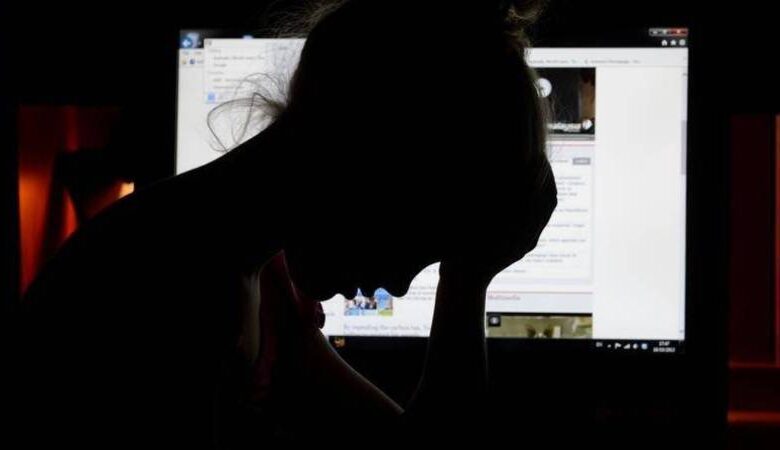
A young woman in Lahore fidgets before posting a photo online, while another in Karachi hesitates, worried if her textured skin will survive the ruthless scrutiny of algorithms. Meanwhile, men around them generate AI images of themselves with celebrities, celebrating the technology with awe and excitement. For women, however, the same technology feels threatening. Simply existing on the internet has become gendered, as synthetic media redefines not only how women are seen but also how they see themselves.
The Digital Rights Foundation reported in 2024 that globally, 90 percent of deepfakes target women, and in Pakistan, nearly 70 percent of women feel unsafe online. These statistics reveal that synthetic media is not just innovation — it is a weapon. The fear is no longer about being seen but about being digitally remade without consent, a fear deeply tied to culture and gender.
Film theorist Laura Mulvey’s concept of the “male gaze” in cinema described how women were turned into objects of visual pleasure, their value measured by appearance. That framework is now digital, automated, and magnified. AI-generated perfection creates women with flawless skin, no dark circles, no stretch marks — bodies stripped of reality. This machine gaze does not merely imitate the old male gaze but amplifies it, setting impossible beauty standards while fueling harassment and abuse.
The risks for women are twofold. First, they face violations of safety through harassment, surveillance, and deepfake exploitation. Second, they confront a psychological toll as AI perfection reinforces unattainable ideals. Young girls increasingly post AI-edited photos, which appear uniform, polished, and detached from humanity. Social media platforms become spaces of comparison, where real imperfections are seen as flaws rather than markers of authenticity.
In Pakistan, these challenges are intensified by cultural and legal gaps. A criminological review of the Prevention of Electronic Crimes Act (PECA) 2025 showed that only 10 percent of students surveyed had even heard of deepfakes. Just 15 percent understood the law’s provisions, and a majority admitted they would not report violations due to fear of social backlash. This silence is not ignorance — it is rooted in honor-based norms where women are punished even for fabricated content. In such a context, a single manipulated image can endanger reputations, strain family ties, or even risk lives.
The state’s response remains inadequate. Pakistan’s National Artificial Intelligence Policy 2023 focuses on advancing AI adoption but gives little attention to privacy, harassment, or gendered harms. While it references ethics and training, it fails to address deepfakes directly. Similarly, PECA, introduced in 2016, does not explicitly criminalize synthetic media abuse. Prosecutors are forced to stretch outdated categories, often leaving victims unprotected. Though amendments in 2025 criminalized “false and fake information,” the language remains vague, and enforcement weak.
Meanwhile, the harm continues to spread. A Dawn report earlier this year noted cases where AI-generated images of public figures surfaced online, showing how the issue extends beyond private harassment to public disinformation. Yet, women remain the most vulnerable. The combination of weak policies, cultural stigma, and technological ease has left them exposed to both external violations and internalized insecurities.
The implications are not only personal but societal. Studies show that women exposed to AI-enhanced beauty content experience higher rates of body dissatisfaction and mental health struggles. In a country already obsessed with fairness creams and unrealistic beauty standards, AI has automated these ideals into something even more unreachable. Thus, the pressure is relentless: women are unsafe both from manipulation by others and from their own self-perception shaped by digital perfection.
Addressing this requires urgent reform. PECA must be updated to explicitly recognize and criminalize AI-facilitated abuse. Law enforcement agencies need digital forensics training, while universities must include digital literacy in curricula to teach young women about their online rights. Most importantly, Pakistan’s AI policy should be reframed with human dignity and women’s safety at its center, not its margins.
Until these steps are taken, women will continue to navigate social media with hesitation, fearing both harassment and unrealistic beauty expectations. The machine gaze is not just about seeing; it is about redefining women without consent, turning them into digital constructs they cannot match. For Pakistani women, true online safety means more than avoiding abuse — it means reclaiming the right to exist authentically, without being remade by the lens of a machine.