Empowering Women at Fuel Stations: A New Era of Change in Pakistan
Pakistani fuel stations are embracing gender inclusivity, with women now confidently working as attendants, overcoming societal challenges and empowering their families.

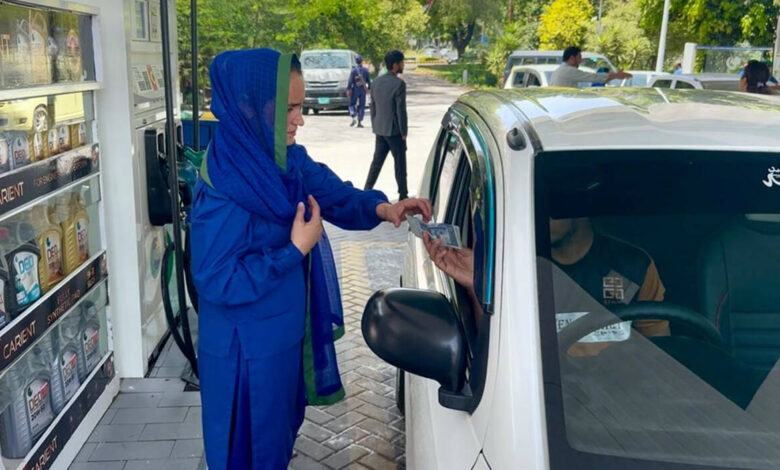
In Pakistan, a country where traditional gender roles often limit women’s professional opportunities, a quiet revolution is taking place at fuel stations. Once dominated by men, these spaces are now being reshaped by women like Sumeera Bibi, who have broken free from societal constraints and carved a path toward financial independence.
Sumeera’s journey from a struggling homemaker to a skilled fuel station attendant is nothing short of inspiring. A mother of five, she was once trapped in an abusive marriage to a drug addict, which led her to seek refuge with her sister. With no income and relying heavily on her sister’s support, Sumeera faced numerous hardships. However, her life changed dramatically when she secured a job as a fuel station attendant at a PSO station in Islamabad.
“Before this, I had never worked. I had never even dealt with strangers,” Sumeera recalls. “Now, I deal with all kinds of people every day. There’s no shame in hard work.” Today, Sumeera not only manages to raise and educate her children but also stands as an example of resilience and empowerment in her community. She works long shifts, six days a week, earning a steady salary, receiving annual bonuses, and benefiting from free medical care—luxuries that were once out of her reach.
Sumeera’s experience reflects a larger shift in Pakistan’s workforce. The trend of employing women at fuel stations started gaining momentum with the launch of Pakistan’s first all-female staffed fuel station in Johar Town, Lahore, last year. Since then, hundreds of women have followed suit, proving their worth in a field traditionally reserved for men. In the federal capital of Islamabad, women are now working alongside male attendants at numerous stations, taking on roles that were once unthinkable for women in the country.
Despite the challenges, such as societal skepticism and occasional harassment from customers, women like Sumeera and her colleagues are pushing back against long-standing stereotypes. Sana, another female fuel station attendant, shared her experience: “Some customers praise our work, saying it’s great that we are working in an open environment instead of being confined to an office, while others discourage us, saying it’s not suitable for women.” However, with the support of management, who ensure a secure working environment with CCTV surveillance and protective measures, these women are overcoming these barriers with grace.
Rukhsana Bibi, who works at a PSO station in Islamabad’s F-8 sector, also feels empowered by her role. Coming from a middle-class background with limited education, she joined the workforce to support her family after her husband’s income wasn’t enough to cover household expenses. “I stepped out of my home not just to earn but to build a better future for my children,” she explains.
Jahanzaib Abbasi, the Deputy Division Manager at PSO Islamabad, notes that the company began hiring women during the COVID-19 pandemic and has since received overwhelmingly positive responses. Many women have been with the company for over a year and are satisfied with their jobs, proving that this progressive step has been beneficial for both employees and employers.
For customers like Azka Durrani, witnessing women working confidently at fuel stations is a symbol of progress. “Whenever I see these ladies working at a fuel station, I feel empowered,” she says, acknowledging the societal shift toward gender inclusivity.