Bangladesh Sees Alarming Rise in Rape Cases Amid Security Crisis
Women’s rights groups warn of worsening law and order as reports show sexual assaults nearly doubling, with activists blaming rising anti-women sentiment.

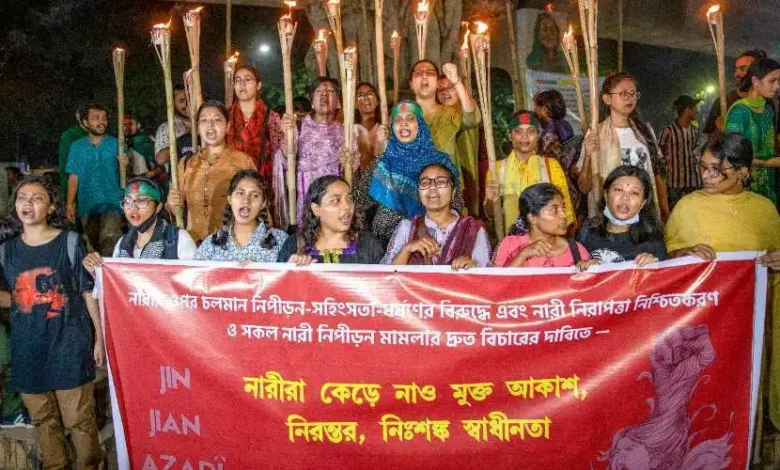
Bangladesh’s leading women’s rights organization, Bangladesh Mohila Parishad, has reported a dramatic surge in rape cases across the country, linking the rise to worsening security conditions and growing hostility toward women. The group’s president, Fauzia Moslem, said on August 27 that the number of sexual assaults recorded in the first six months of 2025 nearly equaled the total for the entire previous year, underscoring what activists call an “alarming crisis.” She noted that violence against women tends to escalate whenever law and order deteriorates, warning of a deliberate attempt to create an anti-women atmosphere in society.
The group based its findings on cases reported in national newspapers, which are often considered conservative estimates given the widespread underreporting of sexual violence. According to the data, 364 rapes were recorded in 2024, while 354 incidents had already been documented in just the first half of 2025. The organization emphasized that the real figures are likely much higher due to social stigma and fear of reprisal that prevent many survivors from coming forward.
Police figures add further weight to the concern, showing that more than 11,000 women and children were subjected to various forms of repression in the first six months of 2025. This marks a steep rise from just over 9,000 in the same period last year, highlighting a worsening trend in violence and insecurity. While police did not comment directly on the increase in sexual assaults, spokesperson A H M Sahadat Hossaine acknowledged that the overall deterioration of security is deeply troubling. Describing the situation as a crisis, he stressed that authorities are trying their best to contain it, though challenges remain immense.
The gravity of the crisis is echoed by other rights organizations. Ain O Salish Kendra (ASK), another prominent rights group, confirmed that its monitoring also points to a sharp increase in gender-based violence this year. ASK coordinator Abu Ahmed Faijul Kabir said the situation was “undoubtedly alarming” and diverged starkly from the expectations many had after the 2024 revolution, which toppled the long-standing government of Sheikh Hasina. Instead of ushering in greater freedoms and safety, Kabir noted, the post-revolutionary period has seen women pushed into deeper vulnerability.
Fauzia Moslem argued that women are facing increasing pressure as extremist narratives gain traction. She pointed to growing communalism and hatred directed at women, saying such attitudes have created a more dangerous environment. While she did not name specific groups, activists have voiced concern over the rising influence of hardline Islamist factions in the country. These groups, they warn, are fostering regressive attitudes and undermining the struggle for gender equality in Bangladesh.
The surge in violence comes at a politically sensitive time, with the Muslim-majority nation of 170 million people preparing for national elections scheduled for February 2026. These will be the first polls since the mass uprising that ended Sheikh Hasina’s authoritarian rule last year. Women’s rights advocates fear that without urgent action, the gains from the revolution could be eroded, leaving women even more marginalized in the country’s evolving political landscape.
Both Mohila Parishad and ASK are calling for immediate government action, stronger law enforcement, and policies to ensure women’s safety and justice. They stress that violence against women is not only a human rights issue but also a national crisis that threatens social stability and democratic progress. For many activists, the rise in sexual assaults represents a test of whether Bangladesh’s post-revolutionary society can deliver on its promises of freedom, equality, and security for all citizens, especially women.