Women Take the Wheel in CPEC’s Next Phase of Development
From truck driving in Thar to garment production in Gwadar, women are reshaping Pakistan’s economic future through CPEC

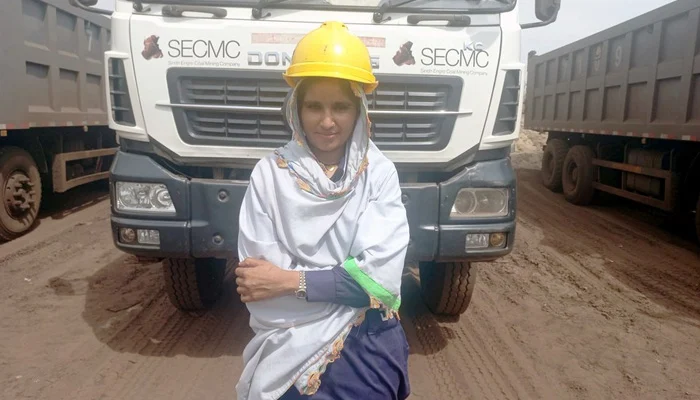
The China-Pakistan Economic Corridor (CPEC), once synonymous with highways, ports, and power plants, is now fuelling a powerful transformation in Pakistan — one driven by women stepping into the workforce, reshaping industries, and redefining traditional roles.
As CPEC moves into its second, people-centric phase, a new wave of empowerment is rising across the country. Women from historically marginalized areas are not only entering the workforce — they are leading it.
Driving Change in Tharparkar
In the conservative district of Tharparkar, Sindh, 70 women are rewriting history by taking on roles as heavy dump truck drivers under the Thar Block II Project, managed by the Sindh Engro Coal Mining Company (SECMC). These women, trained under CPEC-linked programs, are challenging deep-rooted gender norms in one of Pakistan’s most traditional regions.
This milestone is not just symbolic. It represents a tangible shift in employment patterns and gender inclusion, giving women economic agency and social recognition previously considered out of reach.
Stitching New Futures in Gwadar
Further west in Gwadar, a women-led tailoring centre has been established within the Gwadar Port Free Zone. Backed by China Overseas Ports Holding Company (COPHC) and the Chinese Consulate, this initiative trains and employs over 20 women in garment production, with stipends offered as they produce uniforms for port staff.
These efforts are helping turn CPEC into more than just an infrastructure project — it is becoming a blueprint for inclusive development.
A Shift in Vision: From Roads to People
Umair Pervez Khan, Secretary of the Consortium of Asia Pacific Studies (CAPS), affirms that CPEC is evolving beyond its traditional scope. “CPEC is not just about roads and trade. It is a platform of opportunity — and women are at the heart of this transformation,” he said.
The second phase of CPEC prioritizes special economic zones (SEZs), community empowerment, vocational training, and sustainability. According to Khan, the success of these goals hinges on ensuring that women are integrated from the very beginning.
SEZs like Rashakai (Khyber Pakhtunkhwa) and Dhabeji (Sindh) are being positioned as future hubs of employment. But for them to succeed long-term, Khan insists on embedding women into the economic structure through training, supportive work environments, and inclusive policies.
Inclusion in Action
Progress is already visible:
-
Tharparkar (Sindh): 70 women trained as dump truck drivers; 21 others in solar energy maintenance
-
Gwadar (Balochistan): 20+ women working in garment production
-
Punjab: Increased female participation in textile units due to improved energy in SEZs
-
Khyber Pakhtunkhwa: Better roads have enabled women to access urban jobs and vocational centres
-
Sindh Police: 191 female officers have joined CPEC’s dedicated security force
These numbers point to more than workforce participation — they reflect a cultural shift in regions where women’s mobility was once limited.
Building a Gender-Inclusive Economy
Khan emphasizes the need for vocational centres, daycare facilities, and women-friendly workplace designs within SEZs. “The only way forward is to build inclusion into the foundation. Women shouldn’t be brought in later — they must be part of the system from day one.”
He also notes that awareness campaigns and community-level partnerships are vital to sustaining momentum. When one woman takes a bold step forward, others are more likely to follow.
A New National Narrative
CPEC is no longer just a story of roads, trade, and megaprojects. It’s also a story of lives transformed, especially for women in rural and underserved regions. From dump trucks to solar panels, tailoring to textiles, Pakistani women are proving that they are not just participants but pivotal contributors to the country’s economic future.
As the Belt and Road Initiative deepens, Pakistan is uniquely positioned to set a regional example in gender-inclusive development. With targeted investment, supportive infrastructure, and a national commitment to equality, women can drive the next era of economic progress — not from the sidelines, but from the front seat.