Indonesian Women’s Alliance Demands End to State Violence Amid Widening Unrest
API rallies in Jakarta urge withdrawal of military from civilian duties as protests grow, leaving at least 10 dead in nationwide unrest.

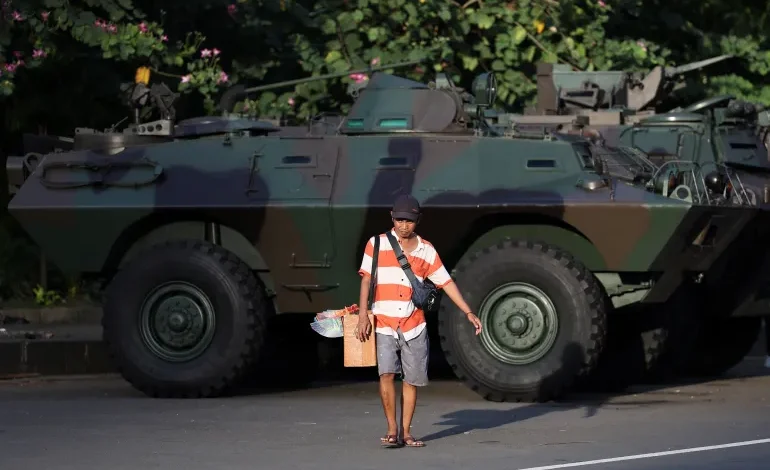
About 300 members of the Indonesian Women’s Alliance (API) rallied outside parliament in Jakarta on Wednesday, demanding an immediate end to state violence and the withdrawal of the military from civilian security operations. The protest came amid a week of mounting unrest that has already claimed at least 10 lives across the country.
The demonstrations were sparked on August 28 after a motorcycle taxi driver was killed when an armoured police vehicle ran him over near crowds in Jakarta. The incident ignited widespread anger that quickly spread into nationwide protests, fuelled further by discontent over low wages, rising taxes, and lawmakers’ pay.
The growing pressure forced President Prabowo Subianto to reverse his earlier decision to increase benefits for members of parliament. However, he also instructed security forces to take firm action against rioters and looters after government buildings and homes belonging to political party members were attacked and, in some cases, set ablaze.
On Tuesday, unrest intensified when clashes erupted near two universities in the city of Bandung. Student groups and authorities reported police using rubber bullets and tear gas to disperse crowds, bringing the death toll from the protests to at least 10.
At the Wednesday rally, API leaders delivered a series of demands directed at the government and senior security officials. They called on President Subianto to halt the deployment of soldiers in civilian areas and urged Defence Minister Sjafrie Sjamsoeddin and National Armed Forces Commander Agus Subiyanto to order troops back to their barracks. The alliance also demanded the resignation of National Police Chief Listyo Sigit and the release of all detainees held without charge.
In strong remarks, API denounced what they described as the criminalisation of dissent. The group pressed authorities to stop targeting activists, journalists, and legal aid workers, calling for the immediate release of all those detained during the protests. Their message was clear: the government must respect the rights of Indonesians to assemble, associate, and protest peacefully without intimidation or repression.
The demands come against a backdrop of escalating public frustration over economic and political issues. Many Indonesians have expressed anger not only at the violence used against demonstrators but also at the government’s perceived failure to address the rising cost of living and growing inequality. The protests have quickly grown beyond the initial incident, becoming a broader platform for citizens to voice their discontent.
International human rights groups have also weighed in. Amnesty International condemned the crackdown in strong terms, describing the rising death toll as unacceptable. “The increasing number of deaths from the crackdown on protests in Jakarta and other regions in Indonesia is alarming. Nobody should die while exercising their right to freedom of expression and peaceful assembly,” said Montse Ferrer, Amnesty’s deputy regional research director.
For many Indonesians, the use of the military in policing duties has long been a source of concern, recalling the authoritarian era when the armed forces frequently intervened in civilian affairs. The API and other groups are now demanding a decisive break from that past, insisting that the military’s role must be limited to defence, not the suppression of protests.
The coming days will be critical as the government weighs its response. With anger still simmering, analysts warn that further escalation could deepen the crisis unless authorities take concrete steps to address public grievances and curb the use of force. For now, the voices of the protesters, particularly those of women demanding peace and justice, continue to echo across Indonesia’s streets, calling for accountability, dignity, and respect for democratic rights.