Pakistan’s Unending War on Women: A National Emergency of Moral Failure
From Bano Bibi to Noor Mukadam, every name is a tombstone of a silenced life

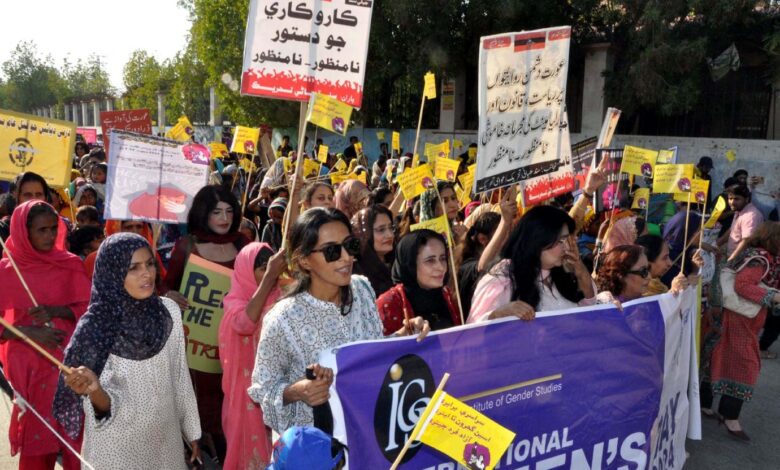
There are moments when words collapse under the weight of violence. In Pakistan, those moments come too often. The killing of Bano Bibi by men posing as her protectors only deepens the unending lament that runs through the names of Mukhtaran Mai, Qandeel Baloch, Noor Mukadam, Sana Yousaf, and countless others. Each story carries its own details, but the conclusion is always the same: women punished for daring to live with agency, for stepping outside the boundaries drawn by patriarchal authority. What follows is silence, outrage on repeat, and a nation that quickly forgets.
This is not new. A country that once proudly presented Benazir Bhutto, the first female Prime Minister of the Muslim world, as a symbol of progress, also saw her assassinated. Pakistan parades the optics of empowerment but consistently erases the women who step too far out of line, particularly those without elite protection. Every killing becomes another marker of the collective failure of state and society.
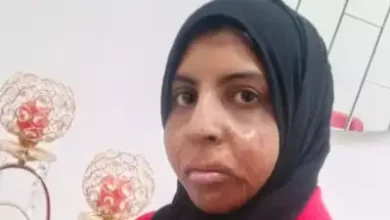
I remember the silence of women who came to Darul Aman, a government-run shelter where I worked as a UNICEF intern. Their bodies bore evidence of violence—burn scars, bruises, hollowed eyes. One woman had escaped barefoot at night, another was imprisoned by her family for “dishonoring” them and later killed, only for her murderer to be pardoned. These women were not anomalies. They were reminders of how deeply violence is embedded into the system, normalized, excused, and repeated.
Meeting Mukhtaran Mai left an unforgettable mark. A survivor of one of the most brutal acts of public humiliation, she had transformed her pain into activism. Her courage was extraordinary, but the sorrow in her eyes was unbearable. She was both the victim and the fighter, and in that duality lay the cruelest truth—Pakistan celebrates its women only when they are silent martyrs, not when they scream for change.
Qandeel Baloch dared to be bold, to live unapologetically online, and for that audacity, her own brother murdered her in the name of “honor.” Noor Mukadam’s killing in the capital city showed that privilege and power protect perpetrators more than they protect women. And Sana Yousaf, just 16, was murdered for refusing a man’s attention. Her story was swiftly reduced to a “personal matter.” What remains are viral videos and the same vile suggestions that a woman’s visibility is an invitation to violence.
The nation treats women’s deaths like cosmetic rituals—painting over corpses with symbolic empowerment while ignoring systemic causes. We see token gestures: a female officer in uniform paraded as proof of progress, laws passed but rarely enforced, empowerment used as a mask for reality. Even more tragic is how many women, deprived of real freedom, have internalised these illusions of empowerment and learned to celebrate crumbs as victories.
The truth is stark: in Pakistan, when a woman leaves, she is punished. When she speaks, she is silenced. When she dares to live, she is killed. This is not simply a social issue; it is an existential one. The Feminist Fatality is about the erasure of the female being, not just the body. It is about making women invisible, reducing their lives to fragile threads easily cut by the convenience of male anger and social complicity.
This is not just state failure. It is a collective moral collapse—a society that raises sons as executioners and teaches daughters how to die quietly. Outrage has become ritual, hashtags have become memorials, but nothing changes. It is long past time to call this what it is: a national emergency of conscience.
The names of these women must not be confined to fleeting news cycles or courtroom trials. They belong in legislation, in school curricula, in mosques, in boardrooms, in every arena where their existence has been denied. Only then will we begin to confront the reality we keep pretending doesn’t exist.