Why Women Hold the Key to Economic Revival
With only 21% female participation in the workforce, Pakistan’s economy is running on half its potential — empowering women could add up to $85 billion to its GDP.

Pakistan’s economy continues to struggle with recurring fiscal and external crises, yet one of its most powerful solutions remains largely ignored — women’s participation in the workforce. Despite making up nearly half the population, women account for just 21% of Pakistan’s labor force, one of the lowest rates globally. Countries like Bangladesh (38%), India (29%), and Saudi Arabia (37%) have made significant progress, proving that reforms can transform economies.
The economic cost of excluding women is staggering. The World Bank estimates that bridging Pakistan’s gender gap in labor participation could boost GDP by up to 30%, equivalent to $75–$85 billion in additional output. This isn’t just about fairness; it’s about national growth. The absence of women in formal employment reduces productivity, limits innovation, and weakens the country’s middle class — a crucial driver of sustainable development.
Cultural barriers, lack of safe transport, limited childcare facilities, and informal labor structures all restrict women’s ability to work. According to the Pakistan Bureau of Statistics, over 70% of employed women work in agriculture or home-based sectors, often unpaid or underpaid. This invisibility not only distorts economic data but also excludes women from essential social protections, such as pensions and healthcare. The UNDP reports that women in Pakistan spend an average of 4.5 hours daily on unpaid care work, compared to just one hour for men.
Education doesn’t guarantee participation either. The Pakistan Institute of Development Economics (PIDE) found that nearly half of women with university degrees are not part of the labor force. This highlights a huge inefficiency — skilled and educated women remain sidelined while the country complains of a lack of talent. When women don’t work, households lose a second income, reducing their capacity to save, invest, or educate their children.
The middle class, already under strain from inflation and limited job opportunities, suffers the most. Dual-income families are more resilient and contribute to consumption and tax revenue, which strengthens the economy. By limiting female employment, Pakistan is depriving itself of millions of potential middle-class households that could drive growth and stability.
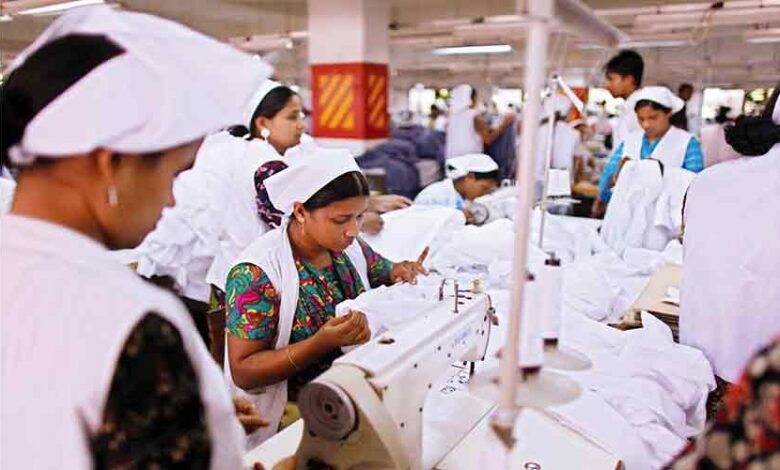
Regional examples show the impact of female inclusion. In Bangladesh, women’s participation in the garment industry lifted millions out of poverty and powered consistent growth above six percent for over a decade. Saudi Arabia’s rapid rise in female labor participation, from 20% in 2019 to 37% in 2023, was achieved through flexible work laws, remote job opportunities, and enforcement of equal pay policies. These models prove that reform is possible — even in traditional societies.
For Pakistan, the path forward is clear. It must prioritize female inclusion as a macroeconomic goal, not a social issue. Policies such as childcare tax credits, flexible work arrangements, and incentives for companies that hire and retain women can help. Public-private transport partnerships, workplace safety reforms, and targeted financing for women-led businesses would also make a significant impact.
The IMF estimates that gender inequality in South Asia costs over $1 trillion in lost productivity annually. For Pakistan, that translates to a loss of up to 3% of GDP growth every year. Even a modest 10% increase in women’s participation could raise annual growth by 1.5 percentage points — enough to change the country’s economic trajectory.
Pakistan’s future prosperity depends on how effectively it empowers its women. This is not just about inclusion; it’s about transformation. By integrating women into the workforce, Pakistan can build a stronger, fairer, and more competitive economy — one that runs on its full potential, not half its engine.