30 Years of the Beijing Declaration: Progress and Challenges in Women’s Rights
Global leaders reflect on achievements and call for urgent action to advance gender equality

In 1995, the Beijing Declaration was adopted as a groundbreaking blueprint for women’s rights, setting in motion one of the most ambitious global commitments toward gender equality. Thirty years later, leaders from governments, civil society organizations, academia, and the private sector gathered in Beijing to mark this milestone and reflect on its impact. The atmosphere was both celebratory and urgent, as speakers acknowledged the progress achieved while emphasizing the critical gaps that remain.
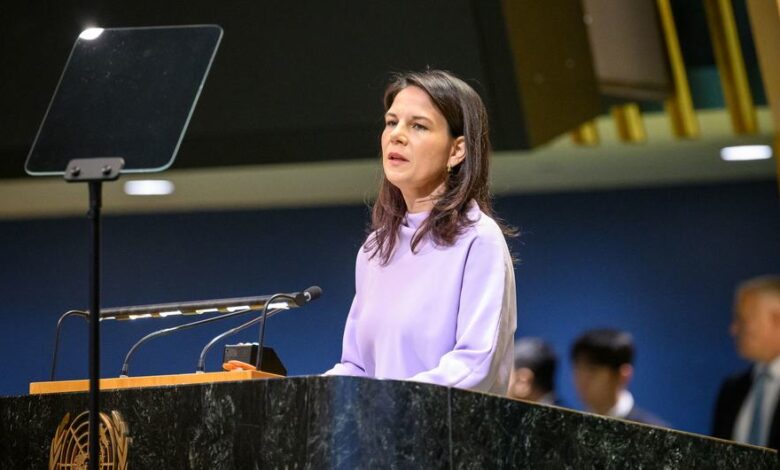
German Foreign Minister Annalena Baerbock captured the significance of the moment, highlighting that positions of influence once deemed unattainable for women are now increasingly common. Her words echoed the rallying cry first voiced by First Lady Hillary Clinton at the 1995 conference: “women’s rights are human rights.” This sentiment has become a guiding principle for generations of activists and policymakers, underscoring the central role of women’s empowerment in building fairer societies.
UN Secretary-General António Guterres described the Beijing Declaration as “the most ambitious global political commitment on women’s rights ever achieved.” He noted that the framework has been instrumental in advancing legal protections for women, expanding political participation, and ensuring better access to education worldwide. The ripple effect of these measures is visible in tangible progress across many nations. Girls are now far more likely to complete their education than at any time in history, a crucial step in breaking cycles of inequality.
Sima Bahous, Executive Director of UN Women, echoed this sense of accomplishment while also sounding a note of caution. She pointed out that the number of women in parliament has nearly doubled since the declaration and that almost 100 discriminatory laws have been overturned globally in just the past five years. Each step forward, she emphasized, proves the undeniable truth that gender equality benefits everyone. Yet she also stressed that progress has been uneven and insufficient, warning that more decisive action is urgently needed.
Despite these achievements, the challenges are sobering. A recent UN Women report revealed that none of the gender equality Sustainable Development Goals are on track to be achieved. Even more troubling, 676 million women and girls are currently living under the threat of deadly conflict, the highest number recorded since the 1990s. This reality underscores how fragile gains can be in the face of war, political instability, and systemic violence.
Cecilia Suárez, UN Global Advocate for the UN Spotlight Initiative, highlighted that despite these setbacks, initiatives designed to end violence against women and girls have shown promising results. She argued that leadership and political will are key to ensuring that reforms take hold, stressing the importance of tangible action over symbolic promises. Her words reinforced the message that real change requires commitment at the highest levels, not just rhetoric.
Perhaps the most powerful testimony came from human rights activist and Nobel laureate Nadia Murad, herself a survivor of ISIL’s crimes against women. She called on the international community to prioritize funding for women’s organizations working on the frontlines of conflict, guarantee women’s participation in peace and security processes, and ensure justice for survivors by holding perpetrators accountable. Her appeal reminded participants that for millions of women and girls, the fight for dignity, safety, and equality is not an abstract discussion but a daily struggle for survival.
The commemoration of the Beijing Declaration’s thirtieth anniversary served as both a reflection and a call to action. It was a reminder of how far the world has come since 1995 and how far it still must go. Progress has been real and measurable, but it has also been fragile and uneven. The leaders and advocates gathered agreed that the next generation of women and girls deserves more than promises—they deserve the lived reality of justice, equality, and dignity. The responsibility now lies with governments, institutions, and societies to transform commitments into lasting change.