
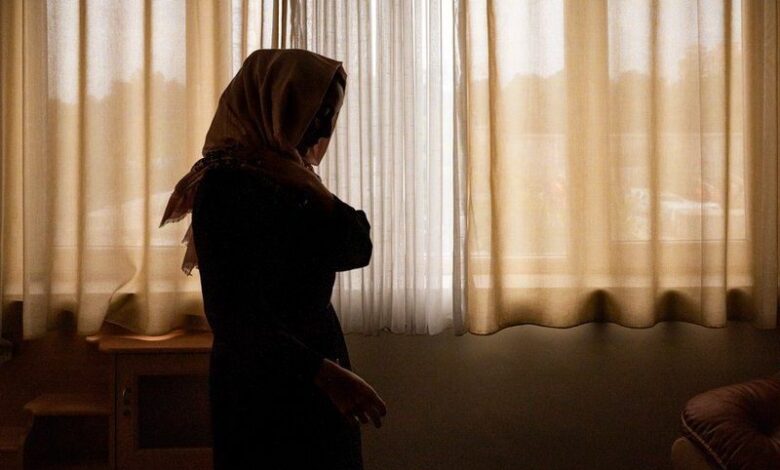
The unmarried couple who planned to elope would be stoned to death by the Taliban. The stoning was scheduled to take place the following day, July 29 of 2023, according to sources cited in the story that appeared in a number of local media outlets in Afghanistan, including the well-known newspaper 8 Am.
The couple last summer was not, in the end, stoned to death. According to people close to the couple, the Taliban instead sentenced them to five years in prison in the Baghlan province, as reported by Zan Times. Interest in the lovers’ tale vanished when the day of their execution arrived without a public stoning. However, Zan Times pieced together Qadria and Atiq’s story over the last five months. He is the 35-year-old head teacher, married, and the father of six children, while she is a 28-year-old teacher and mother of three.
Zabihullah Mujahid and other local and senior Taliban spokesmen refused to discuss the case with Zan Times despite being asked at least 14 times for information. Despite the fact that the crime the Taliban charged them with is unclear, by speaking with the couple’s family, friends, and relatives, we demonstrate how one small decision—to love someone and elope—can change their lives and the lives of their families.
Who are they and when did they begin dating?
At the age of seventeen, Qadria was a student in high school when her family tied the knot with her cousin, Muhammad Azam. “She wanted to study and become a lawyer; she didn’t like her husband and she didn’t agree with the marriage,” explains a school friend. Due to a bride exchange, Qadria’s brother married her husband’s sister as well.
Following their marriage, Qadria’s husband moved her to a distant area of Baghlan, preventing her from pursuing her dream of becoming a lawyer by taking the university entrance exam. Qadria reluctantly accepts her destiny and becomes a mother. After completing a course in teacher preparation, she begins working as a schoolteacher while caring for her kids.
They ultimately relocated to Qadria’s parents’ home in Pul-e Khumri City, the provincial capital of Baghlan. Qadria was employed by Zamirabad Primary School, which educates both boys and girls up to the sixth grade. She got to know the headmaster of the school, Atiq, there. Her spouse departed for Iran in search of employment not long after Qadria began her new position.
Various individuals, such as Qadria’s friends and coworkers, claim that she started a romantic relationship with Atiq when her husband was in Iran. “Qadria spent her time with her three children on the days that her husband was not present,” a close friend tells Zan Times. “She became more and more attached to Atiq during nights filled with longing and despair, and ultimately she made the decision to stay with her love.”
In contrast, Qadria’s husband, Muhammad Azam, asserts that throughout their twelve years of marriage, he and she “had a happy life together.” He asserts that Qadria left him against his will and that he never thought she would go out on another man.
The crisis in Qadria’s family, according to her father Abdul Khalil Rahmani, started on Wednesday, July 5, 2023, when his daughter left for work at the school and never came home. He claims that it took them days to find out that Atiq had brought Qadria to Kabul despite their intensive search for her. Qadria’s parents stated that Atiq “kidnapped” her in their initial interview with Zan Times. The Taliban began looking for the couple after Abdul Khalil Rahmani filed a complaint against Atiq.
A few weeks later, the couple was taken into custody by the Taliban in Kabul and sent to the prison of Kelagai in the Baghlan province, where Qadria and Atiq remain to this day.
The story of what happened according to Atiq’s father is entirely different. Atiq and Qadria were not romantically involved, according to Najibullah Sediqi, who speaks to Zan times. According to him, Qadria’s husband filed for divorce over the phone, but her father stopped her from going to court and threatened to kill her. So Qadria turned to Atiq and begged him to help her get away from her violent father.
To support his account, Najibullah Sediqi provided a brief audio clip of a woman identifying herself as Qadria. The woman says in the one-minute, 26-second audio file, “My husband divorced me over the phone two years ago. I told my father, and he beat me, telling me to sit quietly in his name as his wife even if he divorced you 100 times and never came back for another 10 years.” Despite my repeated reminders that I was divorced, they beat me and made death threats against me.
It sounds like the woman is reading from a script because of how stilted her voice is. We played her father the recording since we weren’t sure if it was Qadria’s voice, and he was able to confirm that it was.
Her spouse and father are adamant that there was never a divorce. In order to take care of Qadria, her father says he brought her and her kids to his home, but he denies ever trying to hurt her. It was when Atiq’s wife visited him at home and begged him to keep Qadria from meeting her husband that he claims to have learned about the love affair. “There was a commotion in the alley,” says a neighbour, confirming the incident. “You shameless and disgraced woman,” Atiq’s wife had come to confront Qadria. “You are a married woman with kids; why are you chatting with my spouse?”
Arrest due to allegations of moral transgressions
Even though many women were escaping domestic abuse, escaping or eloping has long been considered a “moral crime” that carries consequences. The Afghan government, which is supported by the United States, was urged by Human Rights Watch (HRW) in May 2013 to “take urgent steps to halt an alarming increase in women and girls imprisoned for’moral crimes.'” About 600 women and girls were incarcerated for such “moral crimes” as of May 2013, according to a report by HRW, and this number was rising quickly. “Approximately 95% of girls and 50% of women imprisoned in Afghanistan were accused of the’moral crimes’ of ‘running away’ from home or zina (sex outside of marriage),” according to HRW’s 2012 report.
And the Taliban’s return did not mark the start of stoning for the “crime” of elopement. After being discovered eloping with her partner in 2015, a teenage girl by the name of Rukhshana was stoned to death. In a July 2017 New York Times article, Mujib Mashal and Zahra Nader stated that “she was buried waist deep in dirt and stoned to death in October 2015 by a gang of men the government said were Taliban.” The country was stunned by the incident.
When it came to justice and the value placed on women, we could only think of one or two “lawless afghan provinces.” Afghanistan is a lawless country for women now that the Taliban is in power. No transgression of the strict code of the Taliban is too minor. Since January 2024, women have been detained by Taliban forces in public on suspicion of failing to adhere to the Taliban’s official dress code.
Due to these severe regulations, many couples aren’t even permitted to celebrate their love on Valentine’s Day—let alone leave their houses. The days of Afghan youth celebrating Valentine’s Day with cakes, red roses, and balloons shaped like hearts are long gone. The Taliban have outlawed the observance of Valentine’s Day for the previous two years. On February 14, they keep an eye out for any signs of celebration by policing the streets and gift shops. Anyone who breaks the rules faces consequences. Instead of hope, the nation’s youth are now overcome with depression as they are unable to publicly celebrate their love.
The ramifications of Qadria and Atiq’s arrest on society
Even though Qadria and Atiq’s relationship is a private decision between two adults, it is illegal in Afghanistan and has an impact on their families and relatives. The effects are felt by individuals and families according to how close or how far they are from the accused. Naturally, in this kinship chain, the woman or girl is always largely to blame for defaming and embarrassing the family.
After word spread that Qadria and Atiq had been arrested, a family friend who lives in the same neighbourhood as Qadria told Zan Times that Qadria’s family has become socially isolated. Numerous family members have severed their connections with her, and her mother seldom attends social events. The friend says, “They are upset with her family and asked why they didn’t kill Qadria to restore the family and tribe’s honour. So they stopped hanging out with her family.”
The father of Qadria, Abdul Khalil Rahmani, claims that his daughter has frequently expressed regret for her actions: “She says I made a mistake, father, I made a big mistake.” I destroyed my family’s future and that of my kids. She acknowledges her error, but it doesn’t help anymore—the family’s honour cannot be recovered.
When word of her daughter’s disappearance spread, Qadria’s mother, Fawzia, claims that their neighbours and relatives humiliated and reprimanded her: “It is unbearably painful and humiliating. May God not even bring my downfall upon my adversary! In a phone interview, Fawzia tells Zan Times. She is now looking after Qadria’s kids. Fawzia claims, “The kids cry from morning till night, pleading with me to bring their mother to them.” Not even three years old separates the youngest.
Regarding Qadria, her existence in the Baghlan prison of Kelagai has been difficult. A source who is aware of her circumstances behind bars claims that she had been beaten multiple times, including being whipped 150 times for an alleged protest inside the prison. The source says, “She was beaten so badly that she was hardly able to move her body.” “She had bruises all over her body.”