Pakistan’s Battle for Women’s Freedom Marks a Critical Moment
Amid inequality, violence, and cultural constraints, women in Pakistan continue to fight for dignity, opportunity, and the right to live unafraid.

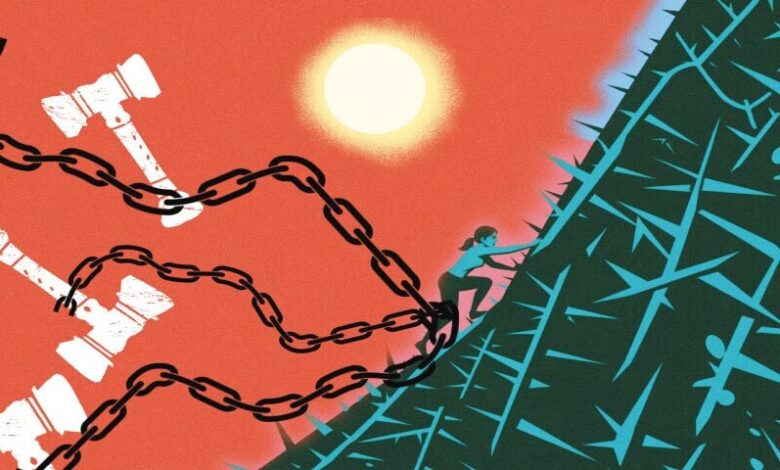
In Pakistan, womanhood exists between admiration and suppression. Women are celebrated as symbols of purity and strength, yet denied autonomy over their own lives. The contradiction is woven deep into the country’s cultural fabric — where poetry glorifies women, but society often limits them, controls them, or silences them.
This conflict becomes painfully clear in global assessments. The Global Gender Gap Report 2024 places Pakistan at 145 out of 146 countries, highlighting deep-rooted disparities in education, health, political voice, and economic participation. UNICEF’s findings show that nearly 47% of girls leave school before completing primary education, driven out by poverty, early marriages, and social restrictions that prioritise tradition over opportunity.
But the statistics only hint at the real crisis. Behind each percentage is a woman’s life shaped by fear, silence, or resistance. Domestic violence, despite being criminalised, remains widespread. The Human Rights Commission of Pakistan notes that almost one in three women has experienced some form of domestic abuse, while over 4,500 cases of violence against women were officially reported in 2023 alone. Thousands more never reach a police station, hidden under the pretext of protecting “family honour.”
The idea of honour has become one of the most dangerous weapons used against women. According to the Aurat Foundation, nearly 1,000 women lose their lives every year in the name of honour, often killed by those meant to protect them. Many perpetrators face minimal consequences due to legal loopholes and social acceptance of such violence. These deaths are not spontaneous acts of anger; they are deliberate attempts to maintain control and enforce obedience.
Economic inequality adds another layer to the struggle. Women represent only 22% of Pakistan’s labour force — one of the lowest participation rates in the region. Even when they work, they face a significant pay gap, earning around 34% less than men for the same roles. These barriers are not a reflection of women’s abilities but of a system that restricts their potential.
Yet, within the challenges, there are sparks of resistance and progress. Malala Yousafzai’s global advocacy for girls’ education continues to inspire millions. Justice Ayesha Malik’s appointment as the first woman judge of the Supreme Court marked a historic step toward representation. These breakthroughs show that change is possible — but they cannot remain exceptions. National progress demands collective transformation, not reliance on isolated examples.
Real reform requires shifting mindsets across households, classrooms, workplaces, and institutions. A woman walking home should not be seen as brave; it should be safe and ordinary. A girl speaking her mind should not be labelled rebellious; she should be encouraged. Parents must raise daughters who know their worth and sons who understand respect.
The struggle for women’s rights in Pakistan is not a request for privilege but a demand for dignity. It is about dismantling a system that restricts half of the population based on outdated norms. True national development will not be measured by economic indicators alone but by the freedom women have to make choices, pursue ambitions, and live without fear.
Pakistan stands at a decisive moment. Progress is possible, but only if the country chooses to confront uncomfortable truths and reshape the cultural narratives that have long held women back. The real measure of Pakistan’s future will be the safety, opportunity, and respect that women experience — not as exceptions but as a universal standard.