Historic Leadership Shift Blaise Metreweli to Lead MI6 as First Female Chief
A seasoned intelligence officer with deep expertise in technology and global threats will break a 116-year barrier, taking the helm of Britain's Secret Intelligence Service.

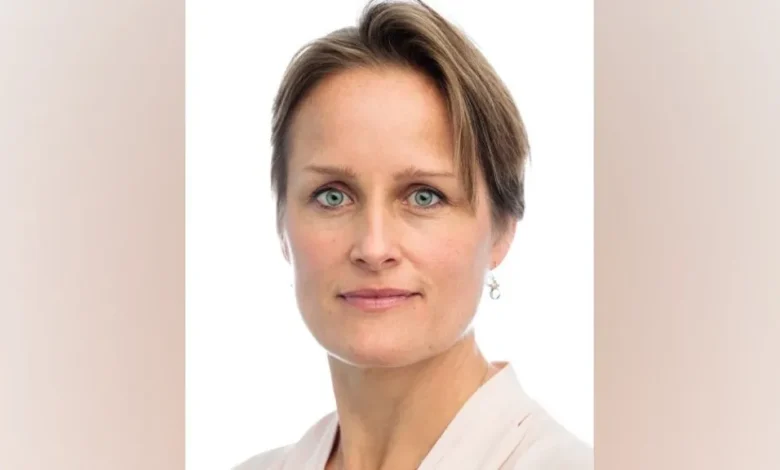
In a truly historic announcement, Blaise Metreweli is poised to become the first woman to hold the top position at MI6, the United Kingdom’s foreign intelligence service. Her appointment as the 18th chief marks a significant milestone in the agency’s 116-year history. Metreweli, who joined the Secret Intelligence Service (SIS) in 1999, will succeed Sir Richard Moore later this year, bringing her extensive experience to the forefront of global security challenges.
The New ‘C’ A Blend of Technology and Field Expertise
Metreweli, 47, is currently known as Director General “Q,” leading the crucial technology and innovation division. This role is vital for safeguarding the identities of secret agents and developing advanced methods to counteract sophisticated surveillance threats from adversaries such as China. Expressing her profound sentiment, Metreweli stated she was “proud and honoured” to be asked to lead the organization. Her background, including studying anthropology at the University of Cambridge and holding director-level positions at MI5 (MI6’s domestic counterpart), combined with significant operational experience in the Middle East and Europe, positions her uniquely for the role. Her recognition on the King’s overseas and international birthday honours list in 2024 with the Companion of the Order of St Michael and St George (CMG) further underscores her distinguished service to British foreign policy.
MI6’s Evolving Mission and Enduring Threats
MI6’s core mandate is to gather intelligence overseas to enhance UK security. This involves preventing terrorism, disrupting hostile state activities, and enhancing cyber-security. Prime Minister Sir Keir Starmer emphasized the “historic” nature of Metreweli’s appointment, highlighting that the work of the intelligence services has “never been more vital.” Metreweli herself affirmed, “MI6 plays a vital role — with MI5 and GCHQ — in keeping the British people safe and promoting UK interests overseas.”
The agency faces a complex and ever-changing threat landscape. Geographically, key challenges emanate from Russia, China, Iran, and North Korea, which are increasingly cooperating to undermine UK and Western interests. Technically, MI6’s traditional role of recruiting human agents to acquire secrets is being challenged by rapid digital innovation, necessitating constant adaptation to gather intelligence effectively in a world dominated by online data and satellite surveillance.
Insights from the Outgoing Chief and Future Challenges
Outgoing chief Sir Richard Moore, who will step down in the autumn after five years, expressed his “absolute delight” at Metreweli’s “historic appointment.” He lauded her as a “highly accomplished intelligence officer and leader” and “one of our foremost thinkers on technology.” Last September, Sir Richard, alongside then-CIA chief William Burns, warned that the international world faced threats “in a way we haven’t seen since the Cold War,” specifically citing Russian sabotage in Europe and the rise of China as the primary geopolitical challenge of the century. They also highlighted efforts to de-escalate tensions in the Middle East.
Foreign Secretary David Lammy, to whom the new MI6 chief will report, described Metreweli as the “ideal” candidate to address “global instability and emerging security threats.” He also extended his gratitude to Sir Richard Moore for his dedicated leadership and contributions to national security. Prime Minister Starmer similarly thanked Sir Richard for his “dedicated service” and expressed confidence in Metreweli’s ability to “provide the excellent leadership needed to defend our country and keep our people safe.”
The Legacy of ‘C’
It’s a common misconception that “C” stands for Chief. In reality, the codename originates from Captain Mansfield Cumming, the first head of the Secret Service Bureau in the 1900s, who always signed his letters “C” and famously wrote in green ink. To this day, the head of MI6 is the sole individual in Whitehall permitted to write in green. While “C” does not grant a “licence to kill,” the foreign secretary can authorize MI6 agents to perform actions that would otherwise be illegal, including the use of lethal force, under Section 7 of the Intelligence Services Act 1994, following a stringent legal process. This historic appointment of Blaise Metreweli marks a new chapter for MI6 as it continues its vital mission in a world of complex and evolving threats.