Japan Marks 80 Years of Women in Politics, Yet Gender Gap Remains
Despite historic gains, women still face systemic barriers in Japanese politics as underrepresentation and gender norms persist

In a year marking the 80th anniversary of women gaining the right to vote and run for office in Japan, the upcoming House of Councillors election brings renewed focus on gender equity in Japanese politics. While 152 women are contesting seats— the second-highest number in history— they still make up less than 30% of all candidates. The gender imbalance in politics remains a stubborn challenge, even as parties pledge change.
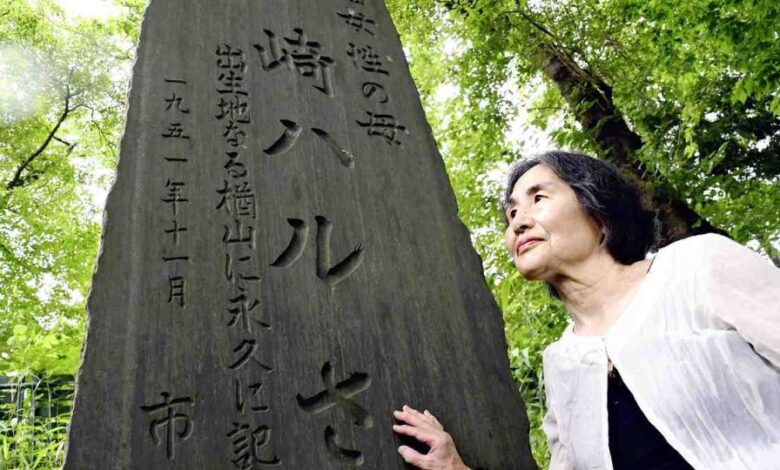
The journey of women in Japanese politics began in 1946, when 79 women ran in Japan’s first postwar lower house election and 39 were elected. Among them was Haru Wazaki, a pioneering politician from Akita Prefecture. After the death of her husband, Wazaki worked as a hair stylist to support her five children. Her activism extended to fighting for the rights of women in red-light districts and aiding rural women in agricultural areas. Though she served just one year in office, her impact resonated far beyond.
Her great-granddaughter, Midori Takahashi, now 76, continues her legacy as a social welfare worker. “She worked very hard for the advancement of women,” Takahashi said. But despite the efforts of trailblazers like Wazaki, the path forward remains steep.
As of March 2024, women accounted for only 25.4% of the House of Councillors and 15.7% of the House of Representatives. These numbers have slowly climbed since 1946, but Japan still lags behind globally. According to the Inter-Parliamentary Union, Japan ranked 138th among 190 countries for women’s representation in politics as of July 2024. It ranked last among the G7 nations.
To promote gender balance, Japan introduced the Law on Promotion of Gender Equality in the Political Field in 2018, urging political parties to strive for parity in their candidate lists. Yet the law lacks enforcement power. In the 2022 upper house elections, the percentage of female candidates rose to 33.2%, only to fall back to 29.1% in 2024.
So why does gender parity in Japanese politics remain elusive?
One major barrier is the difficulty of combining political careers with parenting responsibilities, particularly for women. Takae Ito, a 50-year-old upper house member, knows this struggle firsthand. She serves as secretary general of a cross-party parliamentary group for mothers and fathers, aimed at crafting family-friendly policies and encouraging more parents to participate in politics.
“When I was first elected in 2016, I was raising two small children. There was no one in the Diet in a similar position,” Ito said. “There was no space for parents—especially mothers—to be part of policymaking about children.”
Ito’s experience reflects a deeper societal mindset that still associates political leadership with men. The rigid structure of parliamentary life—long hours, constant travel, and few accommodations for parents—makes politics a daunting field for women, particularly mothers.
“There’s still a deep-rooted notion that men conduct politics,” Ito said. “We need to shift our mindset and create systems where raising children and participating in politics aren’t seen as mutually exclusive.”
Political parties have taken small steps to improve gender diversity, such as offering support for female candidates and creating child-friendly campaign environments. However, critics argue that without binding quotas or institutional reforms, these efforts remain symbolic.
Experts also point to media coverage, societal norms, and the lack of female role models in politics as contributing factors. In a male-dominated field, women often face higher scrutiny, fewer funding opportunities, and limited access to decision-making networks.
Despite these challenges, the upcoming election and its symbolic timing offer a renewed opportunity for change. As voters reflect on 80 years of women’s political participation, calls are growing louder for structural reforms that not only encourage women to run for office but also support them once they are elected.
Japan’s future political health may well depend on its ability to tap into the full talent and perspective of its population. Closing the gender gap in politics isn’t just about fairness—it’s about creating a more responsive, representative democracy.
As Midori Takahashi puts it, honoring the legacy of pioneers like her great-grandmother Haru Wazaki means “continuing the fight, until the political space truly belongs to everyone.”