Online Harassment of Women in Pakistan Hits Crisis Point
After the murder of TikTok star Sana Yousaf, Pakistani women online speak out against rising digital threats, social stigma, and the patriarchal violence they face both virtually and offline.

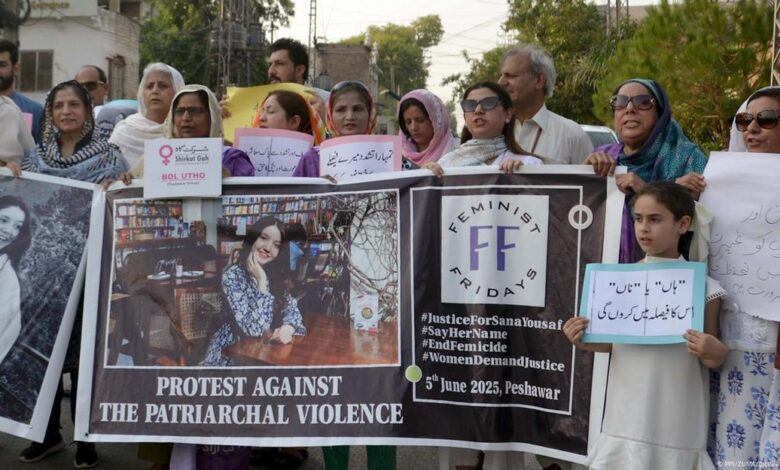
The murder of 17-year-old TikTok star Sana Yousaf earlier this month has reignited national concern over the safety of women with public lives on social media in Pakistan. Her killing by a man who had been harassing her online is a tragic example of how digital threats are increasingly translating into real-world violence.
With over a million followers across TikTok and Instagram, Sana represented a generation of young, visible women shaping their identity through online platforms. But her visibility came at a cost—one that too many Pakistani women are familiar with.
Online Stalking and Offline Consequences
Women like Hira Zainab, who has run public Instagram accounts since 2017, recall alarming encounters where digital followers crossed boundaries. From unsolicited messages based on her public posts to being approached in person, she’s experienced the uneasy intersection of online exposure and offline surveillance.
“I posted a story from a burger shop,” she shared. “On my way back, someone called my name from a passing car.” Another time, a stalker messaged her about her outfit — moments after she had left a salon.
Patriarchy, Shame Culture, and Threats
Violence against women, both online and offline, is rooted in Pakistan’s deep-seated patriarchal norms. Public expression, especially by women, is often labeled as “immoral,” making them targets for harassment, threats, and in some cases, violence.
According to the Digital Rights Foundation, 58.5% of harassment complaints in 2023 were filed by women. But these numbers don’t capture the full emotional toll or the systemic silencing that many experience.
Social media influencer Bisma Shakeel, who posts about mental health, spoke of the struggle to gain her family’s permission to even show her face online. Despite the positive impact of her work, she regularly faces rape and death threats — especially on TikTok.
Activist Maham Tariq says this targeting is far from random. “She’s labeled un-Islamic or shameless — then attacking her becomes a social or religious ‘duty,’” she explains. “It’s structured violence.”
Platforms Falling Short
Despite frequent abuse, many women say social media platforms offer little recourse. Reporting tools are slow, ineffective, and often leave survivors exposed. Some like Aisha*, a Karachi native now living in Berlin, have been impersonated with fake accounts and doctored images. Though recent updates like IP-based blocking have helped, the damage is often already done.
The Call for Accountability
In the wake of Sana Yousaf’s murder, activists like Nighat Dad of the Digital Rights Foundation emphasize the urgent need for stronger systems that protect women — both online and off.
“Bad actors have trust in the system’s failure,” says Dad. “They know it won’t work for victims. That needs to change.”
For now, women continue to resist. Some go private. Others speak louder. But all are demanding a future where visibility does not equal vulnerability.