Experts Unite in Brussels to Tackle Discriminatory Social Norms Blocking Women’s Political Participation
UN Women’s expert meeting under WYDE | Women’s Leadership calls for shifting harmful norms to empower women in politics globally.

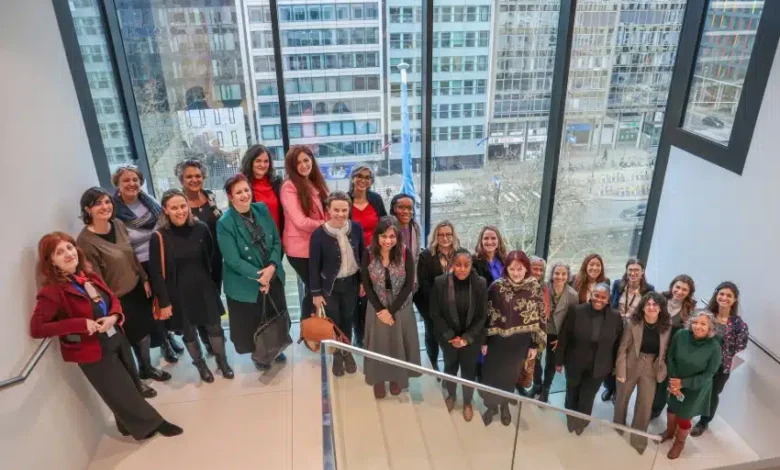
UN Women convened an Expert Group Meeting (EGM) under the WYDE | Women’s Leadership initiative to confront one of the deepest-rooted obstacles to gender equality in political life—discriminatory social norms. Funded by the European Union, the event brought together leading feminist scholars, policymakers, activists, and practitioners to develop actionable strategies to dismantle norms that continue to limit women’s access to political decision-making roles.
Despite decades of advocacy and the establishment of key global commitments like the Beijing Platform for Action and the SDGs, women remain underrepresented in leadership roles around the world. Cultural beliefs and social expectations about gender roles continue to create invisible walls that prevent women from fully stepping into power. The WYDE initiative, led by UN Women and supported by partners including International IDEA, IPU, and UCLG, is responding to this gap by focusing not only on policies but on the root causes—mindsets and social behaviors.
The gathering emphasized that achieving equal representation requires more than quotas or policy changes. It demands a shift in how societies perceive leadership and who is seen as “fit to lead.” As Lina Andeer from the European Commission noted, intersectionality and social norms must be central to any global strategy on political equality. UN Women’s Julie Ballington reinforced this, stating that while quotas are helpful, they often bypass the cultural shifts needed to sustain long-term change.
Experts like Sonia Palmieri and Jennifer Piscopo highlighted how media, family structures, and political institutions reinforce stereotypes—such as the belief that politics is a “man’s job.” These beliefs are not just private attitudes; they manifest in systemic barriers, toxic political environments, and a lack of support for women candidates. Professor Naila Kabeer pointed out how informal family and kinship networks even influence who gains access to power, especially in regions like South Asia, where dynastic politics dominate.
On the second day, discussions shifted toward solutions. Participants emphasized the power of feminist movements, local storytelling, and inclusive media representation to challenge dominant narratives. Sohela Nazneen from IDS called for building cross-sector alliances to resist backlash and keep pushing for change. Meanwhile, Abosede George-Ogan from Nigeria’s Women in Leadership Advancement Network stressed the importance of collaboration between media, governments, and civil society to ensure diverse women are represented in leadership.
The meeting concluded with a strong focus on measurement—how do we track changes in social norms and behaviors over time? Experts agreed that measurable change is possible, but it must be approached thoughtfully, with culturally sensitive tools and long-term strategies.
Through this expert meeting, WYDE | Women’s Leadership is laying the foundation for a transformative global movement to break down the social norms that have long held women back. By combining research, advocacy, and coordinated global action, the initiative aims to make women’s political leadership not the exception—but the expectation.