

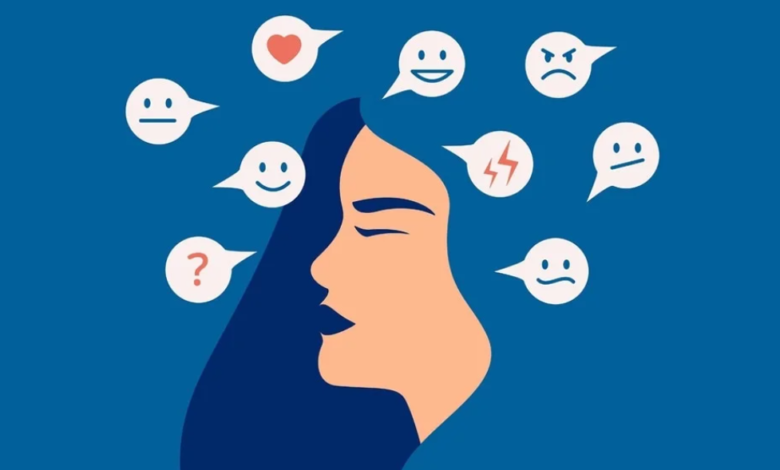
There are a few days in a month when I am so incredibly depressed that I can hardly bear to leave my house. There have been suicidal thoughts, panic attacks, and depressing feelings. There are many reasons for it, as it is something that has only recently occurred in the last few years. Job. Family. Cash. Connections. Wellness. contraindication. proprietors. My monthly episodes of poor mental health are essentially the result of every kind of life issue that could arise for any one of us at some point.
I didn’t learn about PMDD until last year while doing research for another piece on women’s health. A severe version of premenstrual syndrome (PMS), which mainly affects mental health, is called premenstrual dysphoric disorder. This hormone-based mood disorder, which affects two to eight women out of every 100, can result in a variety of emotional and behavioral symptoms that are a lot worse than PMS. They include everything from exhaustion, inattention, and agitation to aggression, sadness, and anxiety.
Many people suffer from this crippling illness, which causes significant monthly disruptions to their psychological and physical health. According to one study, women with PMDD may lose three years of quality-adjusted life if they don’t receive treatment. However, in some cases, it can be fatal. According to a 2021 study, women with PMDD have an almost seven-fold increased risk of attempting suicide. And yet, not much is known about it at all these days.
The Diagnostic and Statistical Manual of Mental Disorders, which is used by medical professionals worldwide, did not include PMDD until 2013. The inclusion of PMDD in the International Classification of Diseases in 2019 marked the official global validation of the diagnosis. Anyone who has studied medical misogyny and how a long history of ignoring female medical issues has hampered research, diagnosis, and development will not find any of this surprising. After all, some clinicians openly questioned whether PMDD was real until not too long ago, in 2002.
According to Gemma Barry, the creator of the Well Woman Project and the author of Periods Aren’t Meant to Bloody Hurt, “there is such poor research into many aspects of women’s health and PMDD is no different.” For hundreds of years, women have been stigmatized as having hysteria, which has caused many of the symptoms related to menstruation and hormones to be minimized. Because of our cycle, our bodies are thought to be too complicated and variable to test on. Thus, male mice/rats are the subjects of nearly all research, followed by male humans.
It takes, on average, twelve years to diagnose PMDD. The lack of research is partially to blame for the delay, which will undoubtedly be made worse by the fact that the medical community only seems to have recently begun to recognize the illness. “Diagnosis and the relationship with periods can be challenging because PMDD encompasses a spectrum of symptoms,” says London Gynaecology consultant gynecologist Narendra Pisal. “A lot of women observe these symptoms, but it may take them months or even years to connect the dots. Mood disorders, including major depressive disorder and bipolar disorder, can exacerbate in the premenstrual period, mimic PMDD, and complicate diagnosis.

Hannah, 25, recalls, “I went to my GP for the first time when I was eleven, right after I started my period, because I’d been having episodes of extreme dizziness and sickness.” The doctor told me it was hormonal and to watch it, but I wasn’t given a diagnosis at the time. The emotional symptoms started about a year later. They occur the week before my period and alternate between clinically depressing and anxiety levels akin to a heart attack. I could sleep for twelve hours and still wake up feeling like I’ve been hit over the head because of how incredibly exhausted I am.
Hannah didn’t begin researching PMDD until she turned 20. Her diagnosis has not yet been made. “I needed constant reassurance from my partner last month—that he won’t leave me and that I’m not ‘letting myself go’ or putting in too much effort,” she says. This occurred for three straight days. “I alternated between wanting to stay in bed, feeling absolutely numb, and sobbing uncontrollably.” I have to apologize to everyone I’ve ignored or yelled at because two days into my period, everything was normal again.
My GP and I are still having conversations about my PMDD diagnosis. The fact that PMDD can mimic PMS and that symptoms can be confused with those of other mood disorders add to the difficulty of diagnosing PMDD and make it challenging to understand what’s actually going on in your body and mind. Additionally, it shows up differently in each person. Timing is your most valuable tool.
According to Pisal, “it’s important to keep a symptoms diary and correlate it with the menstrual cycle.” Additionally, there are validated scales (like the Calendar of Premenstrual Experiences) for documenting premenstrual symptoms. By providing your general practitioner with this information, you can assist them in making the appropriate referral and reaching a possible diagnosis.
Although PMDD is undoubtedly a hormonal disorder, its precise etiology is still unknown. A family history of mood disorders could be a factor. Barry continues, “More research is needed, but genetic traits and biological factors of how hormones are processed in the brain have been suggested.” “There are theories that postnatal depression sufferers may be more common, and there may be connections to childhood traumas.”
Pisal cites studies from 2017 that discovered a genetic foundation for the unusual sensitivity to estrogen and progesterone that individuals with PMDD experience. “However, as you can see, this is all fairly recent, and there is a lack of agreement and understanding, which causes issues with misdiagnosis,” he continues.
Maria, 45, battled symptoms for decades before receiving a diagnosis six months ago. She says, “I thought I was going crazy.” “I was experiencing severe suicidal thoughts, almost to the point where I could hear someone telling me to end my life. I was struggling with intense outbursts of rage that would strike out of nowhere and cause terrible arguments with my spouse and kids. In addition, I was extremely paranoid and neurotic, reading far too much into everything that people did or said. I would think they were trying to harm me.
The main symptoms that I associate with depression are exhaustion, depression, and suicidal thoughts. But like Hannah, these feelings disappear shortly after I start my period. For a minimum of one more month. “For those with PMDD, relationships can be compromised on both a personal and professional level,” according to Barry. In addition to the exacerbating emotions of guilt and shame regarding their actions, PMDD sufferers may also experience a monthly sense of impending doom, which can negatively impact and ruin the otherwise positive aspects of their cycle. Those who suffer from PMDD may feel very powerless as a result of something that seems out of their control.
What then is doable? Regretfully, research is still ongoing on that matter. Counselor Georgina Sturmer, who works with multiple PMDD clients, says that because PMDD sufferers frequently feel as though their emotions are beyond their control, it can be beneficial to consider lifestyle choices and self-care practices that are within our control. “This might entail finding techniques of emotional regulation that help to manage our feelings, as well as exercise, nutrition, and good quality sleep.”
Reducing additional stressors, such as abstaining from alcohol, sugar, smoke, and caffeine, can also be beneficial. As an alternative, some medical professionals might advise taking the contraceptive pill, which balances hormones by preventing ovulation. Pisal continues, “Your doctor may recommend SSRI (selective serotonin reuptake inhibitor) medication for severe mood-related symptoms as it also functions as an antidepressant.” “During the two-week pre-menstrual window, taking evening primrose oil tablets and B6 pyridoxine vitamin (both over-the-counter) can also be helpful.”