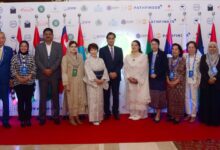
Women’s Political Participation in Pakistan: From Symbolic Representation to Substantive Empowerment
Despite reserved seats, Pakistan’s women face deep structural barriers limiting their real political influence, undermining democracy and governance quality.


Though Pakistan’s constitution guarantees reserved seats for women in National and Provincial Assemblies, women’s political participation largely remains symbolic rather than impactful. Gender quotas have increased female presence in legislatures, but research shows these numbers alone do not break down the deep-rooted institutional and social barriers limiting women’s actual power in governance. Quotas often serve as a surface-level fix, addressing visibility but leaving untouched the structural, normative, and organizational constraints that restrict women’s meaningful political roles.
Behavioral economics highlights how ingrained social norms and gender expectations reduce women’s agency, even when they hold formal positions. In Pakistan’s political system, dominated by clientelism and dynastic elites, women often act as figureheads selected from powerful families but controlled by patriarchal gatekeepers. Their ability to influence policy is constrained by male-dominated party hierarchies and informal networks that resist redistributive change. While some female legislators have advanced important laws, such as the 2006 Protection of Women’s Rights Act, their overall effectiveness is hindered by entrenched institutional resistance.
This gap between numerical inclusion and genuine empowerment poses a democratic problem. Women make up nearly half of Pakistan’s population, yet their underrepresentation in politics creates a legitimacy deficit, weakening both the moral and deliberative foundations of democracy. Feminist political theory emphasizes that women’s lived experiences—especially concerning caregiving, violence, and reproductive labor—offer critical insights that should shape equitable policies. However, male-dominated political spaces often exclude these perspectives, perpetuating injustice and elite dominance. For example, policies related to healthcare and social protection often neglect unpaid care work, largely performed by women, because decision-makers lack this lived experience.
Increasing women’s political agency is not just a matter of fairness but a strategic necessity. Political institutions distribute power and resources, and excluding women reinforces existing inequalities. Studies consistently show that women politicians prioritize investments in education, healthcare, child welfare, and public goods—areas often underfunded in male-led systems. Research from India, among others, finds that women-led councils improve public services critical to women’s needs, like water and health infrastructure. Women’s inclusion is linked to more redistributive policies and stronger resistance to elite capture.
Philosophers like John Stuart Mill and contemporary theorists such as Martha Nussbaum argue that political participation is a core human capability essential to liberty, dignity, and development. Without targeted political training and civic education, Pakistani women remain marginalized, and policies remain disconnected from the needs of half the population. In Pakistan’s patriarchal political culture, empowering women is key to realizing democracy’s deeper goals: freedom, agency, and social justice.
Moreover, women’s enhanced political role can help combat Pakistan’s endemic corruption. Globally, higher female representation correlates with lower corruption levels. Women, often excluded from patronage networks, face stronger societal scrutiny and thus have incentives to uphold ethical governance. Evidence from Rwanda and Latin America shows empowered women drive anti-corruption reforms and foster equitable policies. For Pakistan, expanding women’s substantive political participation is a vital step toward democratic legitimacy and transparent governance. When women gain real political power, they don’t just add diversity—they transform the entire system.