
Women’s Cognitive Performance Peaks During Ovulation, But Exercise Has Greater Impact
UCL study finds physical activity significantly improves reaction time and accuracy, surpassing menstrual cycle effects.

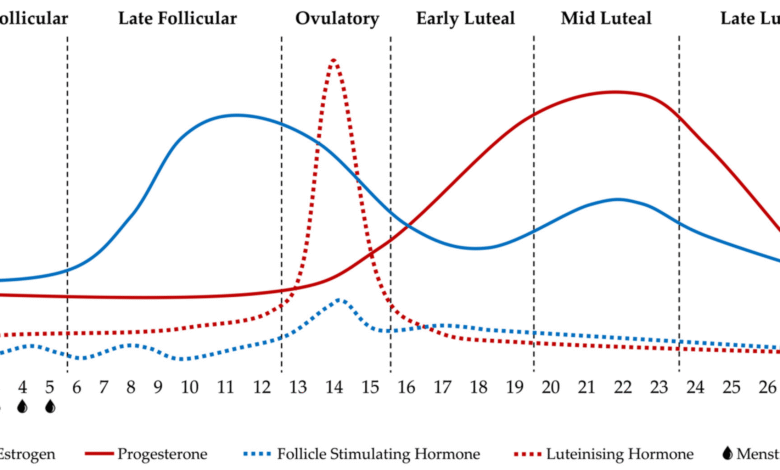
A recent study from UCL has revealed that women’s cognitive performance is at its highest during ovulation, but engaging in regular physical activity has an even stronger influence on brain function. The research, published in Sports Medicine – Open, examined how menstrual cycle phases and activity levels affected cognitive abilities such as reaction time, attention, and accurate timing of movements, which are important in both daily life and sports.
The study involved 54 women aged 18 to 40 who were naturally menstruating and not using hormone-based contraception. Participants were divided into four groups based on activity level: inactive, recreationally active, club-level athletes, and elite athletes. Cognitive tests were conducted during key phases of the menstrual cycle: menstruation, late follicular phase, ovulation, and mid-luteal phase.
Results showed that women had the fastest reaction times and made the fewest errors on the day of ovulation, when fertility peaks. Reaction times were approximately 30 milliseconds faster compared to the mid-luteal phase. However, the differences caused by activity level were far more pronounced. Inactive participants had reaction times around 70 milliseconds slower and made about three times as many impulsive errors than their active counterparts, regardless of the cycle phase.
Researchers noted that these findings are especially relevant in sports. Even small differences in reaction time—about 20 milliseconds—can affect whether an athlete sustains or avoids injuries such as concussions. For everyday life, the 70-millisecond gap between active and inactive participants is more significant, as it can determine how quickly the brain responds to stimuli, like regaining balance after a trip.
Interestingly, slower reaction times during the mid-luteal phase, likely caused by higher progesterone levels, did not result in more errors, indicating that accuracy is not necessarily compromised during this stage. Errors were highest in the late follicular phase, though the reasons for this remain unclear. Participants’ subjective experiences, such as feeling low energy or symptomatic during menstruation, did not correspond with performance, suggesting that perceived limitations are not always reflective of actual cognitive ability.
The study underscores the importance of incorporating regular physical activity into daily life, even in moderate amounts. Dr. Flaminia Ronca, lead author, highlighted that activities like brisk walking or cycling for just 15 minutes a day can meaningfully boost cognitive performance and mood. Evelyn Watson, a co-author, emphasized the positive message for female health: despite common assumptions, menstruation does not impair cognition, and peak performance can be achieved with the right lifestyle habits.
This research not only challenges misconceptions about female performance across the menstrual cycle but also reinforces the critical role of exercise in optimizing cognitive function, both for everyday tasks and athletic endeavors.