Women and Minorities Underrepresented in Syria’s Transitional Parliament Elections
Syria’s first transitional parliament since Assad’s ouster faces criticism as results reveal weak representation of women and minorities in an already controversial election process.

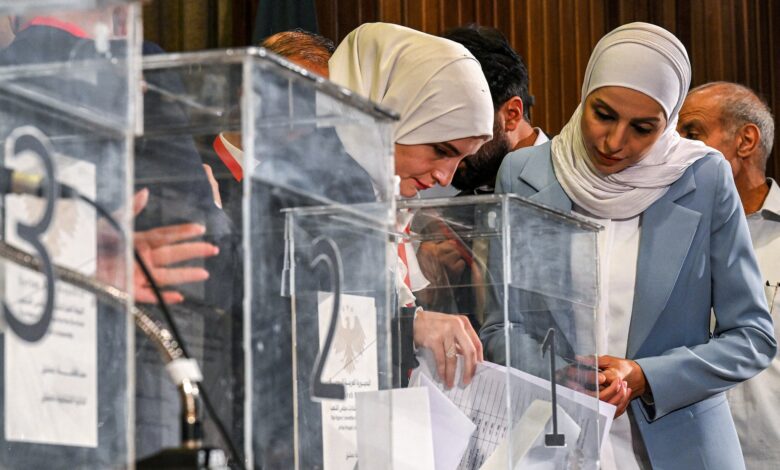
The results of Syria’s transitional parliament elections have sparked criticism over the glaring underrepresentation of women and minorities, exposing deep flaws in a process already dismissed by many as undemocratic. This marks the first assembly to be formed since the ouster of longtime ruler Bashar al-Assad, yet the new structure seems to reflect old inequalities rather than a fresh democratic start.
According to the electoral commission’s announcement, only 4% of the 119 members elected were women — a steep decline from the 14% of female candidates who initially contested. “The number is not proportionate to the status of women in Syrian society and their role in political, economic, and social life,” said commission spokesperson Nawar Najmeh during a press conference. The commission also confirmed that only two Christian representatives were elected, calling their representation “weak considering the proportion of Christians in Syria.”
The election, held over the weekend, saw several thousand members of local committees cast votes to fill 210 parliamentary seats. Interim President Ahmed al-Sharaa will appoint 70 representatives, forming one-third of the body, while the remaining seats were chosen by committees appointed by the electoral commission — itself appointed by Sharaa. Critics argue this system undermines democratic legitimacy and consolidates power within the president’s circle.
Adding to the controversy, ballots were postponed in Kurdish-held northeastern regions and the Druze-majority Sweida province in the south — both areas currently outside Damascus’s control. This exclusion further limits the participation of diverse communities in shaping Syria’s political transition.
The election also failed to include Syrian-American Henry Hamra, the first Jewish candidate since the 1940s, who was not selected. Observers note that his exclusion underscores the persistent marginalization of smaller communities despite promises of inclusion.
The March 10 agreement between Syria’s Kurdish authorities and Damascus, which aimed to integrate Kurdish-administered institutions into the state by year’s end, remains stalled. Najmeh acknowledged delays in implementing this deal, stating, “We are serious about having supplementary ballots to fill the assembly’s seats, but we are unable to set timetables for ballots in Raqa and Hasakeh.”
While the government insists the parliament represents a step toward national reconstruction, many Syrians view it as an exercise in political control. Nour al-Jandali, a political and rights activist from Homs who secured a seat, emphasized the importance of meaningful reform. “The new lawmakers have a great responsibility,” she said. “We must re-establish a state built on freedom, citizenship, and justice. Women must have a real and active role in drafting public policy.”
Under the temporary constitution announced in March, the transitional parliament will hold legislative powers for 30 months or until a permanent constitution is adopted. However, critics argue that without transparency, fair representation, and inclusion, the assembly risks becoming symbolic rather than transformative.
Political analysts suggest that the weak participation of women and minorities signals ongoing resistance to inclusive governance in post-Assad Syria. Many fear that unless corrective measures are taken, the transitional phase may entrench divisions rather than heal them.
The international community has also expressed concern over the credibility of the process, urging Damascus to ensure broader representation and safeguard the rights of marginalized groups.
As Syria attempts to rebuild after years of conflict, the composition of its new parliament will likely determine how inclusive and stable its political future can be. For now, the outcome serves as a stark reminder that genuine democracy requires more than new faces — it demands equal voices.