Lawmakers, Religious Leaders Unite in Islamabad to Protect Women’s Inheritance Rights
Women lawmakers and religious scholars in Islamabad call for reforms, awareness, and justice to ensure women receive their rightful inheritance as guaranteed by Islamic teachings.

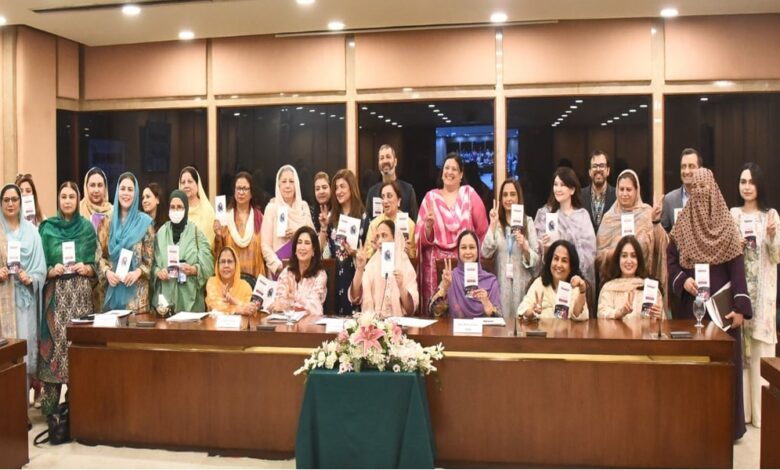
In Pakistan’s capital city, a rare and significant alliance between women lawmakers and religious leaders came to the forefront on Tuesday, as they gathered under the Women’s Parliamentary Caucus (WPC) to address one of the most pressing issues facing women in the country: the denial of inheritance rights. Despite clear guarantees in both the Constitution of Pakistan and Islamic teachings, countless women continue to be deprived of their rightful share in family wealth and property, often left vulnerable to economic insecurity and social marginalization.
The meeting brought together Secretary WPC Dr. Shahida Rehmani, Chairperson of the Special Committee on Gender Mainstreaming Dr. Nafisa Shah, MNA Syeda Shehla Raza, and Chairman of the Islamic Ideology Council Dr. Allama Muhammad Raghib Hussain Naeemi. The gathering underscored a shared recognition that while the framework for justice already exists in Islamic law, gaps in implementation, coupled with cultural and familial resistance, leave women fighting an uphill battle to claim what is theirs by divine right.
Participants stressed that denying women their inheritance not only undermines religion but also strips women of dignity, independence, and security. In a society where women, especially widows and divorcees, often depend on inheritance as a lifeline, the absence of enforcement can mean years of litigation, financial struggle, and emotional trauma. Dr. Rehmani described the gathering as “a vital step” toward translating the guarantees of faith and law into lived realities. She argued that without collaborative reform, women will continue to face systemic denial of their rights despite the clarity of scripture and legislation.
Religious leaders echoed this sentiment, emphasizing that Islam has laid out clear guidance. Dr. Naeemi called for a renewed effort to put the principles of the Holy Quran and Sunnah into daily practice, noting that the faith itself offers an uncompromising roadmap for justice in inheritance. He said that denying women their share is not only unlawful but also un-Islamic, highlighting that religion and law must operate together to close the gap between principle and practice.
Lawmakers at the meeting highlighted the need for robust reforms in complaint mechanisms and judicial processes to make justice more accessible. They called for simpler, faster, and more affordable ways for women to claim their rights, pointing out that lengthy court cases often discourage women from pursuing justice. Strengthening legal aid and awareness campaigns were identified as key steps to empowering women with the knowledge and support they need to assert their rights.
Awareness was another recurring theme. Speakers emphasized that cultural barriers and lack of information often keep women silent. Many women are either unaware of their rights or are pressured by families to give up their share, which is then justified as a gesture of sacrifice. Campaigns led jointly by religious scholars and lawmakers were proposed as a way to challenge these narratives and remind communities that inheritance is not a matter of choice or charity but of religious obligation and justice.
The event concluded with a strong message of unity. Both women parliamentarians and religious leaders pledged to continue working together to protect women from injustice. They agreed that protecting women’s inheritance is not merely a legal or political issue but a moral one—integral to dignity, financial stability, and the social fabric of Pakistan. For the women of Pakistan, the commitment voiced in this meeting signals hope for a future where claiming inheritance will not require courage but will instead be a given, as intended by both law and faith.