The Unseen Struggles of Female Athletes in Pakistan
From societal scrutiny to institutional bias, women in Pakistani sports face a battle far beyond the playing field.

In Pakistan’s male-dominated society, where notions of honour are tied to controlling women’s choices, stepping into the world of sports is nothing short of defiance. For many girls, wearing a tracksuit and competing in public is the first rebellion—a symbolic crossing from the private, domestic space into an arena where their presence is often questioned, monitored, and resisted.
Female athletes here navigate two layers of obstacles. The first is cultural: deep-rooted traditions and socio-economic barriers that limit women’s mobility and bodily autonomy. The second is institutional: sports bodies run by male coaches, selectors, and administrators who hold the power to decide who gets to compete, often based on subjective preferences rather than performance.
This gatekeeping means a woman’s place in sports is conditional, with opportunities given to those who conform to certain expectations. The case of Norina Shams, an internationally ranked squash player from Khyber Pakhtunkhwa, is telling. Despite her skill and dedication, she was excluded from the Commonwealth Games squad—a decision she feels reflected bias rather than merit.
Norina recalls early in her career hearing comments about her looks rather than her skills: “I was told I was very beautiful or attractive, so every coach wanted to train me.” While such remarks might seem flattering, they reveal a deeper issue—objectification over recognition of talent. This aligns with the concept of “aesthetic labour,” where women are expected not only to excel in their sport but also to fit an idealised image of femininity.
Inside the sports system, male-dominated structures often determine who is supported and who is sidelined. Women who fit within the unwritten rules of behaviour and appearance may be promoted, while those who speak out about fairness or demand autonomy risk invisibility. Funding is limited, training resources scarce, and safety—both physical and psychological—often overlooked.
The toll is not just professional but deeply personal. “No one realises that it takes years for a female athlete to recover from the mental trauma she goes through,” Norina says. This trauma is the result of constant scrutiny, lack of institutional support, and the pressure to repeatedly prove one’s worth in male-controlled spaces.
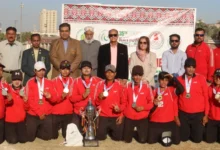
Public celebration of women athletes tends to be selective and short-lived. Medals are applauded, but demands for equity and respect are often ignored. Female athletes remain visible only when their success aligns with broader patriarchal narratives; the rest of the time, their struggles are erased.
Real change will require more than token gestures. Pakistan’s sporting institutions need structural reform to prioritise transparency, equity, and inclusion. Merit—not compliance with gendered expectations—should determine opportunities. And critically, women must be given space to lead: as coaches, administrators, and policy-makers who shape the very systems they compete in.
Until that happens, every victory for a female athlete in Pakistan will continue to be more than a win on the scoreboard—it will be a fight against a system designed to keep her out.