Pakistan’s Gender Pay Gap Among Highest Globally
An ILO report reveals women in Pakistan earn nearly 30% less than men despite similar qualifications, with discrimination and structural barriers fueling persistent wage inequality.

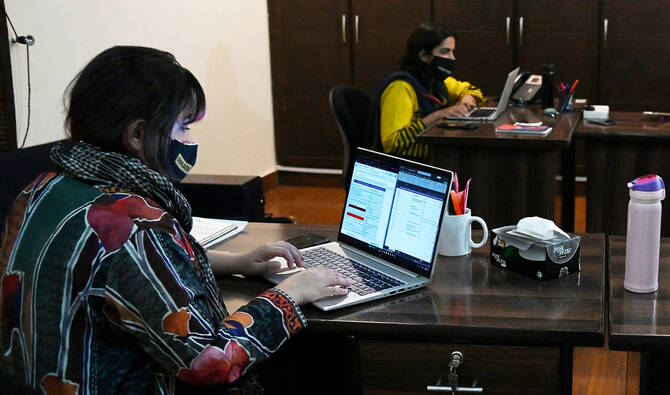
Women in wage employment in Pakistan earn almost 30% less per month than men, even when they have higher levels of education and work full time, according to a new International Labour Organization (ILO) report published in July 2025. The study, one of the most comprehensive analyses of Pakistan’s gender pay gap, found that women earn on average 25% less per hour and 30% less per month than men in comparable roles with similar experience.
The ILO noted that Pakistan’s gender pay gap ranks among the highest for lower-middle-income countries. Using Labour Force Survey data from 2013 to 2021, the report examined earnings across public, private, formal, and informal sectors, concluding that most of the wage gap remains unexplained by factors such as age, education, occupation, or hours worked. This suggests that discrimination and entrenched social biases play a significant role.
The issue is compounded by low female participation in wage employment. Women account for just 13.5% of wage employees despite making up nearly half of the working-age population. As of 2021, only 23% of women were employed compared to 79% of men, with the employment gap consistently hovering at 56 percentage points over the last decade. Women with higher education still often earn less than men with fewer qualifications, pointing to systemic barriers in hiring, promotions, and pay scales.
The report highlights that the gender pay gap is most severe in the informal sector, where women earn over 40% less per hour than men. The formal private sector shows a slightly narrower gap, while the public sector—where regulated pay scales are in place—has the lowest disparity. The informal sector’s lack of oversight, minimal unionization, and absence of wage-setting mechanisms leave women particularly vulnerable. Occupational segregation further entrenches inequality, with women concentrated in undervalued roles such as domestic work, agriculture, and lower-paid education jobs, and underrepresented in higher-paying professions.
To close the gap, the ILO recommends expanding formal job opportunities for women, enforcing minimum wage laws, implementing pay transparency measures, and creating gender-responsive social protection systems. Strengthening labor inspections, improving legal enforcement in the informal sector, and investing in detailed sex-disaggregated wage data are also essential. Additionally, Pakistan is urged to ratify and enforce ILO Conventions No. 100 on equal remuneration and No. 111 on discrimination in employment.
The report emphasizes that eliminating wage disparities is both a moral imperative and an economic necessity. Equal pay could significantly boost household incomes, enhance economic productivity, and contribute to inclusive growth. Addressing the gender pay gap is also central to Pakistan’s commitments under the Sustainable Development Goals. As the ILO concludes, achieving fair pay is not only about justice for women—it is about building a stronger, more equitable economy for the nation as a whole.