Tajikistan to Publish New Women’s Dress Guidelines, Tightening Clothing Restrictions
The new book will outline “traditional” dress codes for women, reinforcing the country's ban on "foreign" clothing styles.

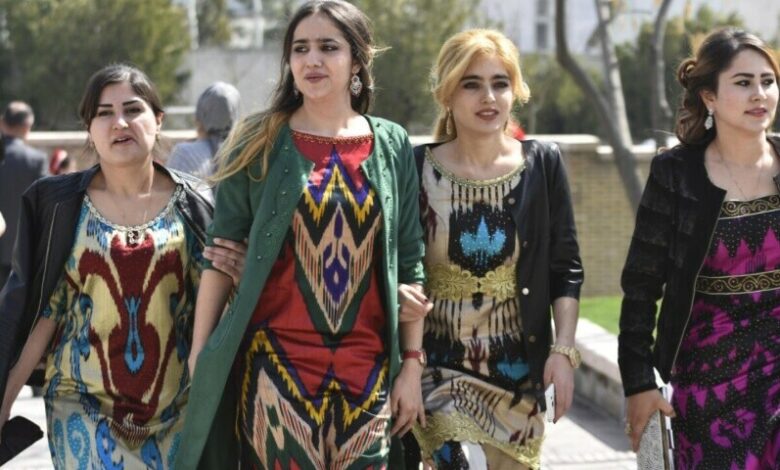
Tajikistan is set to present a modern book laying out national dress recommendations for ladies, fortifying its strict control over clothing choices within the Muslim-majority nation. The distribution, anticipated in July, will give rules on what ladies ought to wear based on their age and different social settings, counting at domestic, theaters, and formal occasions. Specialists claim the move points to protect the country’s social legacy and avoid the selection of remote influences.
This activity adjusts with Tajikistan’s continuous endeavors to advance conventional clothing whereas controling what authorities depict as radical Islamic social influences. The nation has already executed measures prohibiting clothing outsider to national culture, with a solid accentuation on empowering ladies to wear long, colorful weaved tunics matched with free trousers an equip profoundly established in Tajik heritage.
According to Khurshed Nizomi, a senior official within the Service of Culture, the unused book is an progressed adaptation of past dress rules, including high-quality pictures, verifiable references, and point by point portrayals of acceptable attire. Specialists contend that national dress may be a crucial portion of the country’s character and ought to be secured from outside social influences.
Tajikistan, a mainstream state bordering Afghanistan, has taken a firm position against Islamic clothing in open spaces. The government has de facto prohibited the hijab, with President Emomali Rahmon alluding to it as a problem for society. Ladies are energized to dress within the Tajik way, whereas men confront confinements on developing long facial hair, which specialists relate with extremism.
This crackdown on Islamic impacts escalates taking after a dangerous assault close Moscow final year, where four Tajik citizens were denounced of carrying out a slaughter. Since 2015, the government has communicated concerns over Tajik nationals joining radical bunches, inciting stricter controls on devout expression, counting clothing.
Despite these measures, numerous Tajiks share phonetic and social ties with Afghanistan, where Islamic clothing remains profoundly imbued in everyday life. The thrust to implement dress codes highlights the government’s broader endeavors to state control over open life and smother what it sees as dangers to its mainstream ideology.
The unused book will at first be disseminated for complimentary, serving as an instructive instrument to instill government-approved mold standards among ladies and young ladies. It remains to be seen how the public will react to these limitations, as numerous ladies in Tajikistan as of now confront social and legitimate weight with respect to their dress choices.
With specialists fixing clothing directions, concerns are developing over the disintegration of individual opportunities within the nation. Whereas authorities claim that protecting national clothing is basic for keeping up Tajikistan’s social identity, critics contend that such measures encroach on person rights and devout expression.
Tajikistan’s proceeded endeavors to direct women’s mold emphasize the government’s broader design of strict social control, raising questions around the adjust between social conservation and individual opportunity within the cutting edge world.