SBP BSC and UN Women Partner to Boost Women’s Financial Inclusion in Pakistan
New MoU aims to enhance financial literacy, access to finance, and gender equality across underserved communities.

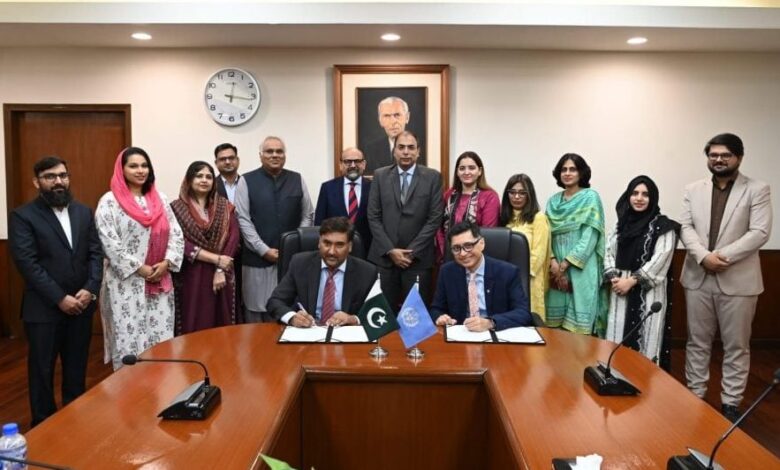
The State Bank of Pakistan’s Banking Service Corporation (SBP BSC) and UN Women Pakistan signed a landmark Memorandum of Understanding (MoU) on Wednesday to strengthen long-term cooperation aimed at promoting financial inclusion, financial literacy, and access to finance, with a special focus on women’s empowerment in Pakistan.
The MoU was signed in the presence of Maraj Mahmood, Managing Director of SBP BSC, and Jamshed Kazi, Country Representative of UN Women Pakistan. It establishes a collaborative framework for capacity building, mass awareness campaigns, and research initiatives to extend financial services to underserved populations. By leveraging the combined expertise, networks, and resources of both organizations, the partnership seeks to drive meaningful and lasting change in the country’s financial ecosystem.
In a statement, the central bank described the MoU as a demonstration of the shared commitment of both organizations to create an enabling environment for women’s economic participation. The partnership focuses on improving access to financial resources and knowledge, particularly for women in marginalized and underserved regions.
Speaking at the ceremony, Jamshed Kazi of UN Women Pakistan highlighted the critical role of inclusive financial systems in promoting gender equality. “Financial inclusion is key to unlocking the potential of women in Pakistan. Through this partnership with SBP BSC, UN Women aims to create pathways for women to access financial services, build resilience, and contribute to sustainable economic growth,” he stated.
Maraj Mahmood emphasized SBP’s dedication to advancing women’s participation in the financial sector. He said the collaboration with UN Women reflects the central bank’s long-term vision to expand financial literacy and broaden access to finance, particularly for underrepresented and underserved groups. “Together, we aim to address structural barriers and promote innovative solutions for inclusive economic development,” Mahmood affirmed.
The partnership aligns with UN Women’s ongoing efforts to enhance women’s economic empowerment in accordance with the Beijing+30 review process and Pakistan’s national commitments to gender equality. This MoU represents the continuity of initiatives aimed at ensuring women have equitable access to financial tools and resources necessary for economic independence.
Key areas of cooperation outlined in the MoU include the organization of joint seminars and conferences, delivery of capacity-building and awareness programs, and collaborative research to identify barriers to women’s financial inclusion. The partnership also emphasizes the promotion of digital financial services, enabling wider adoption and improved access to finance across underserved regions and social strata.
By focusing on these objectives, the collaboration aims to create sustainable opportunities for women to participate in the formal economy, contribute to household and national income, and enhance their financial resilience. Through innovative solutions, outreach initiatives, and evidence-based research, the MoU provides a structured approach to empower women economically and socially.
While the MoU does not create legally binding obligations, it provides a robust framework for partnership. Both organizations can leverage their expertise, networks, and resources to drive meaningful impact and facilitate systemic change in financial inclusion policies. The collaboration signals a strong commitment from Pakistan’s central bank and UN Women to support women’s economic participation as a cornerstone for inclusive growth.
In conclusion, this partnership marks a significant step toward bridging gender gaps in financial access and literacy. By promoting inclusive financial systems and empowering women economically, the SBP BSC and UN Women aim to create pathways for sustainable development, enhance resilience among marginalized communities, and strengthen Pakistan’s broader socioeconomic fabric.