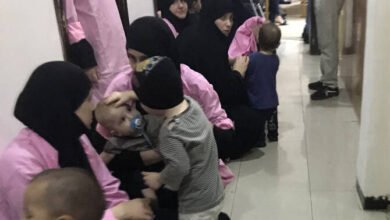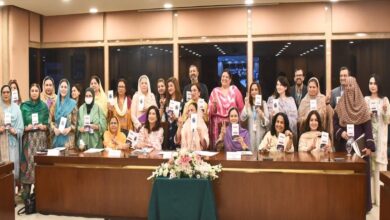


Women who are internally displaced in Pakistan face additional challenges, especially in the areas of women’s health and maternity care. These women are already coping with the loss of their homes and means of support.
Pakistan is one of the nations most susceptible to the consequences of global warming. Millions of people have been forced to relocate due to the new normal of rising temperatures, irregular monsoons, and severe droughts, especially in the north. Over 3 million Pakistanis were internally displaced by natural disasters in 2023 alone, according to the Internal Displacement Monitoring Centre (IDMC).
Pregnant women’s trials in camps
The 28-year-old Shabana Bibi (name changed), who lives in a remote part of northern Pakistan, had no notion that climate change would compel her to make difficult decisions regarding her family’s health. Shabana and hundreds of other people were uprooted by devastating floods in the Chitral region in July 2023, and they have been living in a makeshift settlement for nearly a year.
Shabana remembers, “Everything was gone in an instant.” “Our house, our livestock, and our harvests. All we had on our backs were the garments we had to leave behind. Her family joined hundreds of other displaced families in a temporary camp situated on higher ground.
Her trip to the camp was horrifying, but the struggles she faces on a daily basis point to a much more significant problem: the dearth of maternity care and women’s health resources for women who are relocated due to climate change.
In a similar vein, Geetha (name changed) discovered she wasn’t ready when she felt the first signs of labor. The 25-year-old and her two kids were living in a makeshift tent after being forced to leave her home in the drought-stricken Tharparkar district of Sindh province in southern Pakistan. She and innumerable other families fled to other regions of the Sindh province in search of safety due to the ongoing droughts. Her excitement at welcoming a new life into the world was overshadowed by the fear of what lay ahead as she held her expanding belly.
The suffering of Shabana Bibi and Geetha is a stark picture of an impending disaster in Pakistan, where migration brought on by climate change has a major negative influence on the health of mothers and women.
Women are especially at risk
When compared to men, women have much more severe repercussions from displacement. There are more hazards for expectant mothers who reside in makeshift shelters with little access to food, medical treatment, or sanitary facilities. Inadequate housing conditions and the stress of relocation frequently make pregnancy and delivery issues worse. Similarly, unintended pregnancies and other health problems may result from losing access to women’s health goods and common contraceptives.
Many displaced women ignore prenatal and postnatal appointments, according to Samina Hussain, an obstetrician in Central Punjab, an area severely devastated by the floods. Hussain works with a local NGO. “For those who are internally displaced, the situation is dire. Women aren’t getting the care they need, and a lot of them are too scared or live too far away from hospitals to get help, according to her. Pregnancy-related problems are often left untreated due to restricted access to quality medical care. Under these conditions, conditions that can be quickly treated in appropriate medical facilities—like infections, malnourishment, and high blood pressure—become potentially fatal. Dr. Hussain tells the story of a woman who lost her baby as a result of delays and inadequate medical facilities after traveling over three hours from a remote rural area to the closest hospital.
Fatima shares her worries about giving birth in the midst of her uprooting and move. Here, I’ve witnessed women suffer. The hospitals are not set up to deal with crises. The lack of a doctor at the time caused my neighbor to lose her kid. Her voice quivers with passion as she continues, “I don’t want to go through that.”
Managing the displacement’s stress
Healthcare services are disrupted by climate-related displacement, which is exacerbated by additional stressors. Displacement often results in physical and psychological stress that might cause issues during pregnancy and labor.
According to an expert from the National Institutes of Health in Pakistan, stress hormones like cortisol are affected by both stress and temperature and may have a negative effect on the success of pregnancy. Premature deliveries and low birth weight are associated with elevated cortisol levels, which are common among displaced groups.
Naila, a recentlywed who is getting ready for her first childbirth, experiences extreme anxiety and depression, which are made worse by the unpredictability of her circumstances. “I worry about my children’s futures every single day. “I’m not sure how I’m going to support this new baby,” she admits.
According to Bruce Aylward, Assistant Director General for Universal Health Coverage, Life Course at the World Health Organization (WHO), “pregnant women, babies, and children face some of the gravest consequences of all.” Climate change poses an existential threat to all of us. “It is imperative to proactively safeguard children’s futures by addressing climate change today to safeguard their well-being and ensure that their distinct requirements are taken into account in the climate response.”
The impact of climate change on reproductive health and menstruation, especially for women who are displaced, aggravates the complex problem that already exists. It’s becoming clear how challenges to reproductive health relate to shifting environmental conditions. For women like Shabana, rising temperatures and severe weather have been shown to have an adverse effect on menstrual cycles and overall reproductive health. For instance, irregular menstrual cycles have been linked to severe heatwaves in Pakistan. Menstrual cycle disruption may be caused by stress hormones like cortisol, according to research from the National Institutes of Health. Elevated cortisol levels in the presence of extreme heat can lead to disorders like dysmenorrhea, a condition marked by excruciating cramping during periods, as well as a complete cessation of menstruation.
Food insecurity
One of the most urgent problems for expectant and nursing mothers is food insecurity, which is exacerbated by climate change’s impact on agriculture. Communities worry about feeding themselves and their children when crop output is impacted by erratic weather patterns. Amina, who was uprooted from a Balochistani hamlet devastated by drought, expresses her concerns, asking, “How can I bring a child into this world when I can barely feed myself?”
Shabana expressed her concern for other expectant mothers and remarked, “We barely have enough food to feed ourselves.” “Women usually eat rice and lentils to survive.” Neither fresh vegetables nor milk are present. Their health is impacted by the restricted diet, as is their capacity to generate enough breast milk for the baby.
According to the WHO article “Protecting Maternal, Newborn, and Child Health from the Impacts of Climate Change,” there has been a lack of awareness, underreporting, and underestimate of the consequences of climate events on health outcomes for mothers and their infants. As “a glaring omission and emblematic of the inadequate attention to the needs of women, newborns, and children in the climate change discourse,” it draws attention to the fact that relatively few countries have included maternal or child health in their climate change response plans.
Even with these enormous obstacles, efforts are being made to make things better. The significant need for maternal health services in IDP camps and other locations with higher displaced populations has been identified by local NGOs and international organizations. The Turkish Cooperation and Coordination Agency is one notable project that stands out; it has created mobile clinics to offer prenatal and postnatal care to women in remote areas. These mobile healthcare units, equipped with essential medical supplies and manned by skilled midwives, visit different camps to deliver vital healthcare services. But much more work needs to be done. Our resources are insufficient to keep up with the growing amount of displacement brought on by climate change and the increasing frequency of climate disasters.