Fighting Cervical Cancer in Africa: DRC’s HPV Vaccine Rollout and Zanzibar’s Model of Success
With policy reforms, awareness campaigns, and integrated health models, Africa is taking bold steps to protect girls from cervical cancer

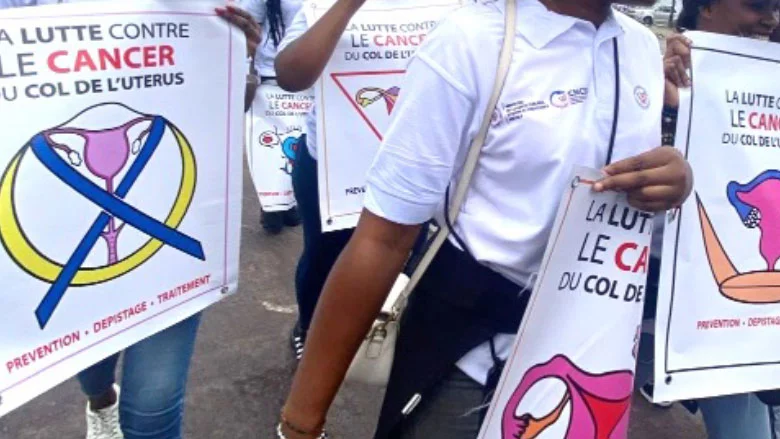
On the streets of Kinshasa, a group of secondary school girls marched alongside government officials in a walk against cervical cancer. Their chants echoed through Boulevard du 30 juin, carrying with them both energy and urgency. Some of these girls were winners of a flyer design contest, rewarded with a year’s tuition by the Gates Foundation. Yet beyond their prizes, they carried pressing questions: where could they get vaccinated against HPV, the virus closely linked to cervical cancer?
The answers are beginning to emerge. In November 2024, the Democratic Republic of Congo (DRC) revised and validated its National Strategy to Combat Cervical and Breast Cancers for 2024–2029. Backed by the WHO and the Ministry of Health, this strategy places the HPV vaccine rollout at its core, targeting girls aged 9 to 14. With World Bank support, the government plans to build on existing health investments to introduce cervical cancer screening in multiple provinces, including Kinshasa, Tshopo, Haut-Katanga, Kwilu, and Kongo Central.
The urgency is clear. Each year, nearly 7,700 women in the DRC are diagnosed with cervical cancer, and more than 70% lose their lives to a disease that is preventable. To tackle this, the country will begin offering the quadrivalent Gardasil® vaccine in 2026, protecting against the four major HPV types responsible for most cases of cervical cancer. For many girls, this single dose could mean the difference between life and death.
Still, challenges remain. A recent Knowledge, Attitude, and Practice (KAP) study, supported by the Gates Foundation, revealed a significant gap in awareness. One-third of respondents did not see the need for vaccination, with hesitancy higher among adolescent girls than parents. Misconceptions, lack of information, and limited access to organized vaccination services all play a role. These findings underscore the importance of not just providing vaccines but also ensuring communities understand their life-saving value.
While the DRC prepares for rollout, lessons are already being drawn from elsewhere on the continent. Zanzibar, for example, has emerged as a model of success through its innovative HPV Plus approach. Piloted in mainland Tanzania and fully embraced by Zanzibar in 2023, the program reimagines adolescent health. Instead of focusing solely on HPV vaccines, it integrates them into a broader package of services including reproductive health education, nutrition, and eye care.
Community involvement has been central to Zanzibar’s achievements. Local leaders, known as Shehas, have played a key role in mobilizing families and ensuring out-of-school girls are not left behind. The results speak for themselves. In just one year, vaccine coverage soared from 14% in 2023 to 85% in 2024, reaching more than 800 schools and nearly 200 health facilities. This integrated approach has set a new benchmark, showing that cervical cancer prevention can—and must—be part of a holistic vision for adolescent health.
The fight against cervical cancer in Africa is gaining momentum. From Kinshasa to Zanzibar, efforts to expand HPV vaccination, raise awareness, and address systemic barriers are beginning to take root. But the journey is far from over. It will require stronger policy implementation, continued investment, and community-driven strategies to ensure that no girl is left unprotected.
As one survivor of cervical cancer in the DRC reminded us: cancer spares no one. Prevention, awareness, and access to vaccines are not just health priorities—they are matters of survival, dignity, and equity. Africa is showing the world that with the right strategies, the dream of eliminating cervical cancer is not only possible, but within reach.