Breaking the Silence: No Space for Culture in Pakistan
Pakistan is a country that has been plagued by a rising number of rape cases over the past few years. Despite efforts by the government and civil society organizations to combat this problem, the number of reported cases has continued to increase, indicating that the situation is far from under control.
Reasons of Increase Rape Cases
It could be several reasons behind why rape cases in Pakistan are rising, considering patriarchal society in one of the important factor. As the country have dominates decision by man. Women are often seen as inferior to men and are not given the same opportunities or respect. The other factor contributing to the rise in rape cases is the prevalence of sexual harassment in the workplace and in public spaces. Many women in the country report being subjected to unwanted advances or physical contact by men, often with no consequences for the perpetrators.
In addition to these, social and cultural factors, there are also structural issues that contribute to the problem. The justice system in Pakistan is often slow and ineffective, with many cases taking years to reach a verdict. This means that perpetrators of rape and sexual assault are often able to escape punishment, leading to a sense of impunity that encourages further attacks.
Dawlat Khan, a man convicted of raping a 13-year-old girl in Pakistan, was recently released from prison after agreeing to marry his victim. Khan, who was the girl’s teacher, had taken her to his home where he drugged and raped her. The victim’s family had reported the incident to the police, leading to Khan’s arrest and conviction.
However, the High Court gave him the option to seek forgiveness from the victim’s family, which he did by agreeing to marry her. The victim’s family, who come from a conservative rural community, felt that marrying Khan was the only way to restore their honor and protect their daughter from social isolation and stigma.
The case has sparked outrage among activists and human rights groups who argue that the decision sends the wrong message about rape and violence against women. Marrying a perpetrator does not undo the harm that has been caused to the victim, nor does it address the root causes of rape culture in Pakistan.
The case of Dawlat Khan highlights the urgent need for legal and social reforms to address Pakistan’s rape crisis and provide support and justice for survivors. It also illustrates the complex intersection between cultural norms, legal systems, and social attitudes that contribute to the prevalence of sexual violence against women in many societies around the world.
Despite of having many anti-rape laws, Pakistan’s conviction rates in rape cases are less than 3%. The main factor behind it is. Government introduce bills and laws in 2016 and 2020 to introduce longer sentences, and creating special courts to try cases within four months, but no visibility around.
in many cases, rape survivors and their families, fearing the stigma of a trial, often settle out of court and face threats and coercion by their attackers, their own families and the wider community.
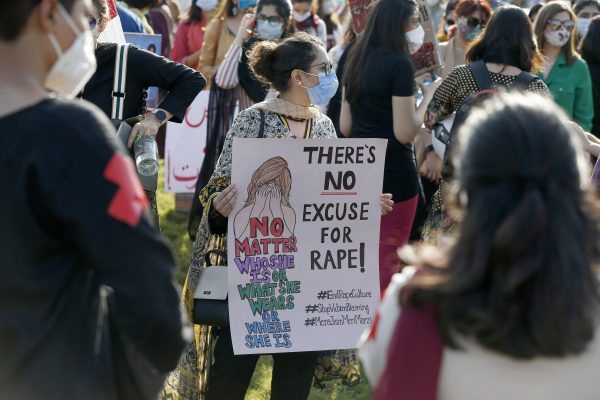
The gang-rape of a woman in Pakistan’s capital, Islamabad, has sparked furious protests at the country’s “rape epidemic” and the culture of impunity that surrounds violence against women.
Protests Sparks in Pakistan
Hundreds of people protested in capital of Pakistan, the protestors were demanding for police handling of the assault and demanded the arrest of the attackers. Social Media users also expressed widespread anger when a 24-year-old was walking with a male colleague in Fatima Jinnah park subjected to rape in F-9 park considered as largest park in the city, where they attacked by two armed men raped the woman.
Ironically, the attackers told “the woman that she should not have been in the park at that time of night, and threatened to call their friends to assault her again if she spoke about the incident.”
The women was not only raped but according to sources from the medical team was also subject to torture on her legs and face.
Speak-Up Its Not Late
Rape is not only occur in Pakistan, but it is estimated by World Health Organization that approximately 35% of women worldwide have experienced sexual harassment in their life.
Pakistan is not among highest the countries reporting rape. In this situation education is essential, it can challenge the deeply ingrained cultural and societal attitudes that enable rape and other forms of sexual violence. Pakistan’s patriarchal system perpetuates gender inequality, which can manifest in various forms of violence against women. By educating both men and women on gender equality, consent, and healthy relationships, we can begin to dismantle the systemic inequalities that contribute to the prevalence of rape.
Moreover, awareness campaigns can help to remove the stigma surrounding rape and encourage survivors to come forward and report their experiences. This is vital because too many survivors suffer in silence, fearing societal judgment or retaliation from their attackers. By providing survivors with support, education, and resources, we can empower them to seek justice and begin the healing process.
Education and awareness also extend to the justice system, which plays a critical role in combating rape. Judges, prosecutors, and police officers need to be trained in how to handle rape cases sensitively and professionally, as well as in the relevant laws and procedures. This can ensure that survivors receive fair and just treatment, and perpetrators are held accountable for their crimes.
By challenging societal norms and providing resources for survivors, we can begin to shift the narrative surrounding rape and empower individuals to demand change. Ultimately, this can create a safer and more equitable society for all.