Bangladesh’s Former PM Khaleda Zia Passes Away at 80
Khaleda Zia, first female prime minister and BNP leader, dies after prolonged illness

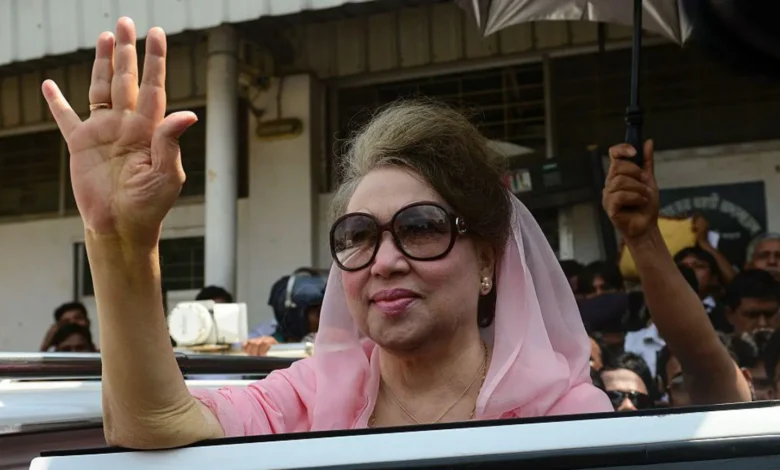
Khaleda Zia, Bangladesh’s first female prime minister and a longstanding rival of Sheikh Hasina, has died at the age of 80 following a prolonged illness. The Bangladesh Nationalist Party (BNP) announced her passing at 6am on Tuesday, prompting crowds to gather outside Evercare Hospital in Dhaka, where she had been receiving treatment.
Zia entered politics following the assassination of her husband, former president Ziaur Rahman, and became Bangladesh’s first female prime minister in 1991. Her tenure was marked by efforts to improve women’s education, social development, and the return of parliamentary democracy, although later terms were marred by allegations of corruption and political controversy. Over the years, she endured spells in prison and house arrest amid a bitter feud with Awami League leader Sheikh Hasina.
Despite her deteriorating health, Zia remained a central figure for opposition forces. She had recently been released from jail following mass protests in late 2024 that toppled Hasina, who is currently in exile in India. Zia had planned to campaign in the upcoming general elections, with her son Tarique Rahman expected to assume party leadership.
During her final days, Zia was treated for kidney damage, heart disease, and pneumonia. Interim BNP leader Muhammad Yunus described her as a “source of utmost inspiration” and a symbol of Bangladesh’s democratic movement. Hasina, whose Awami League party is now banned in Bangladesh, paid tribute from India, calling Zia’s contributions “significant” and a “profound loss for Bangladesh’s political life.”
International leaders also expressed condolences. Indian Prime Minister Narendra Modi praised her role in Bangladesh’s development and its ties with India, while Pakistan’s Prime Minister Shehbaz Sharif remembered her as “a committed friend of Pakistan” whose legacy would endure.
Zia’s political career broke barriers in a male-dominated landscape and transformed her into one of Bangladesh’s most formidable leaders. She faced challenges with resilience, leaving a lasting impact on women’s political participation, national democracy, and the country’s political history. Her family, including her son Tarique Rahman, was by her side in her last moments, and the BNP urged the nation to pray for her soul.
Her passing marks the end of an era in Bangladeshi politics, with her leadership and legacy continuing to influence the country’s political landscape and aspirations for democratic governance.