UK Aid Cuts Hit Women in Poorest Countries, Warns Charity Chief
Bond CEO calls Britain’s shrinking overseas aid “catastrophic” for global health and education

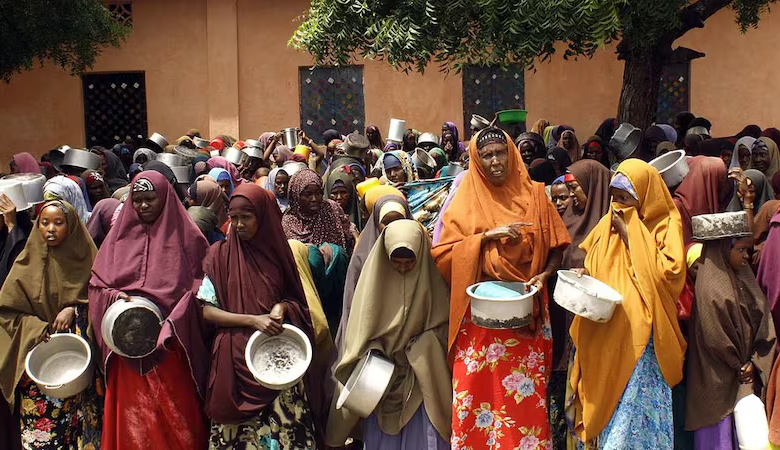
Britain’s decision to cut overseas aid is having a devastating impact on women in the world’s poorest countries while also making richer nations less safe, Romilly Greenhill, CEO of the UK charity network Bond, has warned. Representing over 340 organisations working in international development, Greenhill highlighted that the UK’s aid budget is shrinking from £15 billion to £10.7 billion, with the deepest cuts expected next year.
Charities are already feeling the effects, with programs focused on gender equality, education, and women’s health at particular risk. Save the Children estimates that 55 million people could be affected, while the Gates Foundation has raised concerns that 200,000 children under five could die due to reductions in international aid. Countries most exposed include Mozambique, the Democratic Republic of Congo, Zimbabwe, and Ethiopia, all with fragile health systems.
Greenhill cited projects supporting female education in Syria and initiatives addressing violence against women and girls in Africa, warning that these critical programs are now at risk. Early signs suggest that girls’ education, women’s health services, and medical centres are already suffering.
The charity chief also noted the impact of USAID cuts by the Trump administration, which occurred almost overnight. In Somalia’s Gedo region, the termination of a $1.7 million US-funded project has left 1.5 million people without medical care. Similarly, in southern Africa, Frontline AIDS was forced to suspend US-funded activities, leaving 30,000 girls and young women without HIV services and 26,000 orphans and vulnerable children without support. Greenhill stressed that these cuts are reversing years of progress.
While philanthropic organizations like the Gates Foundation have stepped in to fill some gaps, they cannot match the scale of government funding. Philanthropies can pilot programs and innovate, but they lack the capacity to sustain large-scale services, creating the risk of a misaligned global aid system where essential needs remain unmet.
Bond has called for more detailed assessments and transparency from the UK Foreign Office to ensure dwindling funds reach the poorest and most vulnerable. Greenhill warned that these cuts are not only devastating for people overseas but also undermine the global ability to address pandemics, climate change, conflict, and insecurity, ultimately making the UK and other wealthy nations less safe.
The charity chief described the situation as “a lose-lose,” emphasising that continued reductions in aid threaten both humanitarian outcomes abroad and broader global stability.