Taliban’s Ban on Women Authors Exposes Fear of Knowledge
Dr. Haidari calls the prohibition of female writers’ works a sign of women’s powerful resistance

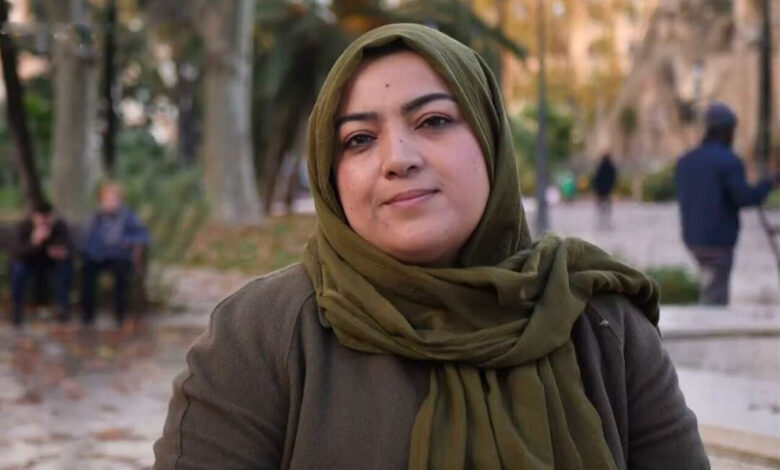
The Taliban’s decision to ban books written by female authors has sparked outrage, but for many women, it also carries a deeper meaning—a sign that their voices are powerful enough to frighten those who seek to silence them. In a powerful video message, Dr. Haidari condemned the move, describing it as a war against enlightenment, progress, and knowledge itself. She declared that the Taliban’s fear is proof that women’s words carry the strength of resistance.
“The fact that the Taliban has banned books written by women is an honor for us,” Dr. Haidari said. “It shows that they are fighting against light and progress.” For her, this restriction is not just an attack on freedom of expression but a clear admission that women’s voices threaten the very foundations of extremist ideology.
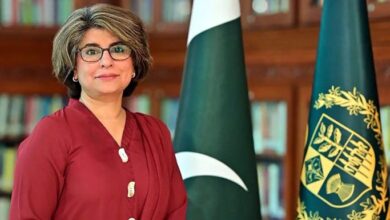
Dr. Haidari, a former professor and outspoken critic of the Taliban regime, stressed that women represent enlightenment and truth in societies where oppression thrives. She congratulated all female authors whose works were banned, framing it not as a defeat but as recognition of their courage. “This is a significant and honorable step that you, women and your works, are taking in the fight for freedom and justice against the Taliban,” she remarked.
She further explained that the Taliban fears women because they embody independence, identity, and progress. For decades, women in Afghanistan have been denied education, stripped of basic rights, and forced into silence. “For years, they have taken away the right to breathe freely from women. For four years, they have held an entire country hostage,” she said. The banning of books, in her view, is the latest form of that suffocation.
More than just censorship, the Taliban’s actions expose their vulnerability. According to Dr. Haidari, restricting female authors is a desperate attempt to halt the spread of ideas that challenge patriarchal control. She called the move the Taliban’s “trump card,” revealing that women are already advancing on the path of resistance. “The banning of your books and pens is evidence that you are walking the right and meaningful path,” she affirmed.
The scale of this crackdown is vast. Reports confirm that the Taliban has removed 679 books from university curricula, many of which were written by women or published by Iranian writers and publishers. This systematic purging is part of the regime’s broader assault on intellectual and academic freedom—an attempt to erase any thought that questions their authority.
Yet, despite these oppressive measures, women continue to resist with their words, ideas, and unwavering determination. For Dr. Haidari, every banned book becomes a badge of honor, proof that women’s voices still hold transformative power. She urged women to see this silencing not as a defeat, but as confirmation of their impact.
The Taliban may fear women’s pens, but history has shown that banning ideas does not extinguish them. On the contrary, it amplifies them. Each censored page becomes a louder echo of defiance, each silenced voice a rallying cry for justice. For Afghan women, the struggle is far from over, but the recognition of their influence is undeniable.
In the end, Dr. Haidari’s message reframed oppression as evidence of strength. The Taliban’s ban is not just censorship—it is confession. It admits that women’s knowledge and creativity are more powerful than bullets, more enduring than fear, and more dangerous to tyranny than any weapon. And it is precisely that power the Taliban cannot control.