Afghan Women Face Fear and Poverty After Forced Deportations
Thousands of Afghan women, deported from Iran without male guardians, return to Taliban-ruled Afghanistan where they face homelessness, hunger, and daily threats under a regime of gender apartheid.

Safia* thought she had escaped a life of abuse. After years of enduring violence from her husband—a former police officer turned Taliban commander—she fled Herat in 2018 with her two children, seeking safety and dignity in Iran. There, she rebuilt her life, launching a small clothing business with help from other refugee women. But two weeks ago, that fragile life came crashing down when Iranian authorities handed her a deportation notice. Now back in Herat, she lives in constant fear of her abusive husband and his powerful family. “Here in Herat, it is not safe for me,” she says. “My husband still has influence with the Taliban. I don’t know how long I can survive this.”
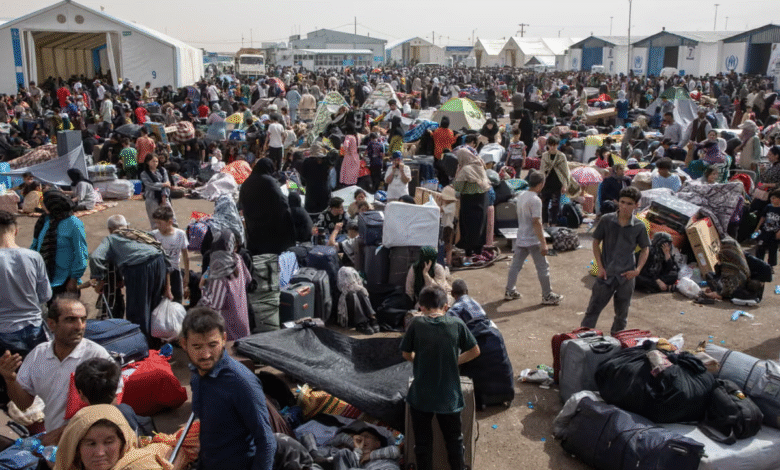
Safia is one of more than 800,000 Afghan refugees forced back from Iran between June 1 and July 23, according to the International Organization for Migration (IOM). Of those, 153,000 were women, and around 8% were female-headed households—single mothers and widows sent back to Afghanistan with their children, and without male guardians. For these women, returning home has meant re-entering a society that strips them of even the most basic rights.
In Taliban-controlled Afghanistan, women cannot rent homes, seek employment, or even access healthcare without a male guardian. Many, like Fahima, are now couch-surfing with relatives, unwanted and invisible. “I’ve tried to rent a place, but landlords tell me the Taliban won’t allow it,” she says. “Only a man can sign the lease.”
Real estate agents confirm this grim reality. “If we rent to a woman without a male guardian, we risk arrest,” said the owner of a property agency in Herat. “The Taliban registers every lease. It’s too dangerous for us.”
Even women with professional skills face total economic exclusion. Raqia, a widow deported from Iran, says she used to work in a handbag factory. Now, the only work she can do is underground and secret. “Even if you know tailoring or hairdressing, you must work at home, in silence. Outside work is forbidden.”
In this system, survival becomes a daily gamble. Aid groups are overwhelmed, and shelters are beyond capacity. Zan Times interviewed nine deported women—all struggling to find food, shelter, or stability for their children. Many have lost everything.
Sabera, from Kunduz, was expelled so quickly she wasn’t even allowed to take furniture. “We left Iran with one set of clothes,” she recalls. “My sons were beaten so badly by police that they couldn’t eat. Now they live with trauma. No one listens to us.”
Maida’s story adds another layer of heartbreak. A widow whose husband died in a military operation, she moved to Iran with her young son. But when detained while standing in line for bread, she was not allowed to return home to fetch him. She was deported alone. Now in Herat, she is separated from her child, helpless. “I can’t live like this,” she says. “But I have no visa, no passport, and no idea how to get back to him.”
This is the daily reality for thousands of Afghan women who have been forcibly returned to a country that punishes them for existing. With no rights, no protection, and no legal pathways forward, they are left in limbo—abandoned by two countries, and trapped in a system that refuses to see them as human.