Pakistan Senate Sparks Controversy by Abolishing Death Penalty for Public Stripping of Women
In a bid to align with global human rights norms, Pakistan replaces death penalty with life imprisonment for public stripping of women—drawing fierce criticism and nationwide debate over justice and safety.

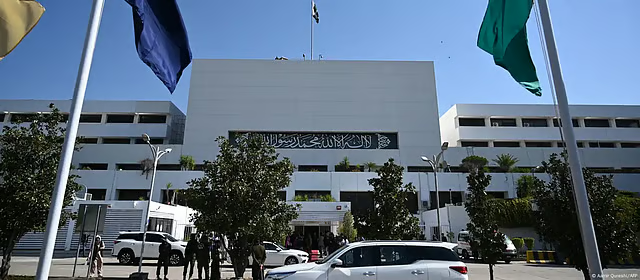
The recent decision by the Pakistan Senate to pass the Criminal Laws (Amendment) Bill, 2025, has stirred a wave of controversy and debate across the country. The amendment, introduced by Minister of State for Interior Talal Chaudhry, replaces the death penalty with life imprisonment for individuals convicted of publicly stripping women. This move comes as part of Pakistan’s broader efforts to comply with the European Union’s GSP+ trade requirements and obligations under the International Covenant on Civil and Political Rights (ICCPR), which reserves capital punishment only for the most serious crimes, typically involving intentional homicide.
Previously, Section 354-A of the Pakistan Penal Code prescribed either the death sentence or life imprisonment, along with a fine, for those who used criminal force to strip a woman in public. With this new amendment, the death sentence is now off the table. According to the bill’s statement of objects and reasons, while the crime remains abhorrent and deeply traumatic, international law does not consider it as a capital offense. The amendment, therefore, seeks to bring domestic legislation into alignment with the country’s international legal commitments.
However, the bill has not been passed without resistance. Several members of the Senate, including voices from opposition parties and even coalition allies, expressed strong disapproval of the softened punishment. PTI Senator Barrister Syed Ali Zafar vehemently opposed the bill, stating that public stripping of a woman is as grave and destructive as murder. In his view, reducing the penalty for such an act removes a significant deterrent, potentially encouraging perpetrators who already exploit systemic weaknesses in the country’s law enforcement and judicial systems.
Senator Samina Mumtaz Zehri of the Balochistan Awami Party echoed this sentiment, warning that such leniency might embolden offenders, especially given Pakistan’s historically low conviction rates in cases of gender-based violence. She argued that the solution lies not in lowering punishments but in overhauling the system—strengthening police procedures, reforming the prosecution mechanism, and ensuring swift and fair trials. For many, the concern is not merely legal but deeply personal and emotional. In a society where women continue to fight for basic safety and respect, such an amendment is seen by critics as a step backward.
Human rights activists, on the other hand, are split in their reactions. Some agree with the amendment’s intent to align laws with global human rights standards, particularly in a country where capital punishment has long been misused or unevenly applied. Others argue that while international obligations are important, domestic realities must take precedence—especially when dealing with crimes that aim to publicly humiliate and dehumanize women.
The decision has also sparked widespread public debate on social media platforms, where citizens have raised questions about the timing, motives, and implications of the amendment. Hashtags demanding justice for victims and calling for harsher penalties have trended across the country, reflecting public discontent and fear that this change could signal further erosion of protections for women.
As the bill awaits implementation, the divide between global alignment and domestic expectations becomes clearer. For a country trying to walk the tightrope between international credibility and local accountability, the question remains—can justice be truly served when the punishment no longer reflects the horror of the crime? The government insists that human rights must guide policy, but critics argue that the right to safety, dignity, and justice for women in Pakistan must not be compromised in pursuit of diplomatic or economic gains.