ICC Issues Arrest Warrants for Taliban Leaders Over Crimes Against Women
The ICC charges top Taliban leaders with crimes against humanity for gender-based persecution, citing bans on education, work, and mobility for Afghan women and girls since 2021.

In a landmark move, the International Criminal Court (ICC) has issued arrest warrants for two of the Taliban’s top leaders—Supreme Leader Haibatullah Akhundzada and Chief Justice Abdul Hakim Haqqani—accusing them of crimes against humanity for systematic persecution of women and girls in Afghanistan. The Hague-based tribunal stated there are “reasonable grounds” to believe both leaders are responsible for policies that have stripped Afghan women of fundamental rights since the Taliban seized power in 2021.
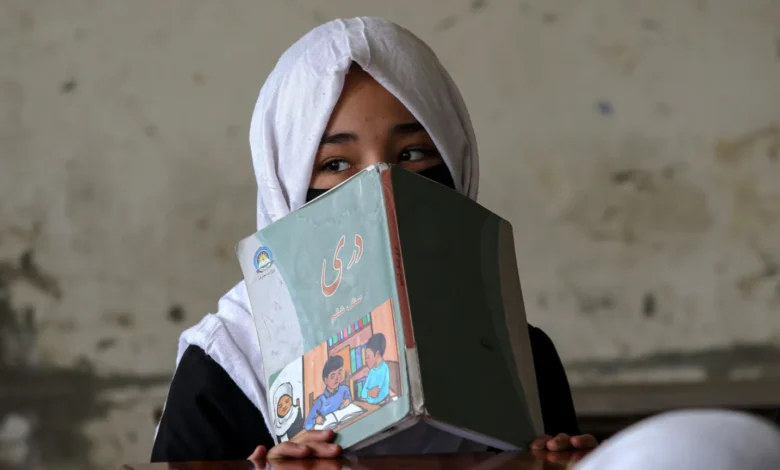
Since the return of Taliban rule, women and girls in Afghanistan have faced increasingly harsh restrictions. Girls over the age of 12 have been banned from attending school, women are prohibited from many forms of employment, and there are strict rules around travel and public conduct—such as needing a male guardian for long-distance travel and being forbidden from speaking loudly in public. These policies, the ICC argues, specifically target women by reason of their gender, amounting to crimes against humanity through gender-based persecution.
The Taliban, in response, rejected the ICC’s move, declaring that it does not recognize the court’s authority. A spokesperson labeled the warrants as “a clear act of hostility” and an “insult to the beliefs of Muslims around the world.” The Taliban insists that their governance aligns with their interpretation of Islamic law and Afghan traditions, and claim they support women’s rights within that framework.
Despite the Taliban’s refusal to acknowledge the ICC, the court has persisted in its mandate to investigate and prosecute grave international crimes where national systems fail. While the ICC lacks its own enforcement arm and relies on member states to carry out arrests, the issuance of arrest warrants signals a strong international condemnation of the Taliban’s actions. The warrants follow allegations made earlier this year by ICC Prosecutor Karim Khan, who accused the Taliban of targeting not only women and girls but also individuals who defy their gender norms or are seen as allies of women’s rights.
Haibatullah Akhundzada, who became the Taliban’s top leader in 2016, has been the de facto ruler of Afghanistan since the U.S. withdrawal in August 2021. He is seen as the ideological architect of the current regime’s hardline social policies. Abdul Hakim Haqqani, the Taliban’s chief justice, is a senior religious figure and former negotiator in U.S.-Taliban talks. Both are widely believed to have played leading roles in formulating the regime’s oppressive policies on gender.
The United Nations and international human rights groups have repeatedly condemned the Taliban’s governance, with the UN previously describing their treatment of women as akin to “gender apartheid.” Women have been excluded from nearly every aspect of public life, including healthcare, education, and government jobs. Reports have also emerged of women being banned from midwifery training—an especially devastating blow in a country with one of the highest maternal mortality rates in the world.
Human Rights Watch welcomed the ICC’s decision and urged the court to expand its investigations. The organization called for justice not only for victims of Taliban abuses, but also for those harmed by the Islamic State Khorasan Province (ISKP), former Afghan security forces, and U.S. military personnel. It emphasized that sustainable peace in Afghanistan requires accountability across the board.
“The ICC’s action is an important step forward,” Human Rights Watch said in a statement. “But true justice demands equal attention to all victims, regardless of the perpetrators.”
The path to accountability remains uncertain, as the Taliban’s current control of Afghanistan means neither Akhundzada nor Haqqani are likely to face arrest unless there is a shift in power or cooperation from other nations. Still, the warrants mark a critical recognition by the international community of the suffering of Afghan women and a call to uphold their rights amid one of the world’s most repressive regimes.