Sima Bahous Urges UN Action to Protect Afghan Women’s Rights at Security Council
UN Women Executive Director Sima Bahous calls for urgent global action to reverse Afghanistan’s rollback on women’s rights and ensure full, equal, and meaningful participation of Afghan women.

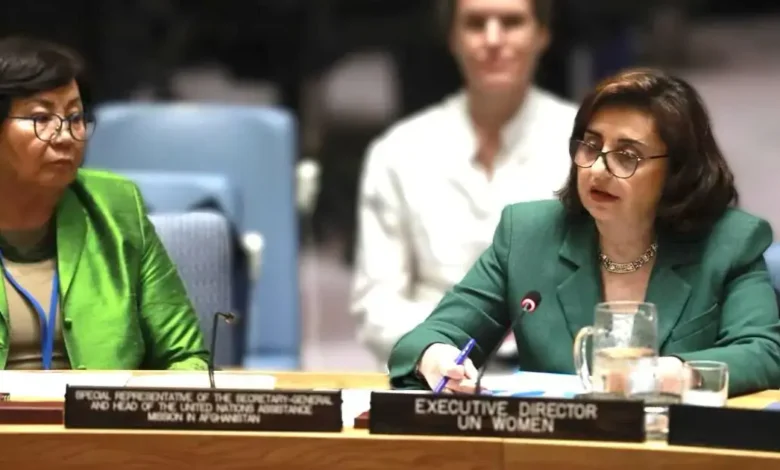
Addressing the UN Security Council, Sima Bahous, Executive Director of UN Women, issued a powerful and urgent plea to protect the fundamental rights of Afghan women and girls. Her remarks came during a session on the situation in Afghanistan, held amid escalating global conflicts and growing humanitarian crises.
Bahous praised the Council’s March decision to renew UNAMA’s mandate, which reaffirmed women’s rights in Afghanistan. But she warned that despite global commitments, the reality on the ground has become increasingly grim.
“Not a single restriction has been reversed. Repression has become more systematic and calcified into law,” Bahous stated.
She described how Afghan women are being erased from public life and subjected to severe restrictions that violate their basic human rights. Funding cuts and legal barriers have made it nearly impossible for female aid workers to serve Afghan communities, further compounding the crisis.
Bahous shared the inspiring story of Sama, a woman entrepreneur in Bamyan, whose solar-powered business – supported by UN Women – has transformed her livelihood. But stories like Sama’s, she said, are exceptions in an otherwise dire landscape. Millions of Afghan women now face:
-
Malnutrition and hunger
-
Rising maternal mortality
-
Mental health crises
-
A ban on secondary education
-
Surging child marriage rates
-
The normalization of gender discrimination in boys’ education
The newly launched Afghanistan Gender Index by UN Women paints a bleak picture:
-
78% of women aged 18–29 are not in education, employment, or training
-
Intimate partner violence is on the rise
-
The gender gap in digital and financial access is widening
-
Education bans alone could cost Afghanistan $1.5 billion by 2030
Bahous issued four urgent recommendations to the Security Council:
-
Prevent normalization of Taliban policies: Ensure that engagement with the Taliban — including via Doha and the Mosaic approach — does not sideline or legitimize discrimination against women.
-
Strengthen accountability: Support the establishment of an independent mechanism to document and investigate human rights violations, and expand Security Council mechanisms to address women’s rights abuses.
-
Increase funding: Commit at least 30% of financial assistance to women and girls, prioritizing grassroots women-led organizations.
-
Invest in digital literacy: Empower women through access to online education, entrepreneurship, and mental health resources.
“Afghan women have not given up. Nor can we,” Bahous concluded. “The oppression of 20 million people simply because they are women is utterly unacceptable.”
She urged the Council to match its words with action — through policy, funding, and principled diplomacy — to uphold the promises made to the women and girls of Afghanistan.