Woman Stopped at Attari-Wagah Border Due to Indian Passport; Children Allowed to Cross with Pakistani Passports
A woman returning to Pakistan with her two children was stopped at the Attari-Wagah border due to her Indian passport, while her children, holding Pakistani passports, were allowed to cross.

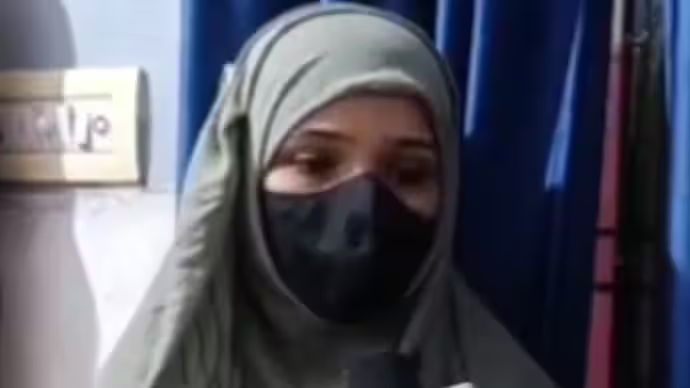
A woman, traveling with her two children, was halted at the Attari-Wagah border while returning to Pakistan due to her Indian passport. In a surprising turn, her children, who held Pakistani passports, were allowed to cross.
This incident took place at a time of heightened India-Pakistan tensions, following the Pahalgam terror attack, which had led to a more stringent approach at the border. Sana, the woman at the center of this situation, is an Indian citizen who married a Pakistani man in 2020. She had traveled to her paternal home in Meerut, Uttar Pradesh, for a visit, but when the geopolitical situation worsened, she made the decision to cut her visit short and return to Pakistan earlier than planned.
Upon reaching the Attari-Wagah border, the Indian Army stopped her at the India-Pakistan border crossing because she held an Indian passport. Despite this, her two children, both of whom held Pakistani passports, were allowed to cross the border and continue their journey to Pakistan without any hindrances.
This situation left Sana in a state of confusion and frustration, as she found herself in a limbo despite having valid travel documents. The Indian Army cited security concerns as the reason for halting her, indicating that they would need to verify her credentials further due to the heightened security measures in place. Sana’s children, however, were permitted to cross with minimal delay. It was unclear whether this was due to their Pakistani citizenship or if other factors contributed to the decision.
Sana’s Case Highlights Border Complexity
This incident sheds light on the complex and often difficult dynamics that families with dual-national ties face when traveling between countries with tense relations. India and Pakistan have a long-standing history of political friction, and border rules can change swiftly in response to shifting tensions. For individuals like Sana, who straddle both nations, such regulations can lead to unexpected disruptions.
While her children were allowed entry into Pakistan, Sana’s situation remained unresolved for a while, causing her considerable distress. The Indian authorities eventually allowed her to continue after further checks, but the entire experience was a stark reminder of the difficulties families face when separated by international borders.
Sana’s case is not isolated, as many families living on either side of the India-Pakistan border often face hurdles when traveling due to changing policies or border security concerns. Despite being married to a Pakistani citizen, Sana was not spared from the rigid scrutiny typically faced by people traveling across the Attari-Wagah border.
A Growing Sense of Border Tensions
This incident comes amid a rising sense of insecurity at the border, largely driven by heightened national security concerns. Both India and Pakistan have tightened their border security measures in the aftermath of numerous security incidents. This has resulted in stricter checks for all travelers, especially those holding documents from the opposing country.
For now, Sana and her children were allowed to proceed with their journey, but this event raises crucial questions about the implications of national security measures on families separated by borders. Sana’s ordeal offers a glimpse into the challenges that ordinary citizens face when attempting to traverse one of the world’s most complex and militarized borders.