Why 50% of the Female Doctors Never Work After Completing Graduation in Pakistan

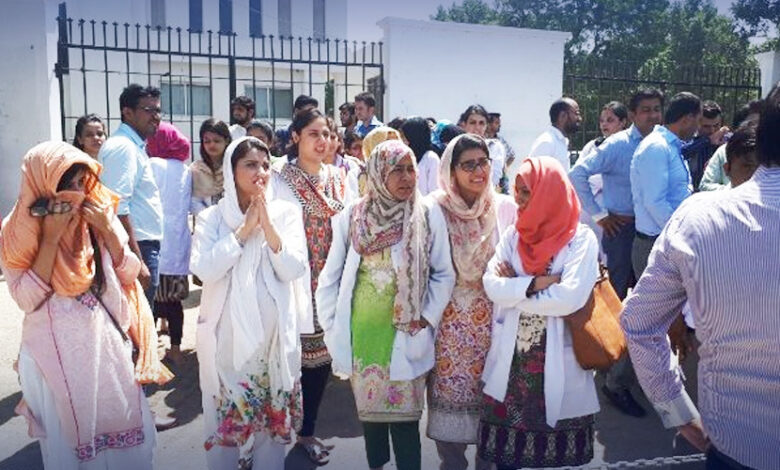
In Pakistan, the prevailing consensus is that girls should receive an education in order to become contributing members of society, as uneducated people do not permit women to work.
However, it was revealed to a press conference that around 50% of women who graduated from medical colleges never found employment.
At the press conference, Prof. Dr. Masood Hameed, President of the Pakistan Medical and Dental Council (PMDC), stated that although female medical students received subsidies and general merit seats in public medical colleges, they never began their professional careers after completing their study.
For every medical student admitted to a medical college on the basis of merit, the government invests Rs2.4 million.
In Pakistan, there are currently 78037 male doctors and 65324 female doctors, as well as 5420 male dentists and 8300 female dentists, according to Dr. Hameed. He also mentioned that women make up about 50% of all medical and dental professionals.
Of the female doctors, just fifty percent are employed. Conversely, a number of physicians—mostly men—have left the nation. 50,000–60,000 medical professionals practice in the nation, compared to the 600,000 that are needed, he claimed.
“We require additional dentistry and medical schools. Pakistan produces about 14,000 doctors annually, with 70% of them being female. He expressed concern that nearly 50% of medical students would never find employment.
Dr. Hameed stated that, compared to the international average of $60, Pakistan spends only $9.3 per person year on healthcare.
Pakistan is unable to meet its healthcare needs due to a lack of resources and medical professionals. In addition, the fast growing population and doctor migration are exacerbating the issue.
Only 32879 specialists have been created by the College of Physicians and Surgeons of Pakistan (CPSP), he claimed, with 40% of them leaving the nation. Thus, there are just 20,000 specialists compared to 100,000 that are needed.
Dr. Hameed stated that the nation could not fill its shortage of specialists in response to a query.
Some factors are preventing the PMDC from operating as it should. The PMDC has been rejected by them as a regulator.
The quality of medical education was declining, he continued, because the teachers who were being created did not meet the required standards.
Dr. Hameed said Dawn that students who were admitted to medical schools based on general merit had to pay between Rs. 15,000 and Rs. 20,000 in tuition each year, which amounted to about Rs. 100,000 for their MBBS degree.
Conversely, the government invests over Rs2.5 million in each MBBS student. Regretfully, the majority of female medical graduates did not find employment following their graduation. Those who wish to work attempt to leave the nation and relocate overseas, particularly to the US or Saudi Arabia, he said.
“The United States favors hiring physicians from other nations due to the high cost of producing each physician, which stands at $250,000. The United States so employs physicians from other nations and invests that sum in the medical field.
According to the PMDC chairman, he is working on a plan that would require all students admitted to medical colleges on a general seat to work for at least three years in the nation’s public or private sector following graduation. The government pays Rs 2.4 million in subsidies for medical study; those who choose to pursue their education overseas must pay this sum.
Additionally, there is a proposal that physicians who received good salaries while studying on general merit seats ought to reimburse the government for the amount of the subsidy. Doctors ought to be asked to contribute the appropriate amount of subsidies to a pool that is created. He stated that the health sector could use that amount of money.