PHC Blocks Oath for KP Women Lawmakers
Peshawar High Court sets aside ECP notifications on women and minority reserved seats, directing fresh allocations; IHC also challenges ECP’s KP seat distribution amid mounting political tension.

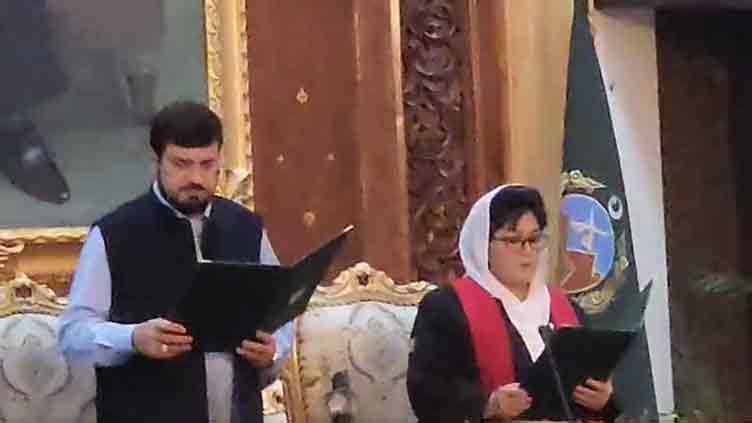
PESHAWAR: In a significant development, the Peshawar High Court (PHC) on Tuesday ordered the Election Commission of Pakistan (ECP) to revise its notification on the allocation of reserved seats for women and minorities in the Khyber Pakhtunkhwa Assembly, barring two women MPAs-elect from taking their oaths until a fresh decision is made. The court also nullified the ECP’s previous declaration of JUI-F’s Gorpal Singh as an MPA on a minority seat.
A two-member PHC bench comprising Justice Syed Arshad Ali and Justice Dr Khurshid Iqbal issued the directives in response to a petition filed by the PML-N, challenging the ECP’s March 4 and March 26 notifications. The court emphasized that the electoral college for allocating reserved seats must include all elected members, including independents who joined political parties by the actual date of the reserved seat election, not by an arbitrary cut-off. The use of February 22 as a cut-off date by the ECP was termed unlawful and inconsistent with the Constitution and relevant electoral laws.
The court gave the ECP 10 days to revise allocations after hearing all stakeholders. Until then, JUI-F’s Naheeda Noor and Arifa Bibi—who had been elected on disputed women’s reserved seats—are barred from oath-taking.
PML-N’s legal team, led by Aamir Javed, argued that the ECP had miscalculated seat distributions by not counting a joining independent MPA in PML-N’s total strength, reducing the party’s reserved seat share. Though the independent had joined on February 22, the same day he was officially notified as an MPA, the ECP used that as a deadline, excluding him from calculations. As a result, JUI-F received a total of 10 women’s reserved seats, while PML-N got eight, despite both parties having equal representation in the Assembly.
The petition also contested the ECP’s allocation of the fourth non-Muslim seat, which it awarded to JUI-F without holding the required draw with PML-N, who had equal claim. The court accepted this argument and set aside the ECP’s decision.
Meanwhile, the Islamabad High Court (IHC) also weighed in, issuing a notice to the ECP on a petition filed by Pakistan Tehreek-i-Insaf Parliamentarians (PTI-P), led by former KP Chief Minister Pervez Khattak. PTI-P challenged the ECP’s July 2 notification on the grounds of flawed calculations that they claim cost the party at least three reserved seats.
Justice Raja Inaam Ameen Minhas, who heard the IHC petition, declined to grant a stay order but sought a response from the ECP before proceeding. PTI-P’s legal team argued that the party was wrongly recorded as having won only one general seat when, in fact, it had secured two—PK-73 and PK-103—entitling it to a greater share of reserved seats.
Previously, the PHC had granted a stay on the oath-taking of reserved seat MPAs in response to similar concerns. However, after the PHC raised questions about jurisdiction due to parallel proceedings in the IHC, PTI-P withdrew its case, resulting in dismissal and cancellation of the stay.
The dual legal challenges—by PML-N in PHC and PTI-P in IHC—have now placed increased pressure on the ECP to revisit and correct its allocation process. Both cases center on concerns of misrepresentation, miscalculation, and procedural irregularities in awarding the reserved seats for women and minorities in the KP Assembly.
With courts actively reviewing these petitions, the ECP’s seat allocation decisions remain under scrutiny, and any delay or misstep could further erode trust in electoral transparency and representation within the provincial legislature.