Glory PakistanGlory Women
Pakistani Proud Women celebrating National Working Women’s Day
Here are eight major problems faced by the women in Pakistan

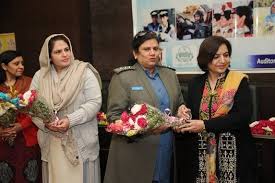
Pakistani women are celebrating the National Working Women’s Day today on Friday. The day was declared on 22nd December 2010 in recognition of the struggle of working women to secure a dignified and respectful working environment. It is also celebrated to acknowledge the economic contributions made by women to the country.
 The number of women joining the workforce has increased in the last few years. The National Commission on the Status of Women (NCSW) collaborated with the Pakistan government and other civil society organisations to facilitate the women who have entered the mainstream society and are economically effective. Women work as human resource managers, police officers, directors, business executives, journalists, lawyers, and pilots in the public and private sectors.
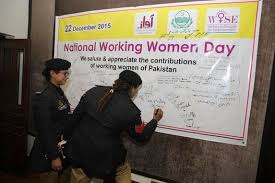 Pakistan is the only Islamic country to give women top notch government posts. The government showed its commitment to the cause of women by promulgating the ‘Protection against Harassment of Women at Workplace Bill 2009’. It was a landmark move by the present government to help Pakistani women work without fear of being harassed or discriminated. The National Implementation Watch Committee formed by the prime minister in collaboration with the NCSW, ensures compliance with the law. Strict monitoring by the NCSW watch committee resulted in the adoption of a code of conduct and formation of a committee by many public and private sector organisations across the country. Despite an improvement in the socio-economic status of women, a lot still needs to be done. Women’s participation in the formal work-force is still low. 80 to 85 percent women work in the informal sector as laborers and agriculture workers. These women workers are paid only half of what their male counterparts earn.
 Their economic interests need to be secured by acknowledging the rights and contributions of home-based workers and introducing policies and laws for them. Working women face challenges like unequal wages, glass-ceiling effect, sexual harassment and other work-related concerns that need to be addressed. Pakistan endorsed the C-111 (Discrimination Convention, 1958) in 1961 and C-100 (Equal Remuneration Convention, 1951) in 2001. The country now has a legal obligation to comply with international laws and is monitored by the International Labour Organisation’s Committee on Application of Standards.
Eight bigger problem faced by the working/non-working women in Pakistan

Let’s take a look at the some of the biggest challenges and trials still faced by a multitude of women in Pakistan today:
1.Gender biases
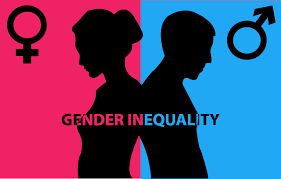 As the heading clearly suggests, there is no debate over the fact that men are given unfair advantages over women under unquestionable circumstances. Unofficial policies exist in private as well as government institutions with regard to the hiring of women, as it is commonly believed that they’ll either get married and quit, or take days off or leaves during their maternity periods. This is downright discrimination and this, of course, robs women of many good opportunities that places them at a lower position in the society.
2.Sexual harassment
 The most common problem faced by women in Pakistan is that of sexual harassment. Men continue to believe that a a working woman is “public property”, and often attempt to take advantage of this. Unsafe and unhealthy environments in Pakistan have been ever-prevalent and this is what contributes to the male mindset of considering weak and fragile women as easy targets.
3.Finding balance between work and personal life
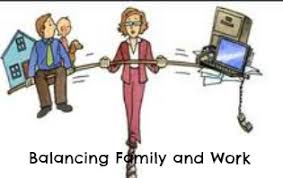 When you’re from Pakistan and have a desi background, the first and foremost that your family expects is for you to fulfill the demands of the house and taking care of responsibilities cheered on to you by your elders. You simply cannot get out of taking time out for your barray or ghar walay. If you wish to be an independent working woman on your own accord you’ll be sure to find yourself leading a double life of a professional worker in an office or elsewhere and a cook at home.
4.Education and marriage
 We come across many fathers and mothers that question the need for their daughter’s desires of attaining a higher education when instead she is all set at the right age to be a victim of marital concerns. After all, marriage is the only and ultimate end for every girl in Pakistan. Whether its death threats from the brother if she dares to refuse marriage or physical thrashings from the parent, a majority of the girls in Pakistan are likely to be forced to discontinue their hopes of attaining an education from abroad or within their country and be sent off in marriage proposals to older men.
5.Husband’s insecurities
 Now if you’re married or are a married working woman (if you’ve been lucky enough), you’ll probably have to find yourself dealing with your husband’s ego and obscure insecurities time and again. Men in Pakistan usually believe that their kind of gender should be the only breadwinners of the entire family. They might feel threatened by your interaction with male colleagues and see your proud achievements as unwanted threats.
6.What People will talk? (Loug kya kahain gay)
 This one factor or claim has ruined a majority of women’s lives as compared to no other. Whether you’re a working woman or a housewife, there’s always the threat of ‘log kya kahain gai‘ and how others will perceive you through their own judgments and opinions. They’ll assume that by working or doing something for yourself, you’re neglecting your house, family and kids etc, and most probably accredit you with filthy and hurtful titles.
7.Rape and honour killing
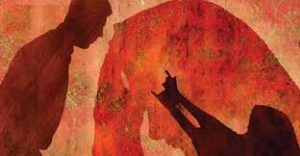 These two problems are part and parcel of the bigger picture in this country which a lot of people tend to completely ignore. Rape culture is wrong, but in actuality, rape culture is justified within Pakistan. It is justified by the excuse that Islam promotes modesty and has tasked men with protecting inferior women. It is furthermore, justified by the most dangerous of all excuses, traditional norms. Also, the conduct of tribal jirgas that form the very institutionalized basis of Pakistan’s rural power structure act as the antithesis of state law with their decisions massively insensitive towards women and in favour of these heinous crimes. Even despite the introduction of the Criminal Law Act in 2016 with amendments in previous laws, 95% of victims of honour killing today are still women. Up to 1000 women are murdered every year in the name of honour, Aurat Foundation reports, with more than 60% of honour-related crimes going unreported.