Pakistan Female Director Sharmeen Obaid-Chinoy Traces Her Hollywood Career From DVF to Star Wars

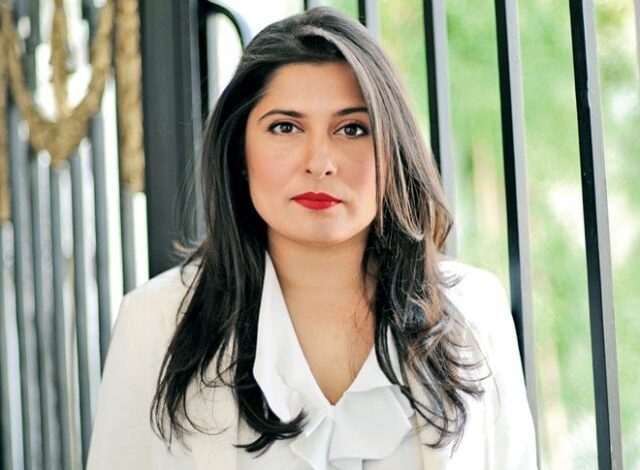
The body of work produced by filmmaker Sharmeen Obaid-Chinoy is difficult to classify. She has produced documentaries on child refugees and victims of acid attacks. Her attention has been drawn to the remarkable life of designer Diane von Furstenberg. She has led the production of animated films about and for Pakistani kids. She has directed “Ms. Marvel” episodes and is working on a Star Wars movie. Along the way, she has also won two Oscars.
It’s not a traditional résumé or career path; it’s nothing that a film school or workshop on breaking into Hollywood would ever teach or even consider advising. For Obaid-Chinoy, however, it’s effective. She is now among the most captivating storytellers in the industry as a result of it.
In a recent interview, Obaid-Chinoy stated, “I’ve been able to follow my own yellow brick road to Hollywood.” “That’s been made easier by the Academy Awards, but more significantly, a lot of young filmmakers from all over the world write to me and tell me that my unorthodox decisions have given them hope that many people can travel down the yellow brick road.”
“Diane von Furstenberg: Woman in Charge,” her most recent movie, is available for watching on Hulu. It’s an intimate depiction of the fashion tycoon, who is open and honest about everything—death, dalliances, ambitions, love, failures, and everything in between—and shares co-directing credit with Trish Dalton.
Von Furstenberg stated, “I hope it inspires a lot of girls and women to know that they can be the women they want to be.”
Since then, they have remained in contact. They first met 12 years ago when von Furstenberg was presenting Obaid-Chinoy with a Glamour Woman of the Year Award on stage at Carnegie Hall. When von Furstenberg felt she was ready to share her experience, she offered Obaid-Chinoy complete access to her personal records, family, and self.
“I’ve always directed films about strong female characters who face difficult situations and overcome them,” the actress remarked. “Diane fits that description very well.”
The director is occupied with two projects at the same time: she is directing both of the early stages of Akiva Goldsman’s adaptation of the Marcus Sakey novel “Brilliance” and is collaborating with Kathleen Kennedy and Steven Knight on a “Star Wars” movie that follows Daisy Ridley’s character Rey in a Jedi academy.
But Obaid-Chinoy didn’t begin with the intention of becoming a filmmaker. She began her storytelling career in Pakistan as a teenage journalist. She was the oldest of six children—five of them were girls—and a naturally curious young woman who was eager to learn about the world. She would constantly question her mother, asking why she was allowed to attend school while other children were left to beg on the streets. Why did inequality exist?
Her mother suggested that she start jotting down these questions when she was about fourteen years old. Thus, she acted. The first of many letters Obaid-Chinoy would write to Pakistan’s local English-language daily would lead to professional advancements and new prospects. At seventeen, she was contributing investigative pieces to the newspaper.
She didn’t know she wanted to pursue more visual storytelling until October 2001, as she was almost done with her degree at Smith College. Her initial plan was to travel to Afghanistan and concentrate on the common citizens there. After submitting her idea to roughly eighty organisations, she eventually heard back from New York Times Television. They gave her $7,500 and her school gave her $7,500 to make “Terror’s Children,” which was televised and took home multiple awards: All of a sudden, she was an impressive documentary filmmaker.
She became the first Pakistani Academy Award winner in 2012 at the age of 33 with her documentary short “Saving Face,” an enlightening picture about women who have been disfigured by acid assaults.
Angelina Jolie was among its supporters, noting in Time Magazine that Obaid-Chinoy, one of their 100 most influential people of 2012, was influencing the conversation about Pakistan and spurring legislative change.
Jolie remarked, “She celebrates the strength and resilience of those fighting against seemingly insurmountable odds — and winning.” She does this by “giving voice to those who cannot be heard.”
A few years later, her film “A Girl in the River: The Price of Forgiveness,” which tells the story of an adolescent who escapes her father and uncle’s attempt to “honour kill,” contributed to the removal of a loophole that allows offenders to get away with murder. It took home the Oscar as well.
She then had the desire to produce something more visually stimulating and opened an animation studio in Pakistan.
She said, “I started working with actors and narrative work more.” “And from this, a need emerged to create something that would take my experiences as a filmmaker embedded globally and bring beloved characters to life for a global audience.”
She thus sent another letter, this time to Marvel Studios, offering her assistance with the “Ms. Marvel” Disney+ series. She oversaw episodes that focused on the superhero’s journey to 1947 India and modern-day Pakistan.
She now has more visibility and chances due to this new stage of her career, but there are drawbacks as well. Just ask any cast member of “Acolyte” about toxic fandoms. She has long since learned to block out unhelpful voices from her mother, so she isn’t concerned by the cacophony.
Obaid-Chinoy believes that although the gap between serious documentaries and dreams about Jedi knights may appear wide, it’s not really that big.
“My protagonists embark on these heroic journeys, encounter hardships, and emerge from the ashes of those hardships in some way. Additionally, they alter the course of a nation or a society in many of my works, the actress claimed. Star Wars is fundamental to it all. And for the past 20 years, I have been recounting that narrative.