Kuwaiti Palestinian Writer Shahd Alshammari’s New Memoir “Confetti and Ashes” Reimagines the Disabled Female Experience
Alshammari's bold departure from her earlier work blends personal narrative, poetry, and the supernatural to explore the complexities of living with chronic illness.

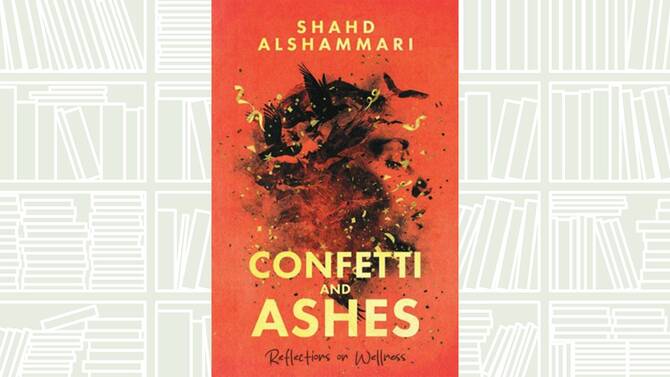
Kuwaiti Palestinian writer Shahd Alshammari’s new speculative memoir, Confetti and Ashes, marks a bold departure from her acclaimed first book, Head Above Water, which was longlisted for the Barbellion Prize in 2022. In Confetti and Ashes, Alshammari takes readers on a journey where personal memory and narrative intertwine with elements of poetry, imagination, and supernatural presences.
Her first memoir offered an unflinching exploration of navigating multiple sclerosis as an Arab woman teaching literature in Kuwait. In contrast, Confetti and Ashes ventures into new territory, blending personal history with reflections on disability, memory, and resilience. Alshammari skillfully navigates the intersection of disability and identity, offering poignant observations on both the physical and emotional challenges of living with chronic illness.
A notable feature of Confetti and Ashes is the introduction of Zari, Alshammari’s qareen — the jinn-companion assigned to every individual in Islamic belief. Zari’s voice becomes a key presence in the memoir, transforming the narrative into a conversation between the seen and the unseen worlds. This inclusion shakes up traditional memoir structure, pushing against Western storytelling frameworks and offering a fresh perspective on disability.
Alshammari’s exploration of the disabled body and its connection to the female experience in Kuwaiti society provides profound insights into the intersections of marginalization and resilience. She examines how both the disabled and female bodies are scrutinized, resisted, and ultimately redefined by societal expectations. Alshammari’s personal story becomes a larger meditation on how these intersecting identities shape one’s experience of the world.
Rejecting predictable storytelling, Alshammari defies the expectations placed on her by society and her own body. As she rebels against her illness, she also pushes back against stigmas associated with multiple sclerosis, especially those voiced by other women with the condition. The memoir’s exploration of holistic wellness practices, including the author’s involvement in squash, demonstrates her determination to maintain both her physical and mental endurance despite her diagnosis.
In Confetti and Ashes, Alshammari presents a reclamation of the self. By blending the mystical, the personal, and the political, she cements her place as an essential voice in reimagining the experience of the female disabled body.