Dangerous Impact of Climate Change on Pakistan: A Flash Drought Attack

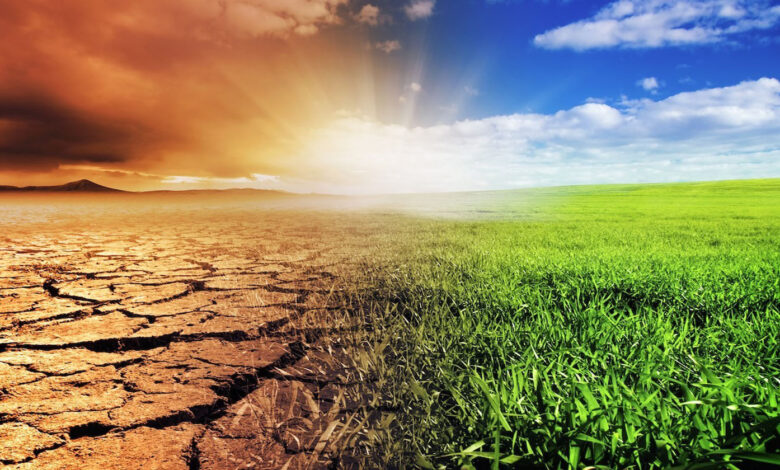
Once again, we have to say, “Oh, the tyranny of the weather.” This is because the heat intensity this year is so extreme that we didn’t get a chance to say “Oh, the cold,” but now we are getting plenty of chances to say “Oh, the heat.” May Allah have mercy.
Have you ever thought about what you would do if this heatwave continues for another three months and the temperature reaches 55 degrees Celsius? Just thinking about it makes you sweat, right? But yes, that time is not far off. We have not taken steps to address climate change, and we have not stopped mistreating the environment. So, how can we escape the effects of climate change? To live a pleasant life, it is essential to plant flowers, plants, and trees in this garden. If you still don’t understand, let me share some more bitter truths.

Nowadays, global warming and climate change are accompanied by continuous heatwaves. A severe heatwave hit in May and has been ongoing. The winds and storms have not reduced the heat. All countries in the world are currently busy finding solutions to these issues. In Pakistan, the severe heatwave since May has made it difficult to spend days in many areas. The situation is particularly concerning because the heatwave is unrelenting. Continuous heatwaves have not only sounded the alarm about the dangers of climate change but have also made their effects visible.
Why are heatwaves continuous? We wondered about this and searched for answers because there are still many hot months left. Even in December, cold weather is rare. Recently, I received some concerning information when I visited the Meteorological Department’s office. This continuous heatwave is not only harmful to humans but also to the land. The increasing temperature and heatwave have led to a flash drought attack on Pakistan. Dr. Syed Faisal Saeed, Director of the National Drought Monitoring Center, spoke to us about flash droughts, explaining that it is a new type of drought currently being discussed in the scientific world.
Yes, a new fifth type. Previously, there were four types of droughts discussed: meteorological, agricultural, hydrological, and socio-economic droughts. I will explain these types later, but this new type, flash drought, is related to heatwaves. It is a combination of reduced rainfall and continuous rising temperatures, causing the surface layer of the land to dry out quickly. If the top layer of the land dries out completely, leaving no moisture, it has very negative effects on agriculture, livestock, and water reserves. This type of drought shows its full effect within two to three weeks.
Due to this flash drought, the risk has increased in Southern Punjab, Sindh, and Balochistan. Rajanpur, Cholistan, Tharparkar, and adjacent areas, as well as parts of Balochistan like Kharan and other regions, are severely threatened. If there is no rain, the situation could worsen, and its effects could become more complex. The cultivation of seasonal vegetables could be greatly affected, and the sugarcane crop could suffer severe impacts. Currently, sugarcane cultivation requires extensive irrigation. Dr. Syed Faisal Saeed further explained the types of droughts, saying that the first type, meteorological drought, lasts for one to three months. If the duration exceeds two to three months, it becomes agricultural drought. If it lasts for a year with reduced rainfall, it is termed hydrological drought, affecting underground water reserves, dams, reservoirs, and other water sources. He expressed concern over socio-economic drought, a human-induced type of drought. If we do not manage water properly and population growth is high, the effects of this type of drought are more severe. Even if there is sufficient rainfall and abundant water, poor management can lead to drought.
The continuous heat is due to climate change, but to understand more about the reasons, I visited the National Emergency Operations Center of NDMA, where I learned that detailed observations of heatwaves and climate variations are being conducted. I spoke with Dr. Tayyab, a technical expert at NDMA, who pointed out worrying conditions. He referred to the previous year, saying that 2023 was the hottest year in history, but the statistics for 2024 are also not promising, indicating that 2024 could be even hotter. June temperatures will be significantly higher than usual, and each month will be hotter than the previous one. Dr. Tayyab also mentioned that each coming year will bring more risks due to climate change, showing its full impact now. A new report from the World Meteorological Organization has also been released, stating that temperatures will rise further in the next five years, and each year will be hotter than the last.
Now, if each coming month is hotter and each year brings more risks, have we prepared to tackle these threats? Are we saving our environment?
We all spend time on social media, and sometimes we come across beautiful, silent yet impactful messages. One such wallpaper on Facebook showed Karachi covered with houses and buildings, but in the middle, there was a lush green place—a graveyard. Regardless of the truth, the message touched my heart:
“Where humans are alive, trees have died; and where humans have died, trees are alive.”
So think about where we stand and what we are doing. Saving the environment is everyone’s responsibility. If we all plant one tree each, we can reduce future risks. May Allah have mercy on us all. Ameen.